


 6 Photos
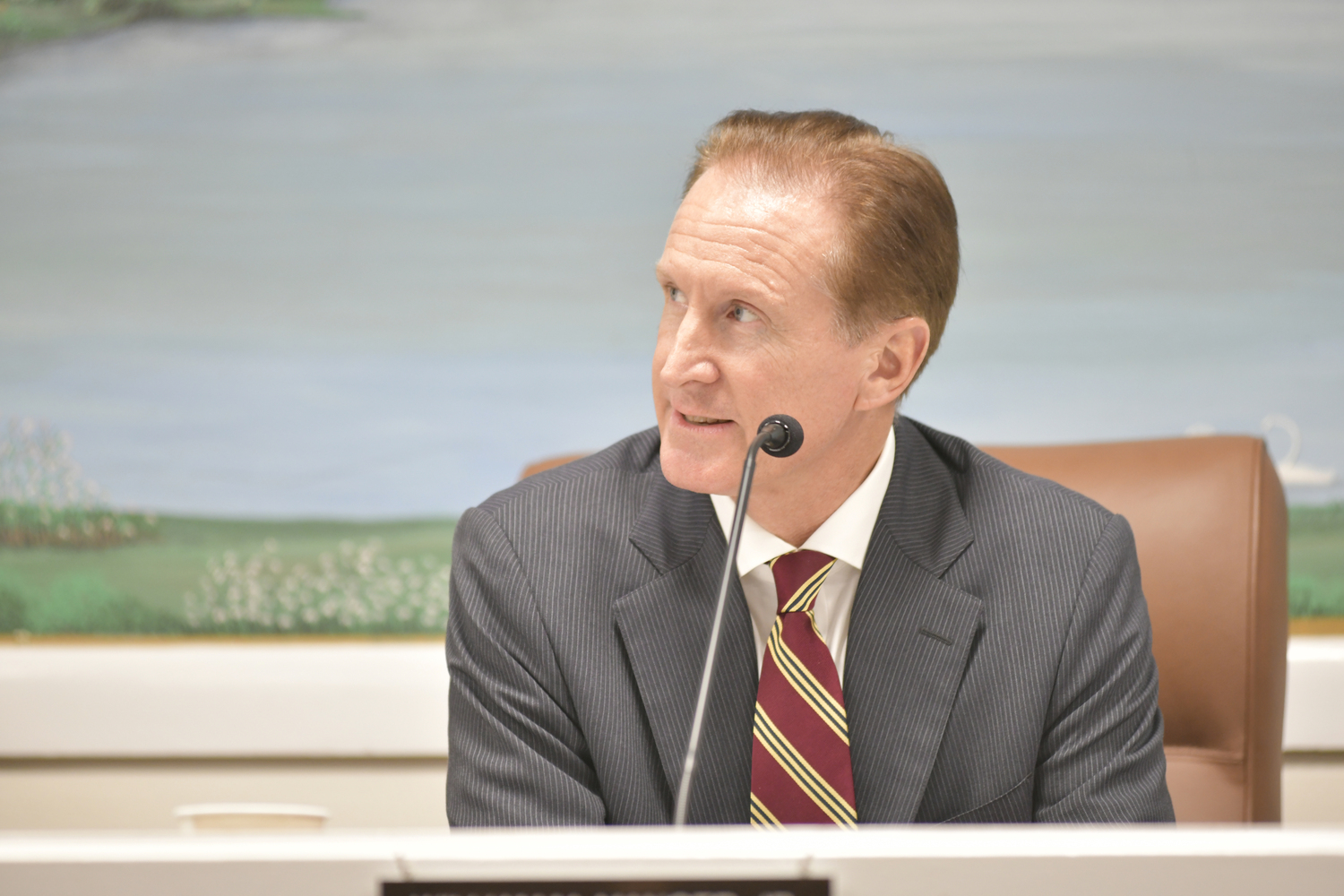
Mayor William Manger Jr. DANA SHAW

Deputy Mayor Gina Arresta DANA SHAW

Trustees Robin Brown and Roy Stevenson. DANA SHAW
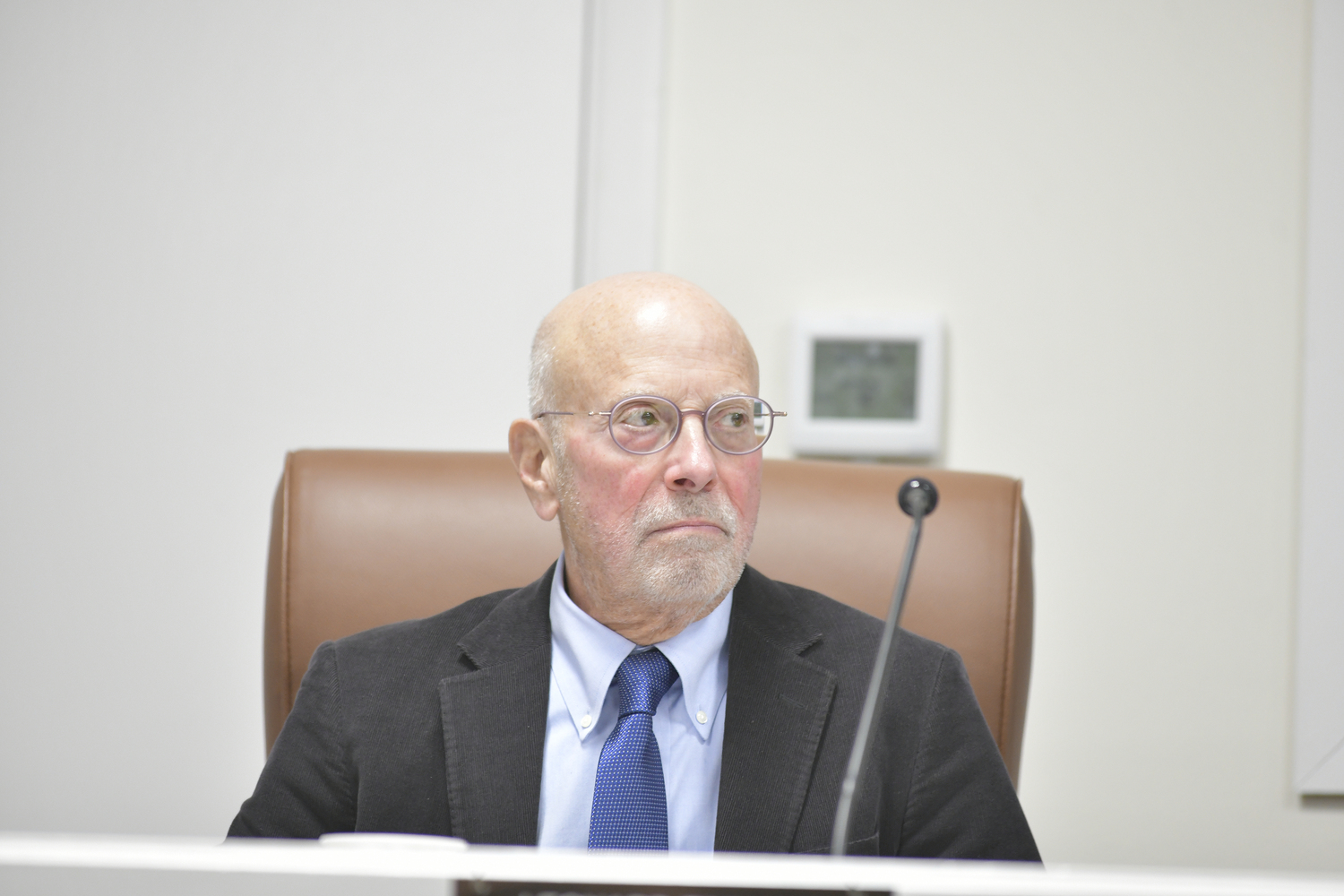
Trustee Leonard Zinnanti DANA SHAW
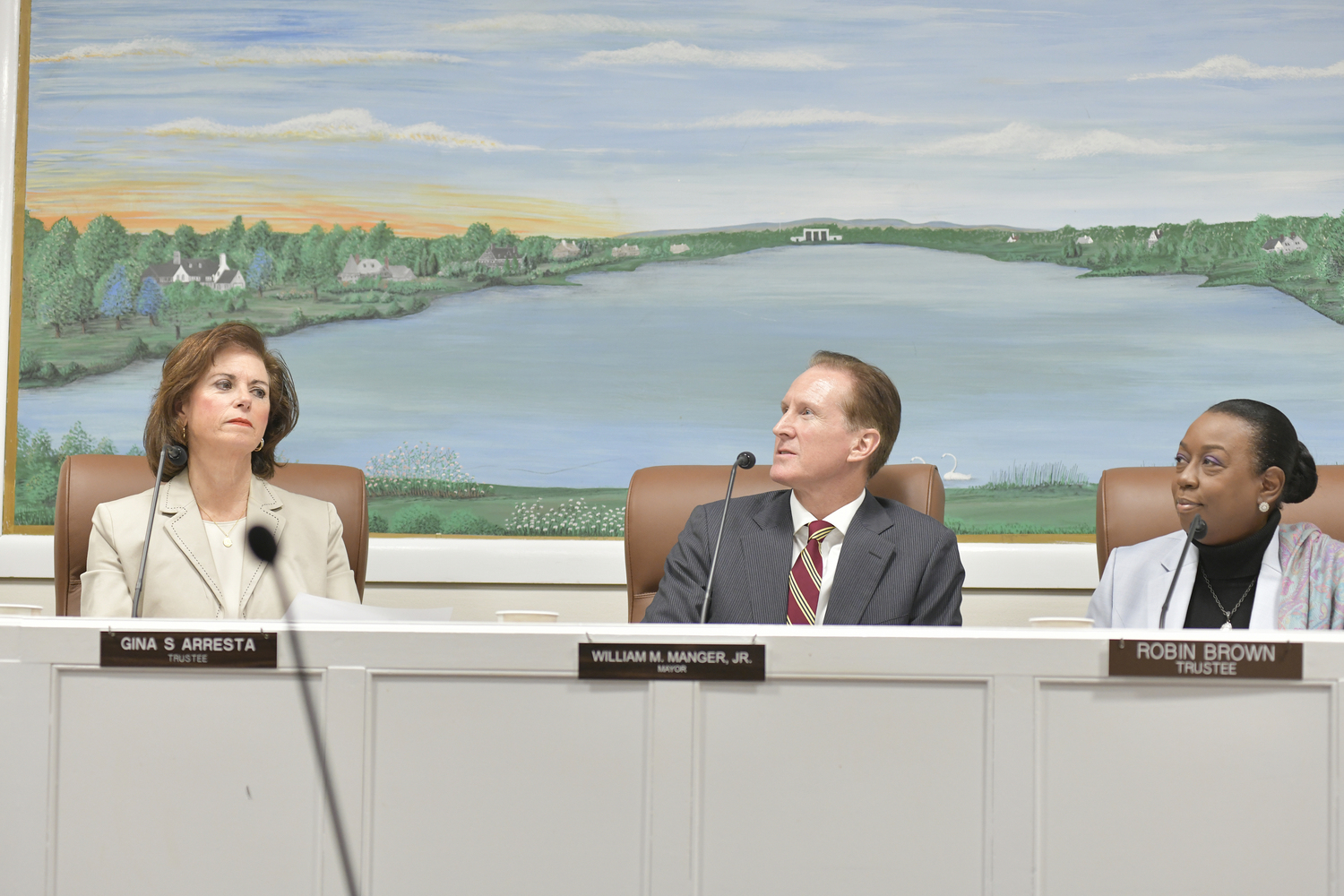
Deputy Mayor Gina Arresta, Mayor William Manger Jr. and Trustee Robin Brown. DANA SHAW

Deputy Mayor Gina Arresta DANA SHAW
After getting an earful from residents who showed up at the November 9 Southampton Village Board meeting, the board members decided to listen to their constituents and abandon plans to extend the term lengths for the mayor and trustees from two years to four years.
At that meeting, the board discussed making changes to not only the term lengths but also compensation and health benefits for the mayor and trustees.
The board voted to change the benefits package at the meeting. Previously, the mayor and trustees received so-called “benefits for life,” provided they had served at least five years, although the benefits did not kick in until they turned 55.
The previous arrangement allowed former board members and their families to receive those benefits at no cost to themselves. Under the new policy, elected officials will be required to pay into the cost of their coverage up to a maximum of 5 percent of their salary while in office, which they noted is the same standard that applies to all village department heads.
Upon leaving office, officials will only receive benefits if they have served for 10 years or more and are age 62 or older. At that time, they will be required to pay 30 percent of the cost. When they reach the age of 65, Medicare will kick in and become the primary coverage, and the village will only provide supplemental insurance.
“As a result of the board’s action, the village will realize substantial financial benefits in both yearly cost savings and the reduction of long-term liabilities on the village’s financial statements,” Mayor Bill Manger said in a Viewpoint published in this week’s Southampton Press that was signed by the rest of the board.
In the Viewpoint, Manger attempted to explain the board’s reason for putting forth a resolution to extend term lengths.
“Having elections every year is expensive, requiring the rental of voting machines and many hours of village employee time, estimated at about $20,000,” the Viewpoint reads. “After studying this issue last year, our Village Planning Commission recommended that if the elected officials’ terms were changed to four years, elections would only be needed every other year. In addition to the financial savings, they proposed that longer terms would lead to greater governance efficiency. However, the public comments received on this issue were overwhelmingly opposed. The board has heeded the public’s concern and will not at this time continue pursuing four-year terms and elections every two years.”
Had the board moved forward with doubling term lengths, it would not affect the current terms of sitting board members but only come into effect after future elections.
At the meeting, residents had expressed their outrage that the board was considering extending its terms via resolution, rather than letting the community decide on the matter in a public vote.
The resolution, if passed, would have been subject to a permissive referendum, meaning that if village residents gathered the signatures of 20 percent of eligible voters in the village within 30 days of the passage of the resolution, they could have forced a vote. But many residents said that would have been overly burdensome, pointing out it was a short amount of time, during a slower time of year, to gather the necessary signatures.
“This is not Russia, this is not Turkey,” resident Jerry Vital said at the meeting. “If you proceed to do it, you will forever be known for the shameless power grab you have done.”
The board did vote to increase compensation, leading to a raise for elected officials for the first time since 2007. The raises mean the mayor will now be paid $35,000 annually, while trustees will receive a salary of $20,500 per year, up from $25,000 and $15,000, respectfully.
“Our actions on November 9 were done in the spirit of fairness and transparency after much study and input from independent consultants,” Manger said in the Viewpoint. “We modified an overly generous and expensive health insurance policy for elected officials, we voted to provide a modest, but fair, increase in compensation and we listened to the opinions of our citizens with respect to the length of terms of office and made no change.”


 Cailin Riley on Nov 15, 2023