


 2 Photos
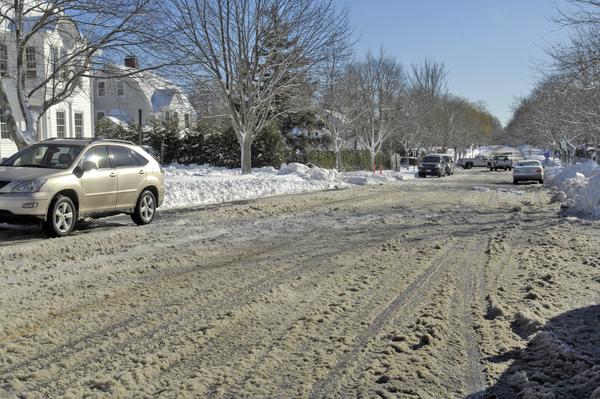
South Main Street in Southampton Village on Thursday afternoon. DANA SHAW
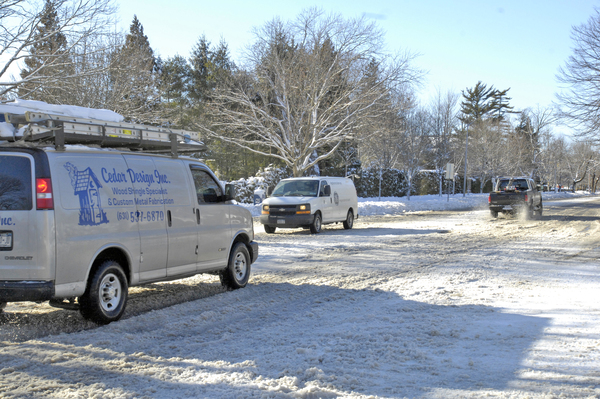
Hill Street in Southampton Village on Thursday afternoon. DANA SHAW
Southampton Village officials are expected to meet today, January 20, to review what many considered to be an unsatisfactory effort to clear the village’s streets in the wake of last week’s blizzard.
The village received a lot of post-storm flak from local residents and merchants. By last Thursday, a day after the snow from the January 11 and 12 storm stopped, main roads across the South Fork were, for the most part, fully cleared, but major roads in the village—including Hill Street, Main Street and Jobs Lane—were still covered in ice and compacted snow. Many sidewalks, likewise, were far from clear. “The roads are the worst I’ve seen in the 18 years I’ve been driving in the village,” United Parcel Service driver Rob Fleischmann said last week.
Mayor Mark Epley expressed disappointment in the work that was done, and—a week after the storm that buried the East End in an average of 12 inches of snow—said no reason for the poor performance had been pinpointed.
“It’s not like it’s the first storm we’ve ever had out here,” he said this week. “I’m not satisfied with the job the village employees did, period, from the maintenance of the sidewalks to the roads. They did a bad job. I’m not going to make excuses.”
The closest village officials came to providing a reason was that the village snowplows use rubber blades, not the steel blades used by Southampton Town, Suffolk County and New York State, as well as other East End villages, such as Sag Harbor, where roads following the storm were reportedly smoother than in Southampton Village.
Mr. Epley said his village does have one plow equipped with steel blades, but said he only learned this week that that plow is “broken down.” He said the village primarily uses the rubber blades because they are supposedly less destructive to the streets and less destructive to the plowing vehicles themselves.
The mayor said he plans to meet with John Brostowski, superintendent of the village’s Highway Department, which is responsible for snow and ice removal; Gary Goleski, superintendent for the village’s Department of Public Works; and Village Administrator Stephen Funsch and Village Attorney Richard DePetris to discuss what went wrong and what can be done going forward.
Mr. Brostowski said the sequence of heavy snow, followed by a pause, followed by heavy rain, sleet and more snow, and plunging temperatures early last Wednesday morning—coupled with the use of rubber, not steel blades, on the plows—were the cause of the still-lumpy roads.
He said traffic and speed limits were another factor: “Traffic was out, and it’s impossible to plow these main drags. Hill Street’s a killer. The speed limit’s 25 mph. How do we blast through this ice if we gotta go 20 mph and worry about rush-hour traffic?”
“We’ve been behind the 8-ball all day and it’s thawing out pretty good,” he said during a brief respite Thursday afternoon after having been up since 4:30 a.m. He also noted that motorists on the main streets make the work more difficult: “If people aren’t going to let us do our job, they’re their own worst enemy.”
Village employees from the highway, parks and building maintenance departments teamed up for storm cleanup, village officials said.
Mr. Epley noted that the village decided not to hire private contractors. The village usually uses its own employees for snow removal but has hired contractors in the past to supplement their effort. A pre-Christmas storm in 2009 cost the village approximately $70,000 in one day, he said. Village records include a list of nine contractors who were hired for that storm.
Village officials this week could not provide a specific figure for this year’s snow budget, though $600,000 has been budgeted for contractual services for the highway and beaches, a broader category that includes some snow removal, though not equipment and supplies.
Bob Schepps of the Southampton Chamber of Commerce said he thought Southampton did a “pretty good job” but added, “Snow is a four-letter word for business.”


