


 1 Photo
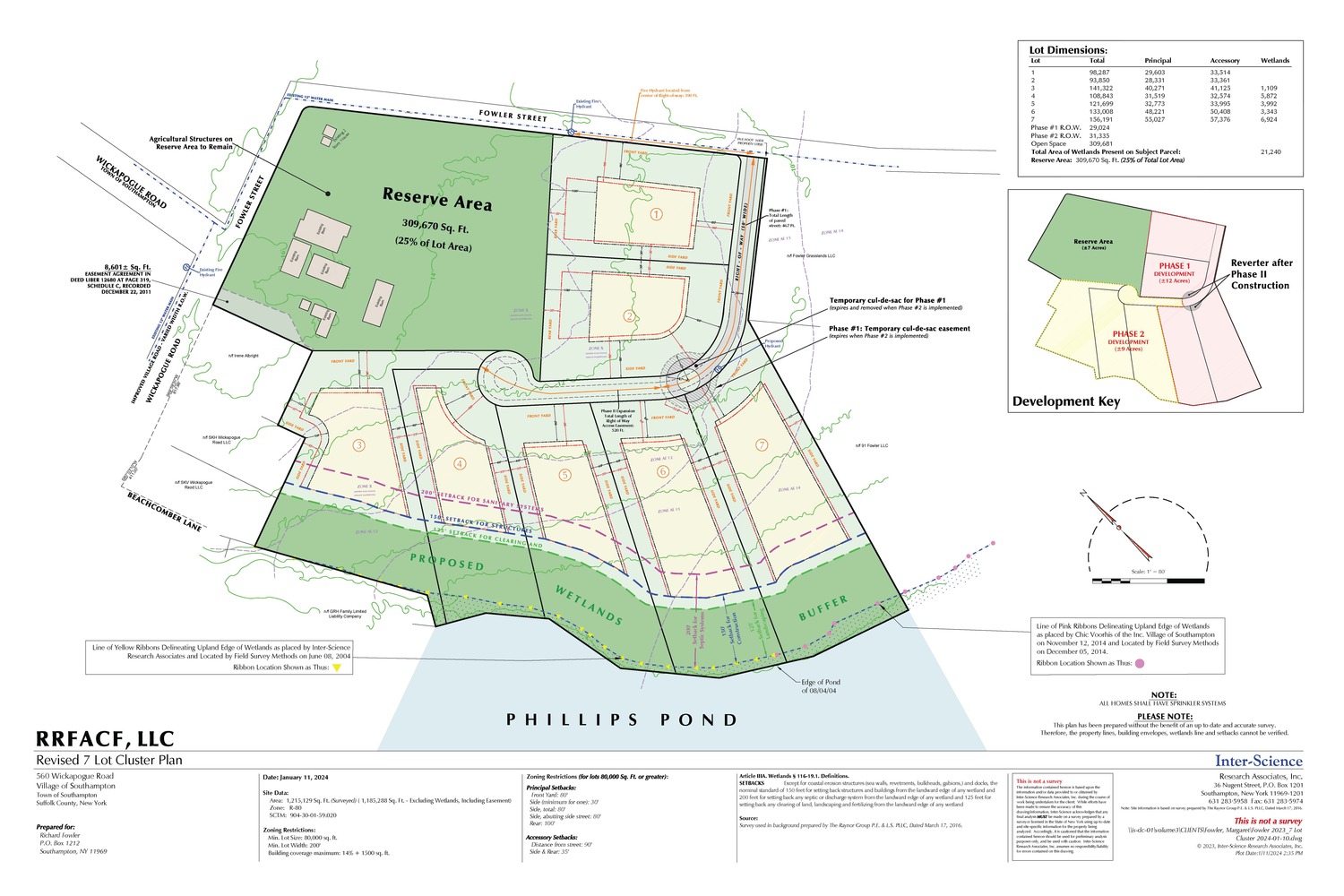
The Southampton Village Planning Board granted Sketch plan approval to a seven-lot subdivision with an agricultural reserve on former farmland owned by the Fowler family on Wickapogue Lane at its most recent meeting.
The Southampton Village Planning Board approved, in a 3-1 vote, a sketch plan for a proposed seven-lot subdivision with an agricultural reserve at 560 Wickapogue Lane on 28 acres of former farmland owned by the Fowler family.
The sketch plan is the first step in what is likely to remain a long process toward full approval. The board approved the plan contingent on board attorney John Bourquin adding language to the resolution for approval stating that certain conditions still need to be negotiated related to a conservation easement, creating access to Phillips Pond, which borders the southern end of the property, and providing open vistas to the agricultural reserve, which accounts for 25 percent of the area of land, in the northeast corner.
“There’s still a lot of work to do on the nuts and bolts of the agricultural reserve and the specifics of governing the reserve,” Planning Board Chairman Mark London said at the meeting.
Planning Board member Amanda Grove-Holmen voted against approval, while London and members Deborah Edwards and Alan McFarland voted in favor.
Willa Bernstein, a board member who had been an outspoken critic of the plan, resigned from the board earlier this month, not long after a contentious back-and-forth at the April 1 meeting with John Bennett, the applicant’s attorney.
Grove-Holmen said she voted against approval because she wanted to see more safeguards and guarantees firmly in place related to the agricultural reserve and what can and cannot be done on the land before moving forward with any approvals.
“The commitment to farming and what happens when farming ceases is a major consideration for this board,” she said. “We have to get serious about the language.”
Borquin said that approving the sketch plan would not prevent putting those safeguards in place.
“It’s very rare to have full drafted documents at the sketch stage,” he said, explaining that the sketch plan is simply an agreement on the “form and layout” of the proposed subdivision, and the discussion can continue after approval on finer details, which Bennett will draft and submit, and the board will then consider before approving both preliminary and final approvals.
London agreed with that line of reasoning. “We have a general outline,” he said. “Clearly, there need to be modifications, and we’ve got a long way to go on the details and conditions on the specific wording of the agricultural reserve and conservation easement.
“I don’t want to start negotiating that at the sketch plan approval stage. I don’t think it’s appropriate, and it isn’t typically done. I think we will revisit those issues at a later stage, when it’s typically done.”
Edwards ultimately voted to approve the plan but said she wanted to make sure that buildings that remain on the property, such as barns, could never be repurposed into something else, such as workforce housing. Bennett, who spoke at the meeting, offered vigorous reassurances that that wouldn’t happen.
“It’ll be a cold day in hell before anything happens on the agricultural parcel besides agriculture,” he said, pointing out that the village code would not allow for workforce housing there.


 Cailin Riley on Apr 17, 2024