


 4 Photos
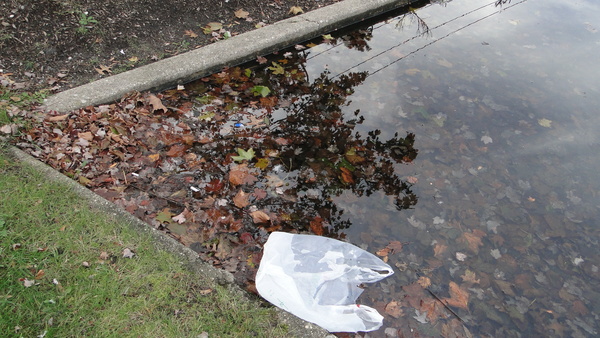
A ban of everyday plastic shopping bags in Southampton Village, a measure aimed at protecting the environment, goes into effect on Sunday.
But are shoppers and merchants ready? Recent conversations with both groups in the village revealed a mixed bag of opinions.
The Village Board approved the ban in April, marking the first of several local efforts proposed in East End municipalities prohibiting the use of plastic bags by retail shops and food outlets. The Southampton Advocates for the Environment, or SAVE, lobbied for the measure in an effort to improve the environment by encouraging the use of reusable checkout bags and banning the use of plastic bags for retail checkout. Retailers are encouraged under the law to make reusable bags available for sale.
“Am I prepared? I’m going to have to be, yeah,” Helen Dykeman, who lives on the border of Tuckahoe and North Sea, said as she wheeled a shopping cart toward the entrance to Waldbaum’s supermarket on Jagger Lane on Tuesday afternoon, with her daughter, Morgan, 8, at her side. “We sometimes shop here, so, yeah, I’ll have to bring my own bags. It’s going to be something I have to get used to.”
She arrived at the store without bags of her own but said she would likely buy some reusable bags there at the supermarket.
Waldbaum’s has said it will offer shoppers two options: recycled paper bags for 5 cents each, the proceeds of which would go to the Peconic Land Trust; and reusable bags made of recycled materials for 99 cents each. For every paper or reusable bag customers bring to pack their groceries, they will receive a 5-cent rebate.
Morgan said she likes the law because she feels the sea turtles will no longer mistake plastic bags for jellyfish. Indeed, the village law cites that non-biodegradable bags can choke marine life and clog sewers, and used that as a main justification for the legislation.
When asked if she was ready for the change, Debi, a resident of the Shinnecock Indian Reservation who had just wrapped up her shopping at Waldbaum’s on Tuesday, replied, “No.” But after a moment, she realized she was, adding that she has plenty of reusable bags she can use.
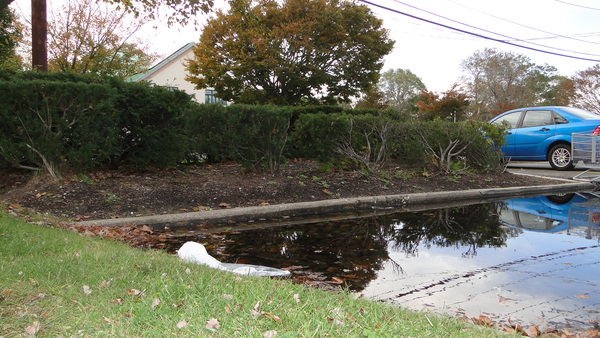
“I guess it’s a good thing, because, you know, the bags are a nuisance—like right there,” she said as she nodded toward the curbside, where an abandoned white plastic bag sat. “I don’t mind the other bags, because I have plenty of them. It’ll be for a good cause.”
Mary Donovan, a North Sea resident who was shopping at Waldbaum’s on Friday, lauded the law. “I think it’s a good idea. Europe has done it for years,” she said. As for the plastic bag in her cart, she said she would reuse it to handle kitty litter at home.
“I’ve always been bringing my own bags, though I don’t have them with me today,” said Lorraine Zingone of North Sea, as she pushed her cart outside of the supermarket.
Others appeared less prepared.
“You’re not allowed to use these anymore?” Bob Giglio of Hampton Bays asked, lifting up his plastic bag full of groceries. Mr. Giglio said he would have to remember to bring reusable bags. “I have my own—I just always forget them. They’re buried in my car,” he said.
Sylvia Clark of Sag Harbor said she, too, was unprepared. “I’m disappointed to see it. I have to say that, so, no, I’m not ready,” Ms. Clark said. “Convenience will be affected, but I’ll learn. I’ll bring my tote bag.”
Village code enforcement officials have made the rounds in recent days reminding merchants of the upcoming mandate, said Village Mayor Mark Epley, who voted in favor of the law.
Roger Blaugh, a SAVE member who pushed hard for the legislation, said that the SAVE will be giving away free reusable shopping bags on Saturday, Sunday and Monday in the village to help shoppers get started. The bags were donated by village merchants, he said.
The law applies solely to retail checkout bags. It does not include plastic produce bags or plastic bags larger than 28 inches by 36 inches. The legislation is also limited to retail stores, sidewalk sales, farmers markets, flea markets and restaurants. It does not include yard sales, tag sales or other sales at homes or by nonprofit organizations. Retailers would have to provide only reusable bags made of cloth or another fabric, durable plastic that is at least 2.25 millimeters thick, or recyclable paper bags that display the words “reusable” or “recyclable,” at checkout.
Any business owner convicted of violating the law could face a fine up to $1,000 and/or 15 days in jail. Mr. Epley said, however, that the village would be lenient until everyone got accustomed to the law. “We’re not going to run out and arrest everybody,” he said. “We’ll remind people.”
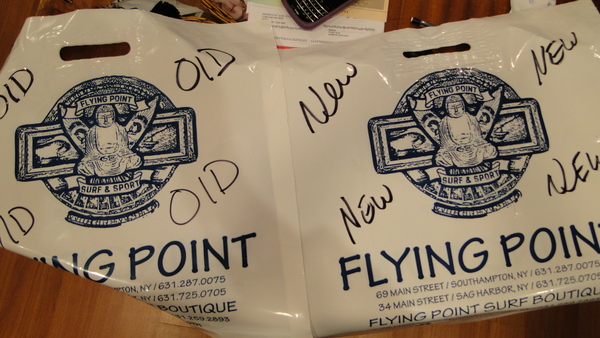
At businesses up and down Main Street and Jobs Lane last week, some stores, such as the Flying Point Surf Shop, already had their new bags in place. Others, such as Norah’s clothing store on Jobs Lane, lamented that they had not yet used up their bulk orders of plastic bags marked for banishment.
Mr. Epley said exceptions could be made regarding surplus bags, but a time line would have to be set.
John Grecu, owner of The Village Gourmet Cheese Shoppe on Main Street said he was prepared with new paper bags, but complained about their higher cost.
At Catena’s Market on Main Street, employees showed off their new paper bags, but said that elderly customers often specifically ask for plastic ones because they are easier to carry on one’s wrist, especially if one is also toting a cane or umbrella.
Is the mayor himself ready for the ban? Yes, he said: His oldest son, Zach, 24, bought a box of 50 reusable shopping bags for his parents as an anniversary present in May.


 Colleen Reynolds on Nov 2, 2011