


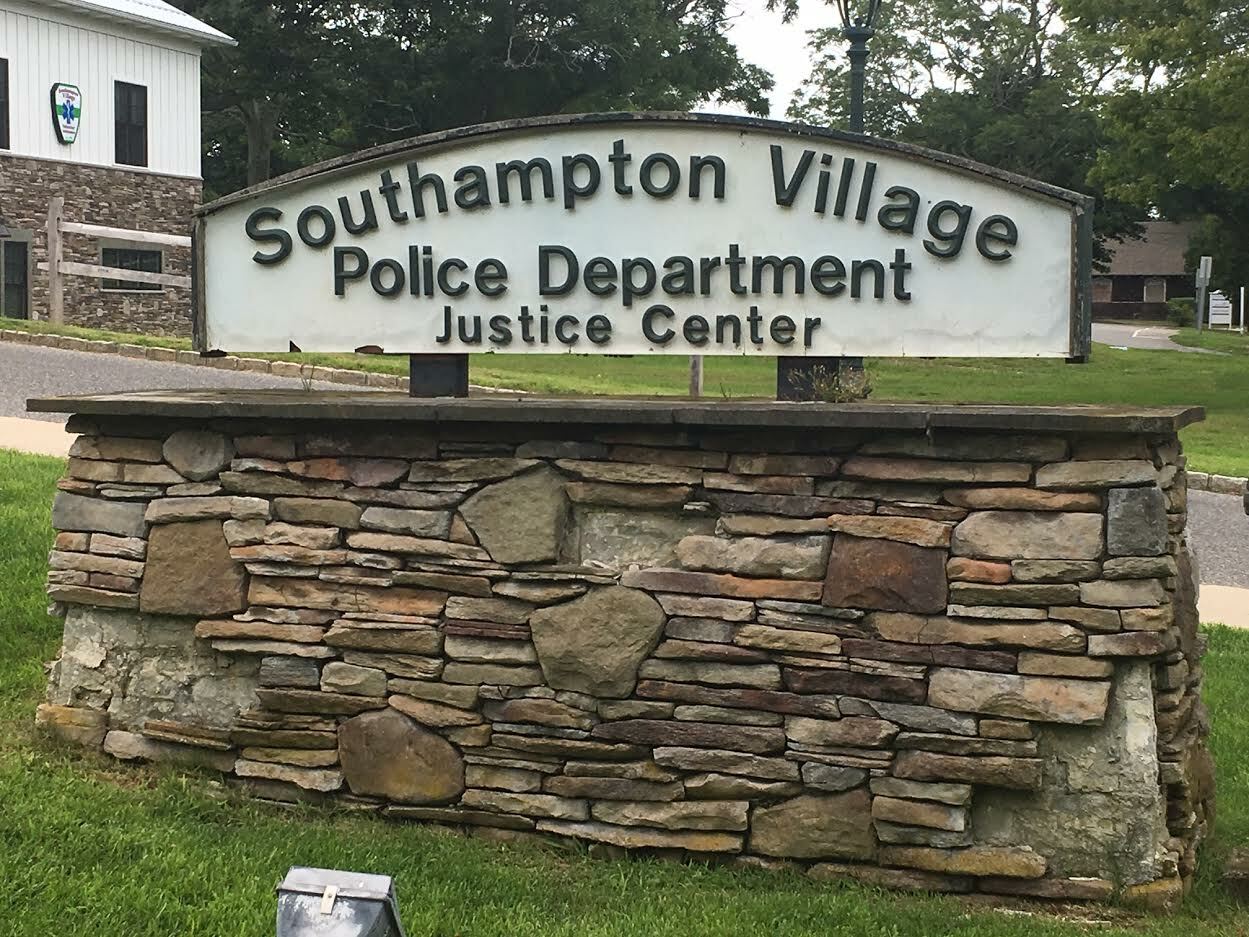
 2 Photos
The community task force convened, per the governor's executive order, to eye Southampton Village Police activities, met for the first time this week.
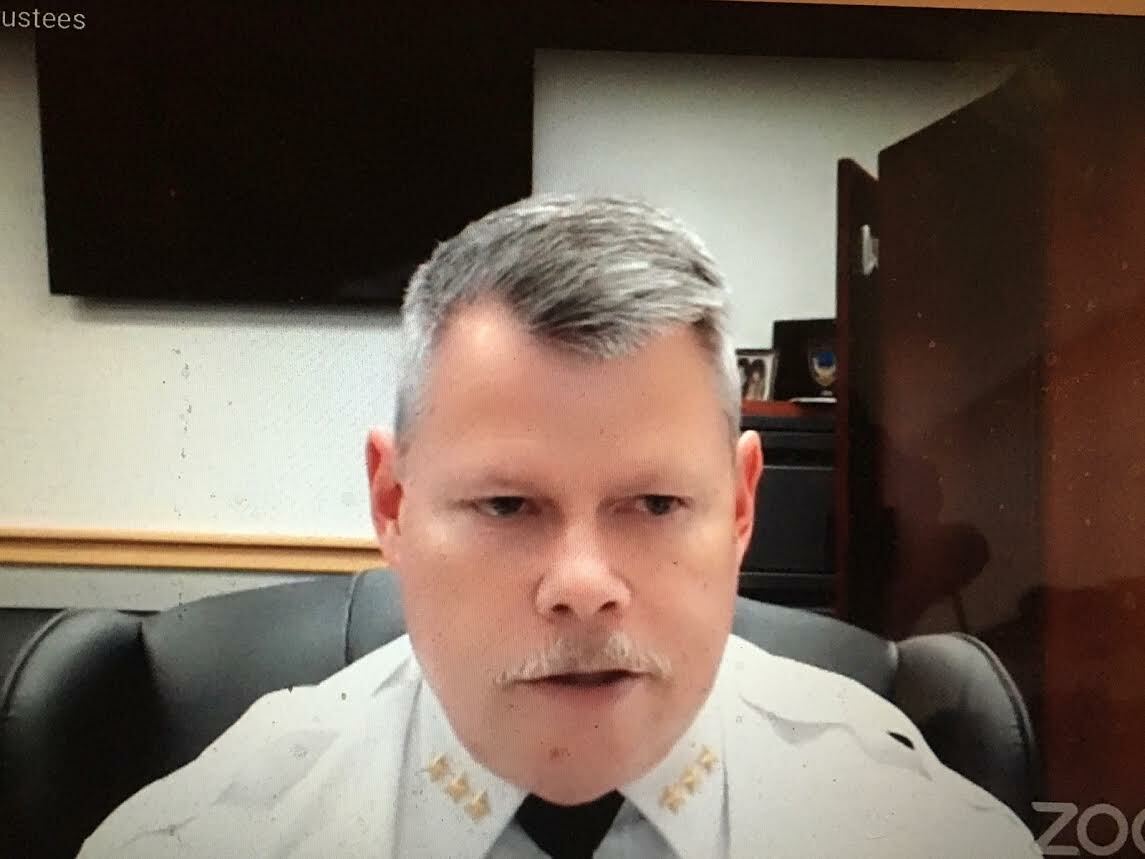
Southampton Village Police Chief Thomas Cummings gave an overview of his department's work toward meeting the goals laid out in Governor Andrew Cuomo's reform requirement during the stakeholder teleconference.
If it’s not going to be real, local Black Lives Matter activist Willie Jenkins doesn’t want to participate in the Southampton Village Police Reform and Reinvention Stakeholder Group. He told the panel as much during its maiden Zoom teleconference on January 13.
In the wake of the death of George Floyd at the hands of Minneapolis Police last May, Governor Andrew Cuomo issued an edict: Every police department in the state would participate in reform measures that include seeking community input. In December, the Southampton Village Board voted to create a stakeholder group. Last week was its first meeting.
“We started working on this as soon as the governor’s executive order came out. I think we’re in good shape, but you’ll tell us,” Southampton Village Police Chief Thomas Cummings offered, as he, Village Board members Mark Parash and Joseph McLoughlin, and facilitator Village Attorney Brian Egan welcomed members of the group.
There has been a significant amount of work on the reform plan already, Mr. Egan noted. “And while the department got a jumpstart, it’s now time for the public portion.”
The governor’s charge, Mr. Egan said as he described the scope of the group’s work, was that “this is to be a collaborative process.”
The community input portion of the reform plan was designed, he said, “to open the doors, and our eyes.” By executive order, every police department in the state must submit a reform and reinvention plan to Albany by April or risk losing state aid. But, Mr. Egan made clear, “The sense of the governor’s charge, is not that on April 1 we all go back to sleep.” Rather, he said, “we should all remain committed.”
The chief offered an overview of internal work the department has completed. His discussion of the results of a community survey drew the first comments from other members of the group.
Only 50 of the village’s 4,000 residents responded to the survey, which asks about interaction with the police and aspects of policing like response times.
Just one person responded negatively to a question asking if respondents were treated respectfully during an interaction with police. Fifty-seven percent said they are very satisfied with the police and nearly 10 percent said they were not satisfied. “That is something we need to work on,” the chief said.
No one who was arrested in the past responded to the survey. “That’s because it’s going back to the police,” community activist and group member Lisa Votino pointed out. Along with Mr. Jenkins, she said she feels an entity other than police should handle complaints.
Speaking to the survey and its results specifically, Ms. Votino said, that while being proactive is great, there should be a subcommittee or someone at Village Hall who reviews the survey results. The Reverend Donald Butler, another group member, agreed. He voiced the need for a buffer between survey respondents and the police department to “relieve some of that apprehension they have dealing with the police.” The reverend suggested using the local Black clergy. Congregations understand that if the pastor brings something to them “it’s not a trap,” he said.
Rev. Butler noted that of the 50 survey respondents, four were Black and four were Latino, adding, “That is a very small number.”
Isabel Sepulveda said outreach to the Latino community would be successful through the church. She also offered to help translate the survey into Spanish.
As the discussion turned to complaints against the police, the chief explained the department procedure for filing complaints and PBA President Michael Horstman noted that of 16,000 calls for service last year, there were only three complaints.
The numbers are skewed because people aren’t going to complain to police about something police did, Mr. Jenkins said. “That doesn’t make a lot of sense. If I get picked on by a bully, I’m not going to go to the bully’s friend.”
A one-time resident of the Hillcrest section of the village, he continued, “I got pulled over probably a hundred times in Southampton Village.” The police who stopped him “were never jerks,” but a traffic stop for a license plate light would turn into a full-fledged search of him and his car.
Emphasizing the officers who targeted him without probable cause were always polite, he added, “Just ’cause you were smiling doesn’t make it right.”
“There are biases that happen, and that’s what we need to address,” he said. “People from the Hill, from the [Shinnecock territory], they get pulled over specifically. … People who live on the other streets, it doesn’t happen to them.”
Turning back to the survey results, he reiterated, “Those numbers do not apply, they’re not real. I’m just being candid.”
Too many times, he said, when committees meet, “we do these number games. Please, don’t do that. I want us to have an honest thing. If we’re gonna do this, let’s do it right. … Let’s don’t play this game, I would rather not be a part of this.”
Asked by Mr. Egan where a better forum for complaints about police might be, Mr. Jenkins said he would speak to his church. Ms. Votino, who is also on the town’s stakeholder committee, said the issue is a recurring theme. The town committee discussed having community leaders consider complaints about police.
The group discussed a wider distribution of the survey, with results given to members of the stakeholder group to review in advance of the next meeting in February.
Convened in December, the stakeholder group members are Ms. Votino, Mr. Jenkins, Rev. Butler, Det. Horstman, Ms. Sepulveda, Suffolk County District Attorney East End Bureau Chief Patricia Brosco, Father Patrick Edwards of St John’s Episcopal Church, Milena Sandoval, a social worker at Southampton Elementary School; attorney Willa Bernstein, May Zegarelli, a legislative aide with Southampton Town; former Southampton Town Councilman Daniel Russo, and Brendan Ahern, the deputy division chief of the trial division for the Suffolk County district attorney’s office.


