


 1 Photo
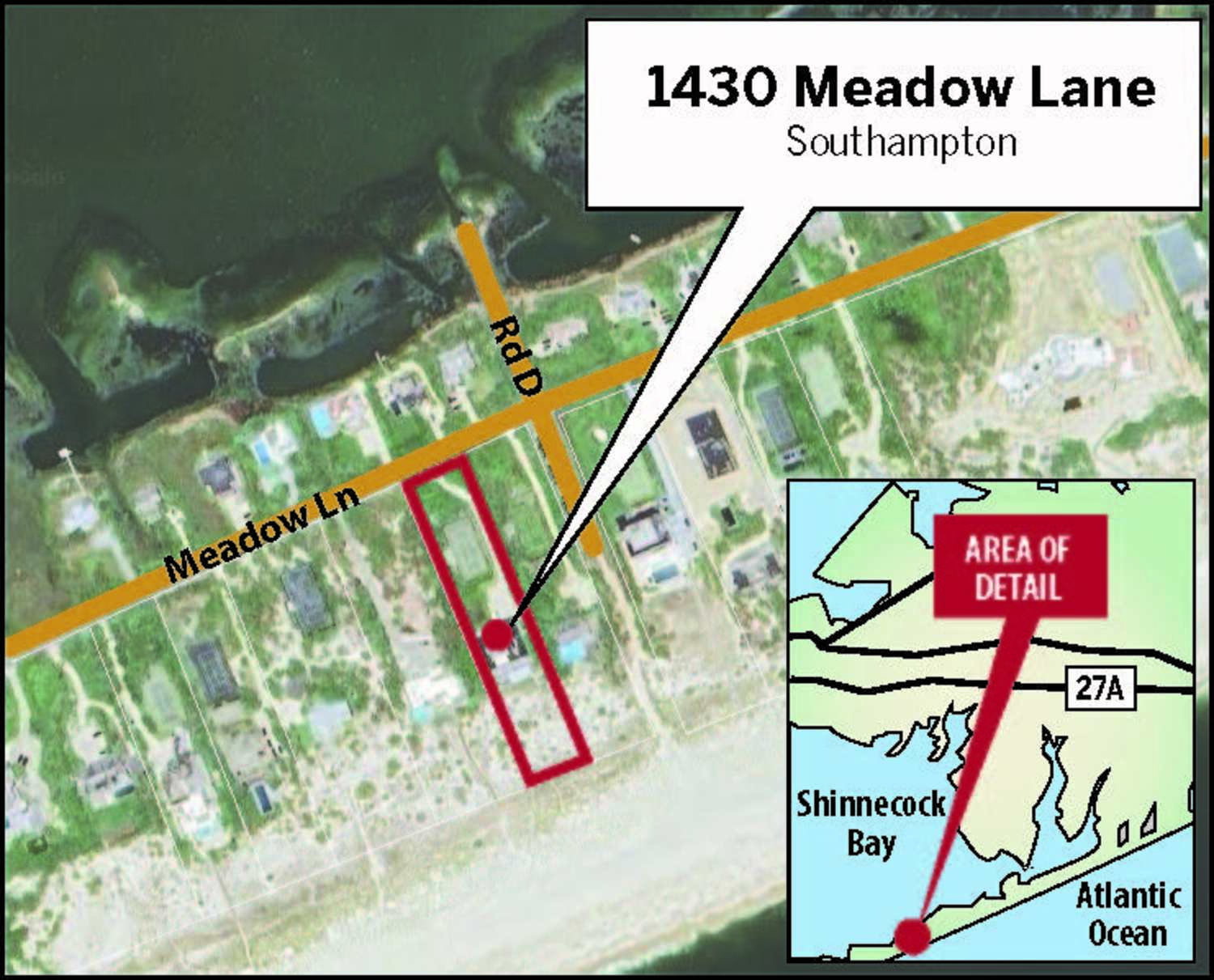
1430 Meadow Lane, Southampton
A State Supreme Court justice has struck down and reversed a Southampton Village Zoning Board of Appeals decision that denied the owner of 1430 Meadow Lane permission to expand the residence there.
Justice Christopher Modelewski ordered the ZBA to grant the homeowner variances to allow for the expansion of three second-floor bedrooms at the oceanfront home. He gave the ZBA 10 days to comply from the date of the order, July 18, and wrote that the board has a “misunderstanding of its role.”
The owner of the oceanfront home had applied to the ZBA in March 2023 for relief from the village’s pyramid law and height restrictions. The request was for 1,155 cubic feet of pyramid law relief and a height variance of 6 feet 1 inch. The ZBA denied the homeowner’s request in October 2023.
The existing house, at it highest point, is 6 feet taller than the requested height of the addition. The current owner has owned the home since before the more stringent height restrictions were adopted by the Village Board that made the variance request necessary for the planned expansion.
Modelewski wrote in his decision that the residence is “consistent with the prevailing pattern of development on Meadow Lane,” both as it exists and as proposed with the addition. He found that the 1,155 cubic feet of pyramid law relief is “minuscule” in terms of the existing home on 2.5 acres and the prevailing pattern of development on Meadow Lane.
The homeowner’s attorney, John Bennett, argued to the court that because the ZBA granted similar relief to Meadow Lane homeowners in 2016 and 2018, it was obligated to grant the relief again.
Modelewski wrote that an August 8, 2023, conversation between Bennett and the ZBA chairman at the time, Mark Greenwald, during a public hearing disclosed “a fundamental defect, the board’s misunderstanding of its role as a board of equity, which appears to the court to have prevented any meaningful application of the legislative mandate to engage in the required balancing test.”
The ZBA’s balancing test, spelled out in state law, requires the board to weigh the benefits to the applicant against the potential negative effects on the community’s health, safety and welfare.
Modelewski included in his written judgment an excerpt of the transcript from the August 8, 2023, hearing. In it, Greenwald argues that new village legislation can’t be effective if the ZBA grants variances “each time an applicant comes in and says this was passed while I still had ownership, or this was passed while I already had a preexisting tall building.”
Greenwald said the ZBA’s job “on behalf of the village is to maintain, in my view, the integrity of the village zoning code.”
Bennett countered: “No it’s not. Your job — what you just said has absolutely nothing to do with your job. Absolutely nothing. Your job is to grant relief in an appropriate case.”
Modelewski wrote that both Greenwald’s statement during the hearing and repeated references in the board’s written decision to the “importance of the village’s recent village code amendments restricting the height of dwellings” reveal an abandonment of the board’s mandate to decide on the application in accordance with statutory standards.
“The board’s decision is not at all supported by the record and was made contrary to previous similar matters that were granted. Accordingly, the Court finds the decision to have been made in derogation of law, and therefore grants the petition in its entirety,” Modelewski concluded.


