


 5 Photos
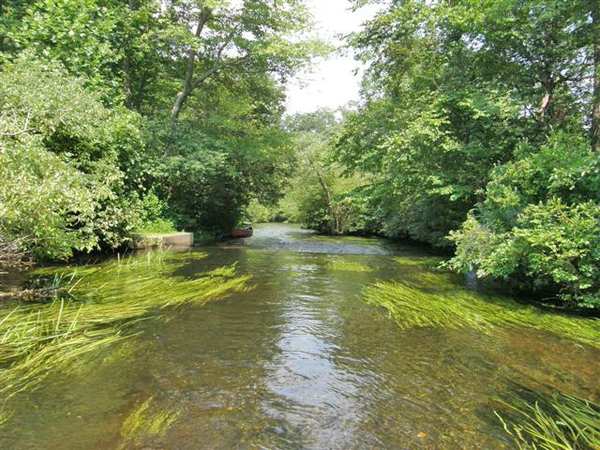
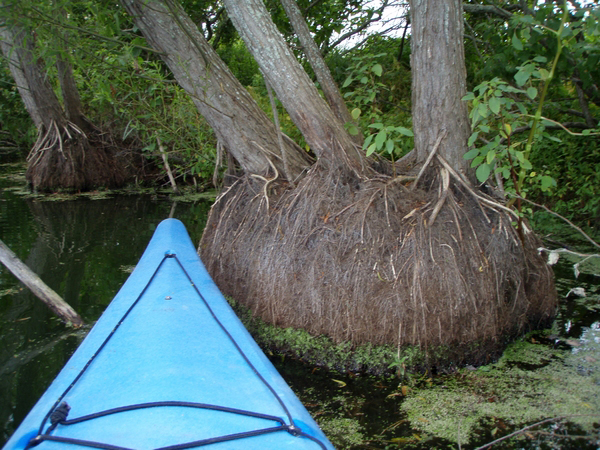
The upper Nissequogue River in Caleb Smith State Park meanders through a mature forest that includes many stately Tulip trees. Photo Elizabeth Marcellus
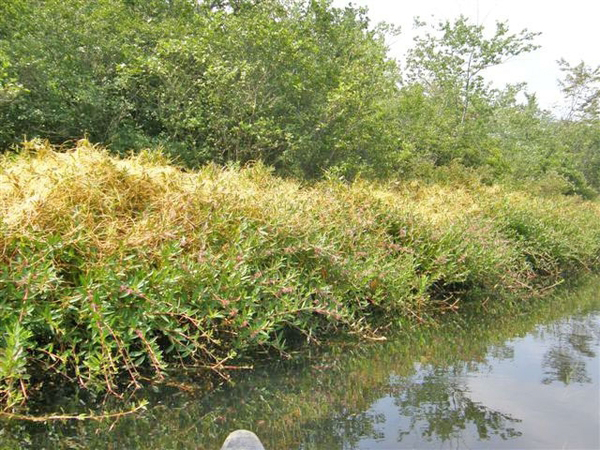
This section of the Nissequogue
is lined with the arching stems and purple flower clusters of water willow
also known as swamp loosestrife. Photo Elizabeth Marcellus
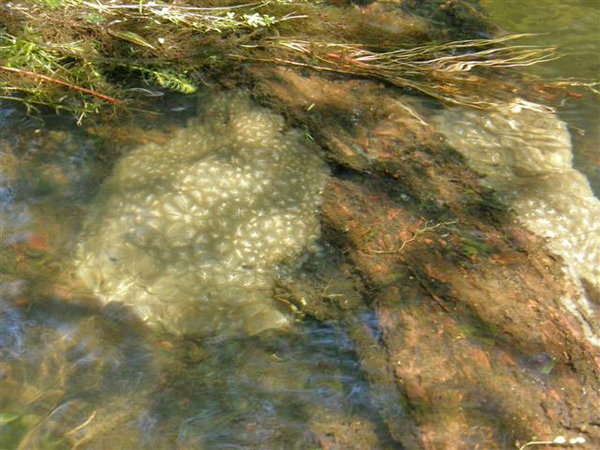
These jelly-like masses in the upper Nissequogue
During the first week in August, I received permission to paddle the upper stretch of the Nissequogue River through Caleb Smith State Park, a section managed for fly fishermen and closed to paddlers. The trip combined a cleanup of the river with surveying for signs of otter. I had received recent reports of otter sightings and photos of otter signs from two park employees—Eric Powers and Henry Buenten—as well as naturalist Bob McGrath. The latter’s sighting was in June, a quarter mile or so downstream from the park.
This summer’s wet weather made the mid-summer paddle over the relatively shallow river quite easy and enjoyable, with water heights resembling early spring conditions. There was no sign of the otters at the two small ponds that feed into the Nissequogue—Vail and Lower Vail—where Eric had photographed otter scat and scrapes in March. But a short distance downstream, a well-established otter “latrine” was found at the river gauge dam.
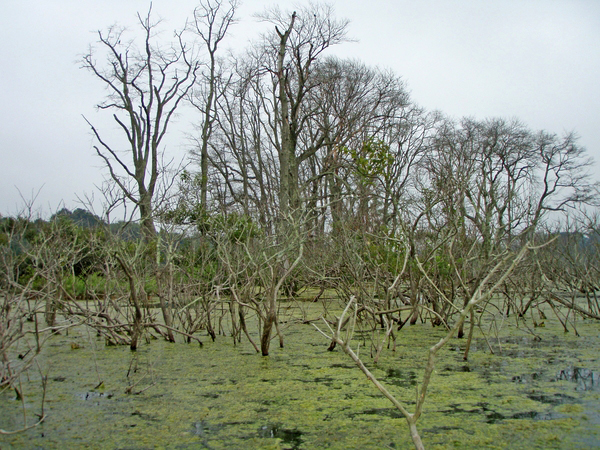
The next evening was the Long Pond paddle, part of a Wednesday evening series sponsored by the Southampton Town Recreation Department over the past several years. One of the benefits of revisiting a place year after year is the opportunity to note changes in the landscape, and learn what causes them. Several years of unusually high water levels in the pond have killed many of the pond’s shoreline trees and shrubs. Of interest here is the fact that these are wetland species that are adapted to growing in wet soil, for example, tupelos, red maples, highbush blueberry, sweet pepperbush and swamp azalea. But even these wetland species have their limits, and they have not been able to survive year-round inundation.
Later in the week was the annual Sagg Pond paddle. The pond was open to the ocean, and as we navigated around the shoals created by the “let,” deep-bodied, silvery fish—some type of herring—leapt out of the water. A small flock of gulls swam on the surface, scooping up individuals that may have been suffering from low oxygen levels.
John White of Sagaponack speculated that the schools of baitfish may have been driven into the pond by the recent run of bluefish along the ocean beach. Since then, a sill of sand has filled in the breach, and at high tide just a thin sheet of water spills into the pond where the baitfish remained trapped. It will be good feeding for the piscivores and scavengers for some time.
Mike Bottini is a naturalist and author of The Southampton Press Trail Guide to the South Fork, Exploring East End Waters: A Natural History and Paddling Guide, and The Walking Dunes: East Hampton’s Hidden Treasure. Check www.peconic.org for Mike’s field naturalist classes.


