


 2 Photos
One of a small flock of Hermit Thrushes residing in my backyard this month. JULIANA DURYEA JULIANA DURYEA
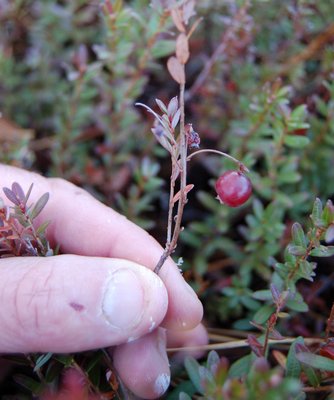
One of very few cranberries found in the Walking Dunes bog this month
The water bucket in the chicken coop froze one night last week, but other than that and a few other cool nights, mild and dry weather has prevailed. Those few cool nights, aided by diminishing daylight, have caused bay and ocean temperatures to finally drop down into the low-50-degree range. Sunday’s Ocean Rescue drill on the ocean beach in Amagansett had swimmers grimacing with “ice cream headaches” on the initial plunge into the surf. I resorted to backstroking with the rescue line to keep my exposed face clear of the water, and was fortunate to have fins on to keep up.While most trees have dropped their leaves by now, the American beeches in the Stony Hill area of Amagansett are still putting on a fantastic show of autumn color, their brilliant golden yellows looking particularly beautiful on sunny days. These are carotenoid pigments that are unveiled as the more abundant green-pigmented chlorophyll breaks down as the beech leaves senesce in autumn.
Carotenoid pigments help chlorophyll capture sunlight for photosynthesis. They degrade more slowly, but they too eventually disappear from the dying leaves, exposing the copper-colored tannins that persist even as the leaves drop to the forest floor.
Many young beech trees will hang on to their copper leaves throughout the entire winter, a phenomenon called marcescence. This is also common among oak saplings. I’m not sure what advantage this has for the plant, but the disadvantage becomes readily apparent following the first heavy, wet snowstorm of the winter.
A small flock of hermit thrushes has been residing in my yard this month. Considered by ornithologist John Bull as one of our state’s “finest singers,” it is listed as a common but local nester on Long Island, seeking out brushy woodlands in the pine barrens and along the north shore of Long Island west into Nassau County.
It is most numerous here in October and April, as a migrant, and is considered a rare winter resident in these parts. It must be feeding on the fall fruit crop here—dogwood, inkberry and Virginia creeper, all nutritious foods that will be gone soon.
Speaking of fruit, I visited my favorite cranberry picking area this week and couldn’t even manage to harvest a handful of berries. Hurricane Sandy pushed saltwater into the bog last fall, and although it appears that most of the cranberry plants have survived, the dousing seemed to destroy the flower buds. It also impacted the orchid bloom last June; I could not locate any traces of the rare lycopodium (bog club moss) nor any of the insectivorous sundews in the area.
This state-owned and -managed bog is currently being treated for phragmites removal. I assume that the state is monitoring the status of all the rare plants along with the phragmites as part of this project. It will be interesting to see how the 2014 season fares.


