


 1 Photo
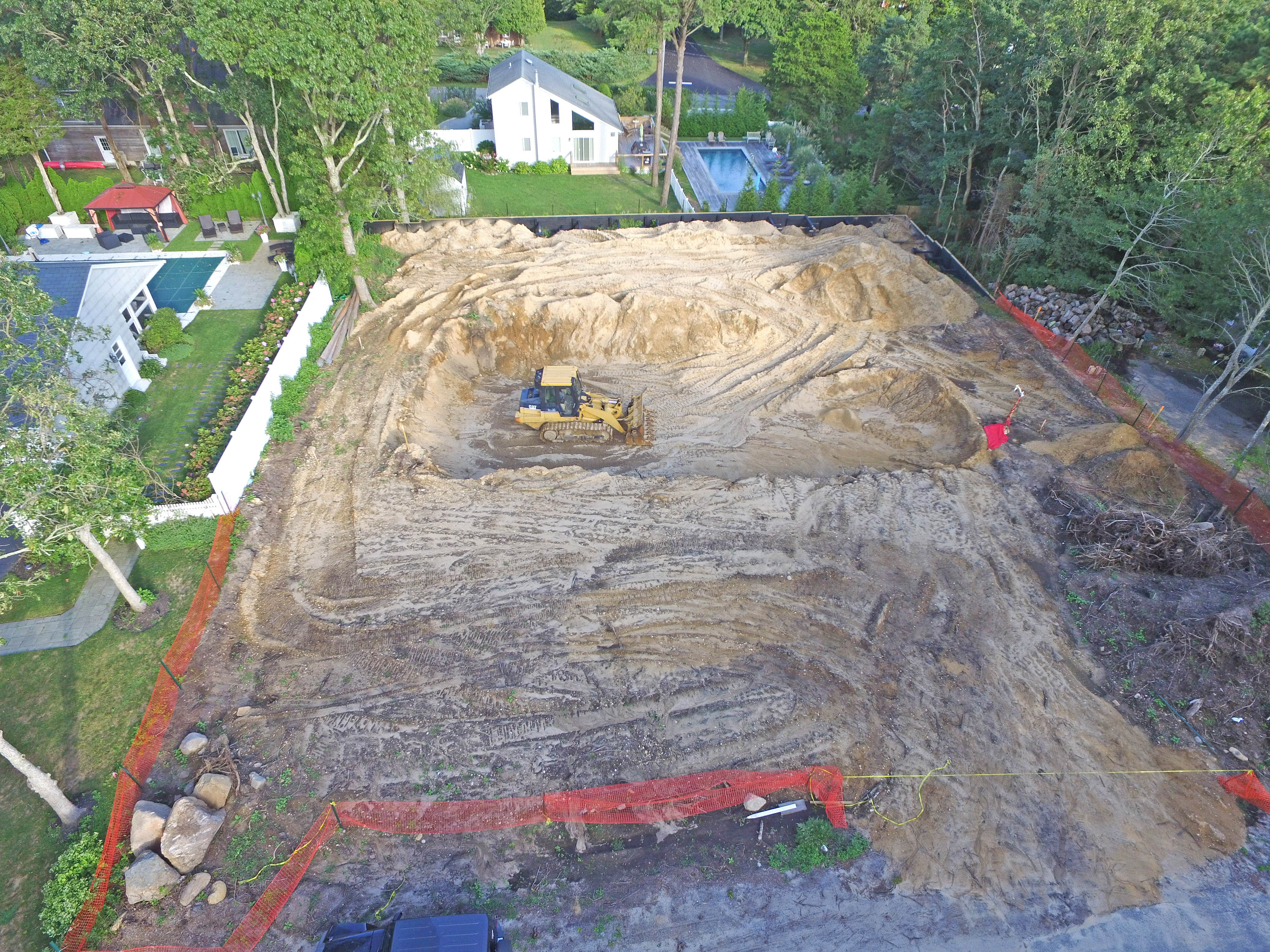
The Hawthorne Road property in Shinnecock Hills, where ancient remains of a member of the Shinnecock Indian Nation were disturbed during construction in August 2018.
Just a little more than four months after Governor Kathy Hochul vetoed a bill that would have provided protection for unmarked graves — a measure supported by the state’s Native American tribes — the New York State Legislature on Monday passed a revamped version of the measure as part of a whirlwind legislative week tied to the completion of the state’s $229 billion budget.
Assemblyman Fred W. Thiele Jr., who guided the bill through the Assembly, said Hochul had agreed to sign the measure as part of the entire budget package, even though it is a stronger version of the bill she vetoed in December. At that time, she cited concerns that the law would not provide enough protection for owners of private property on which old, unmarked graves were discovered.
Members of the Shinnecock Nation, who have long called for protection of land that could contain the graves of their ancestors, hailed the passage of the law.
“What was going on behind the scenes was a big effort by the New York tribes to come together and negotiate as one,” said Shinnecock Tribal Chairman Bryan Polite. “The tribes came together to help pass landmark legislation that really should have happened a long time ago.”
“I’m so happy it got done and this law is on the books,” said tribal attorney Tela Troge. “The ancestors of the tribes in New York are now protected against desecration by residential or commercial construction.”
Troge described the negotiations as “a grueling process,” but she said the end result was “a very strong bill” that makes it easier to protect unmarked graves by providing tribes and other interested parties more time to act when they are discovered.
New York had been one of only three states — New Jersey and Wyoming are the other two — that did not have a law on the books protecting ancient Native American graves.
With no state protections in place, members of the Shinnecock Nation, citing widespread development of their Shinnecock Hills territory, had asked Southampton Town many times over the years to adopt its own graves protection law. The Town Board finally did so, in September 2020, two years after remains were discovered at a construction site on Hawthorne Road, just west of Sugar Loaf Hill, which the tribe says is its most sacred land. That property was purchased with money from the Community Preservation Fund, including a contribution from the tribe.
Although the new law aims to protect Native American graves, Troge said it is also intended to protect the graves of enslaved people or Revolutionary War soldiers. Both were often buried in mass graves, or unmarked ones, she said.
Troge said the most important changes to the bill were a number made to required timelines, which were extended.
“It was difficult trying to negotiate with an executive office that tried to set a timeline so short that nobody could implement it that quickly,” she said.
In the final version, timelines allowing only 10 days of notice for interested parties to intervene were extended to as long as 60 days, she said.
Basically, the law requires that when an unmarked grave is discovered that it must be reported, and a municipality must issue a stop-work order and contact the medical examiner, who, in turn, has four days to determine whether or not the grave is 50 years old or older. If so, they are required to notify the state archeologist and the Native American Burial Review Committee, which would then launch an effort to find direct descendants and set in motion a plan of action to either rebury the remains or remove them.
Last December, the governor also vetoed a bill sponsored by Thiele that would have restored state recognition to the Montaukett tribe. That recognition was stripped in a 1910 state court case by Justice Abel Blackmar, who ruled that the tribe no longer existed as a defined community. The Montauketts have been fighting to regain that recognition for decades.
Thiele said the aim of that bill was to right an obvious wrong and restore the Montaukett tribe’s status. He said he would reintroduce the bill later this year.


 Stephen J. Kotz on May 3, 2023