


 1 Photo
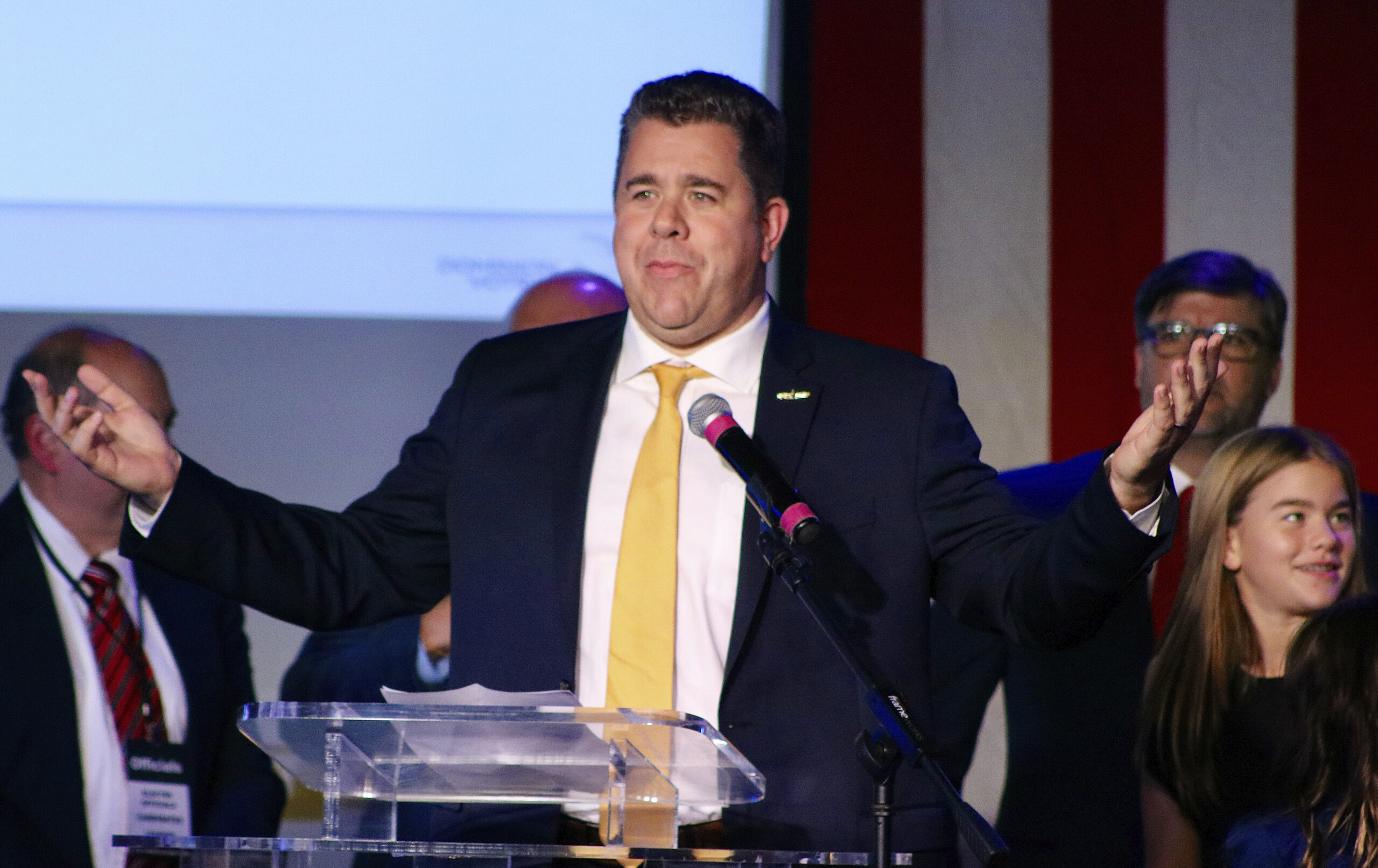
U.S. Representative Nick LaLota FILE PHOTO
The New York State Legislature this week has proposed new boundaries for the state’s 26 congressional districts after rejecting on Monday the redistricting maps that were presented to it by a bipartisan commission earlier this month.
Assemblyman Fred W. Thiele Jr. said the new maps, released Tuesday, tweak the lines of several districts on Long Island and make other minor changes upstate.
Thiele added that the legislature was expected to vote to accept the new district lines on Wednesday, February 28.
“The new lines are pretty similar to the old lines,” Thiele said. “The changes are largely around protecting communities of interest” such as keeping a complete town or county in one district whenever possible.
As an example, he said portions of Moriches that were in the 2nd District have been added to the 1st District, while a portion of the 1st District in Huntington has been moved to the 3rd District.
Thiele said he thought both incumbent Republican Representative Nick LaLota of the 1st District and Democrat Tom Suozzi, who was recently elected in the 3rd District, would benefit slightly from the changes.
When the redistricting commission sent its recommendations to the statehouse, “my concern was the legislature as a body would do what it did two years ago and gerrymander the lines,” Thiele said. Instead, “it’s possible its maps may get a fair amount of bipartisan support.”
“Not only do I think it will hold up in a court challenge, I don’t think there will be an institutional challenge from the Republicans,” Thiele continued. “There’s a feeling the lines are fair.”
The legislature’s decision to revisit the congressional district maps is the latest twist in a redistricting saga, dating back to 2022.
That year, when the independent redistricting commission made up of five Democrats and five Republicans, charged with updating the state’s congressional boundaries following the 2020 Census failed to reach a consensus, the Democratically-controlled legislature took on the task itself.
Republicans sued over the Democrats’ gerrymandered lines, and the Court of Appeals, the state’s highest court, came down on their side, ordering new maps to be drawn by a special master from Pennsylvania. That redistricting helped Republicans pick up four seats in the 2022 election and contributed to the Republicans’ winning a slim majority in the House of Representatives.
Last year, Democrats went back to court, arguing that the district lines drawn for 2022 were for that election cycle only, and the Court of Appeals agreed, ordering the redistricting commission to try once again to come up with fair maps.
In a surprising development, the commission on February 15 released a redistricting plan that was almost the same as that drawn by the special master.


 Stephen J. Kotz on Feb 28, 2024