


 1 Photo
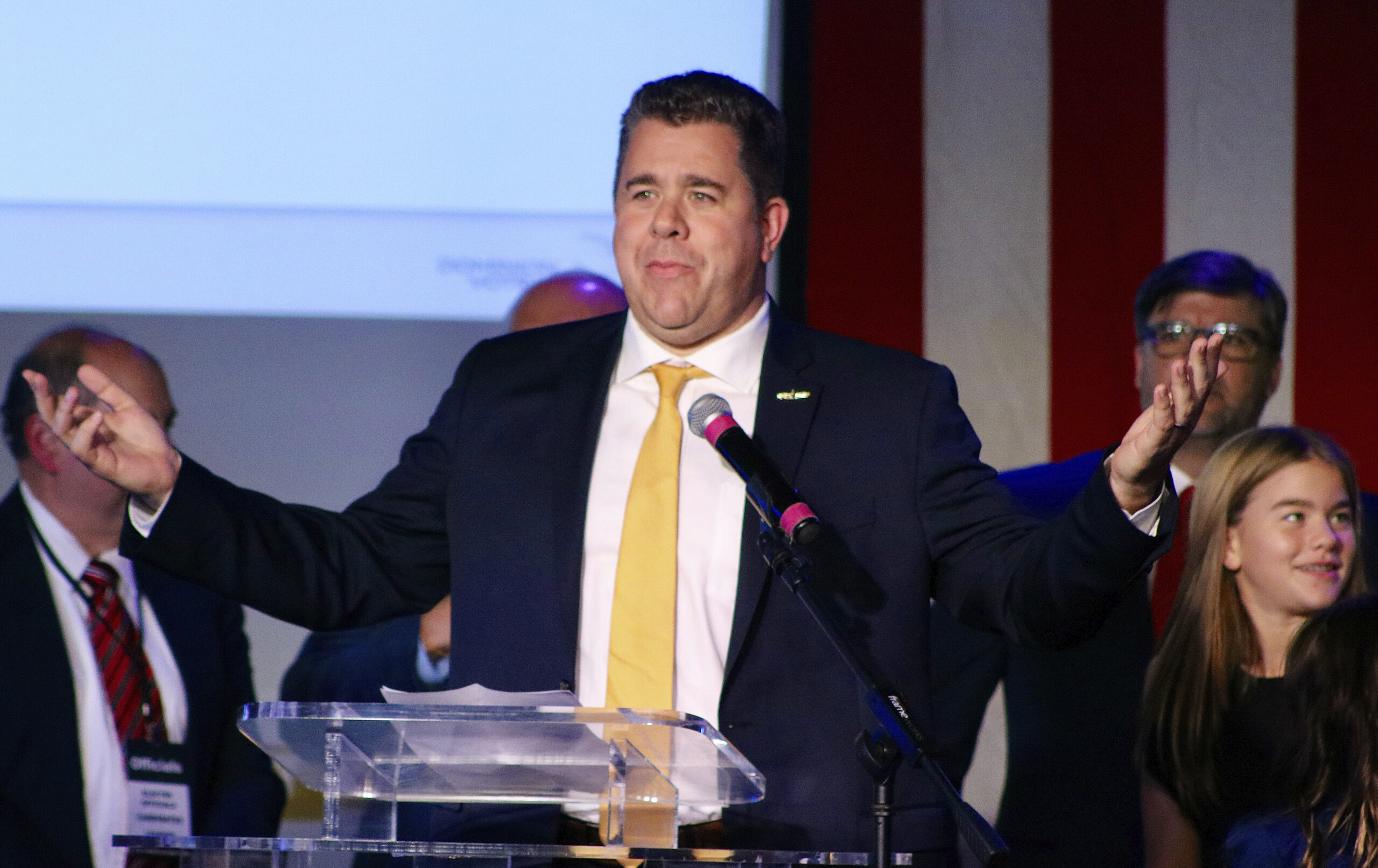
U.S. Representative Nick LaLota FILE PHOTO
New York State’s bipartisan redistricting commission, which was hopelessly deadlocked when it tried to draw new lines for the state’s 26 congressional districts in 2022, surprisingly reached consensus on proposed new boundaries last week that will largely preserve the status quo.
The slightly tweaked district lines will be sent to the State Legislature for its review. Although the legislature, which reconvenes on February 26, could reject the proposed boundaries or make major changes to them — and risk the likelihood of a lawsuit if it does so — State Assemblyman Fred W. Thiele Jr. said on Friday he expected it would adopt the recommendations.
“I don’t think there’s any chance the legislature will reject them outright. There could be minor changes if there is an error that requires a tweak,” he said. “They will likely be overwhelmingly approved by the legislature.”
He added that he would vote to adopt them.
The state’s congressional districts will largely follow the boundaries established by a special master in 2022 after a bid by the Democratic-controlled legislature to gerrymander the lines in their favor was thrown out by the Court of Appeals, the state’s highest court, after a challenge was brought by Republicans.
The new lines will not make any changes to district boundaries on Long Island, Thiele said. That would be good news for first-term Republican Nick LaLota, whose 1st District seat, which has leaned Republican for the last decade, had been eyed by Democrats as one that could be reconfigured to their advantage.
Statewide, a seat in the Syracuse area that is currently held by first-term Republican Brandon Williams will most likely become a Democratic lock, and two other seats in the Hudson Valley region, one held by a Democrat and one by a Republican, likely will become safer for incumbents.
“I was hearing whispers in Albany that there was going to be an agreement,” Thiele said. “But I didn’t know what it would look like.”
He speculated that the commission members found it safer to go with “the devil they both knew” than to try to make major changes to the boundaries and risk a return to court.
The commission’s surprising agreement could mark the end of a topsy-turvy redistricting process going back to 2014 when the State Constitution was amended to prohibit gerrymandering.
To avoid one party or the other using its statehouse majority to draw the lines favoring its candidates, the state established a bipartisan commission made up of five Democrats and five Republicans that would be tasked with redrawing legislative boundaries once every 10 years after each census.
The commission failed miserably at that task when it convened following the 2020 Census, with Democrats proposing one set of boundaries, and Republicans another.
Citing the commission’s inability to complete its job, the State Legislature took it upon itself to adopt new boundaries, but with Democrats in control of both the Assembly and the Senate, those lines were clearly drawn to favor their candidates, leading Republicans to sue.
After the Court of Appeals ruled in the Republicans’ favor, a special master redrew the lines that helped Republicans flip four seats from the Democratic side in the 2022 election, effectively leading to the current razor-thin Republican majority in Congress.
It appeared the battle had ended there, but Democrats filed a suit of their own, arguing the special master’s maps were only supposed to be valid for the 2022 election and that the commission was duty-bound to complete its work. Again, the matter went to the Court of Appeals, which this time ruled in the Democrats’ favor, sending the maps back to the commission for its review.
“Conventional wisdom would say with five Democrats and five Republicans, it’s not going to happen,” Thiele said of the commission coming to a consensus. But, he added, if the commission had failed to act and the legislature again tried to draw the maps, “it very likely would have ended up back in court.”


 Stephen J. Kotz on Feb 20, 2024