


 15 Photos
A screenshot of the walking tour
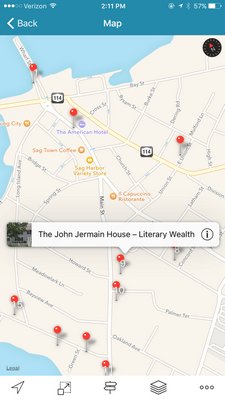
which tells the walker where to go on a map.

A screenshot of the walking tour
which tells the walker where to go on a map.
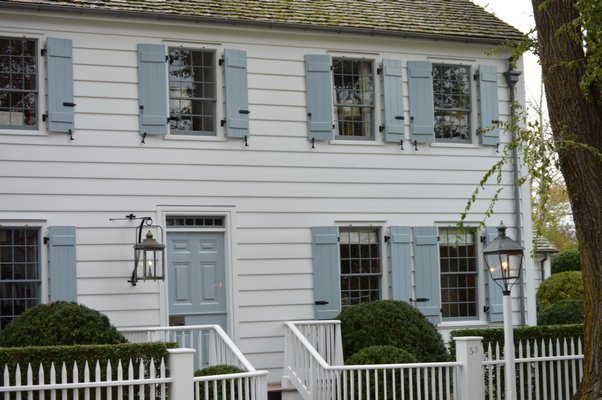
William Mulvihill lived in this home on Glover Street

which is also a stop on the literary tour. ALISHA STEINDECKER

The John Jermain House on the Sag Harbor Village literary walking tour. ALISHA STEINDECKER
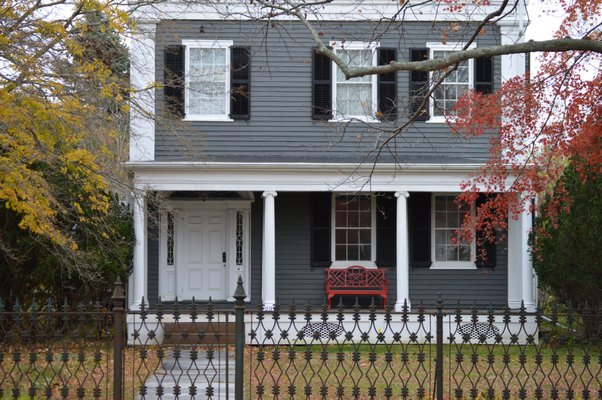
The John Jermain House on the Sag Harbor Village literary tour. ALISHA STEINDECKER
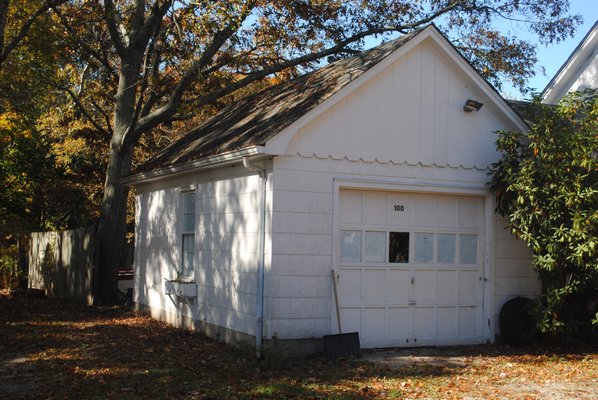
One of the homes on the Sag Harbor Village walking tour. ALISHA STEINDECKER

Julian Hawthorne
Nathaniel Hawthorne's son
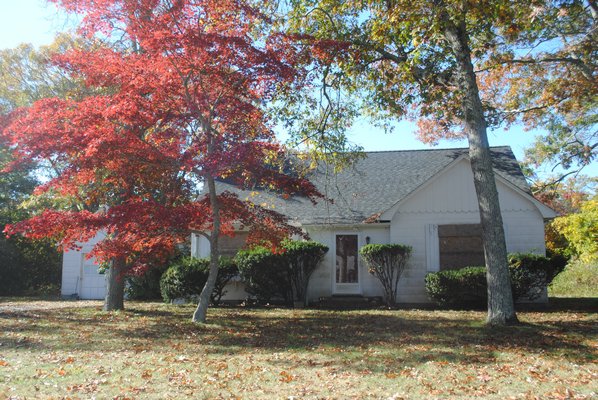
used to live here. ALISHA STEINDECKER
Julian Hawthorne

Nathaniel Hawthorne's son

used to live here. ALISHA STEINDECKER ALISHA STEINDECKER
'Tis the season to cozy up in front of the fire with a good book. Chances are it might even be a story told by an author who once did the same, right in Sag Harbor.
The village continues to be a literary hub, with “Of Mice And Men” just having closed at its Bay Street Theater. The author, John Steinbeck, lived nearby on John Street and sat writing in his backyard gazebo more than half a century ago.
If a reader ever wonders where an author was inspired to create certain characters, the literary tour on the Sag Harbor Walking Tours app, which ambles among the homes of authors and their favorite spots, can offer some insight. Perhaps the tour will even reveal a few clues as to where Lennie Small or Curley in “Of Mice and Men,” or Hannibal Lecter of “The Silence of the Lambs” came to life.
April Gornik, a developer of the app as well as the author of the literary tour, explained that the tour illuminates "Sag Harbor and the amazing diversity that this village represents."
All the walker has to do is download the app, which is free, and follow the red dots outlined on a map. Each dot represents a house that was home or haunt to one of a number of local literary figures. There are several tour apps of varying lengths for Sag Harbor Village—focusing on everything from trees to the largely African-American Eastville community to whaling captains and their widows—but the literary tour has 21 stops and takes about two hours to complete on foot.
Stop number one is the windmill at Long Wharf, where a sign honors Mr. Steinbeck. According to the app, the author would make a pit stop at the Cove Deli on the corner of Glover and Main streets each day and talk to other locals who were doing the same. He went to a bar called the Black Buoy, today the site of LT Burger, taking along his dog Charley, who stars in his late-career book about a 1960s road trip, called “Travels With Charley: In Search of America.” Mr. Steinbeck left for that trip from Sag Harbor after being delayed by Hurricane Donna, which necessitated a daring rescue of his boat in the harbor.
Another stop brings the walker to a nearby gray, three-story building with a bright red door at 66 Main Street, now Salon 66, where the tour-taker "meets" Hannibal Lecter—the infamous character brought to life by actor Anthony Hopkins in the film version of Thomas Harris’s novel “The Silence of the Lambs." Lecter's character was conceived right above what was then called Marty's Barber Shop (now Salon 66). The sign for the barbershop, with its blue writing, remains perched cozily above a newer one for Salon 66.
Mr. Harris, who spent much of his time writing there, still lives in Sag Harbor Village.
Just down the road, at 237 Main Street, a whaling captain once lived; later, Nathaniel Hawthorne's son, Julian Hawthorne, made the place his home. The gray house with navy shutters is adorned with porthole windows on the second floor. Today, a red bench on the front porch adds a splash of bright color, providing a contrast to the home's white trim.
The younger Hawthorne wrote a biography about his parents, called “Nathaniel Hawthorne And His Wife,” and though less famous than his father, published novels such as “Archibald Malmaison,” about how two personalities could exist within one body—a story written years before Robert Louis Stevenson’s ultimately more famous “Dr. Jekyll and Mr. Hyde," which explored a similar concept.
Feminism is brought to life at another stop on the tour. A two-story, all-white house with a stone path at 31 Glover Street was the summer home of Betty Friedan, who wrote “The Feminine Mystique.” Busting the myth that a woman is meant to be no more than a housewife, the book sold more than three million copies worldwide. Ms. Friedan also was the first president of the National Organization for Women, which aimed to help women become equals in society to their male counterparts.
"She was so interesting, and she managed such enormous odds for our time period," Ms. Gornik said of Ms. Friedan.
Sag Harbor was also a refuge for the famous monologist Spalding Gray, who wrote a good portion of his autobiographical monologues such as "Swimming to Cambodia," at his 19th-century Victorian home at 74 Madison Street. Performing his monologues on stage, Mr. Gray was most often accompanied only by a desk, a notebook and a microphone, yet he still managed to mesmerize the audience.
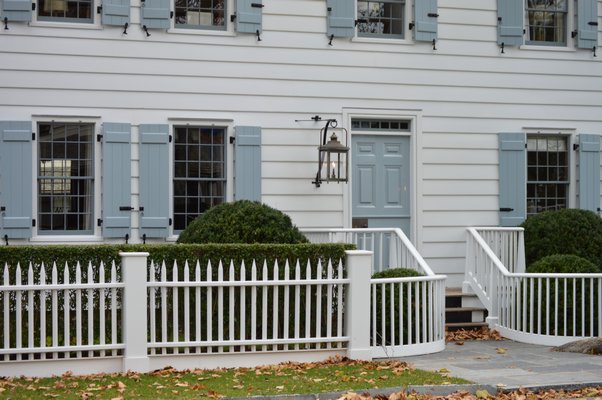
Also on the tour is a large gray house with blue shutters and a white picket fence at 53 Glover Street where William Mulvihill grew up and developed a passion for the environment and an aversion to development. He created the Anna and Daniel Mulvihill Preserve in Noyac, which encompasses 75 acres, including hiking trails.
Mr. Mulvihill wrote several screenplays, essays and novels, and is most famous for “The Sands of the Kalahari,” which was made into a movie, according to the app.
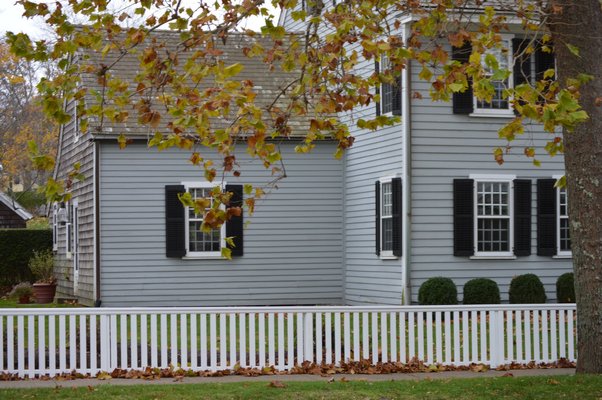
John Jermain lived at 221 Main Street, and what is arguably the literary center of the village—the John Jermain Memorial Library—is named for him. After he fought in the American Revolution as part of the Westchester Militia, he moved to Sag Harbor and lived in what today is a gray house with black shutters and a white picket fence out front.
Later on, Lyman Beecher, the father of Harriet Beecher Stowe, lived in the same spot. Mr. Beecher was a preacher at the East Hampton Presbyterian Church and also a guest preacher in Sag Harbor from 1799 to 1809; he was known to be a very anti-Catholic religious leader, according to the walking tour's guide.
Among the other stops on the tour are the former homes of Lanford Wilson, a playwright and winner of a Pulitzer Prize who lived in what is now a modest white home with white columns out front; poet George Sterling, who resided at the site of the former Stella Maris School; Lady Caroline Blackwood, a critic and novelist who lived in a three-story, large white home; Prentice Mulford, a philosopher who was born in the current Municipal Building, which used to be the Mansion House Hotel; and Nelson Algren, a novelist and short story writer who frequented Canio’s Books, which was founded in 1980 by Canio Pavone and is also a stop on the tour.
An Eastville home often visited by Langston Hughes, the summer home where the contemporary writer Colson Whitehead spent his childhood summers, the former home of the contemporary playwright Jon Robin Baitz, the now-condemned home of Helga and Annselm Morpurgo, publisher of "lesbian pulp fiction," the former Duke Fordham Inn, where James Fenimore Cooper had stayed, the birthplace of Olivia Ward Bush-Banks, the former home of William Wallace Tooker, and that of the Native American Nathan Cuffee—all these, too, are on the walking tour.
"Some of our authors are quite obscure," Ms. Gornik said. Others, not so much.


 Alisha Steindecker on Nov 30, 2015