


 3 Photos
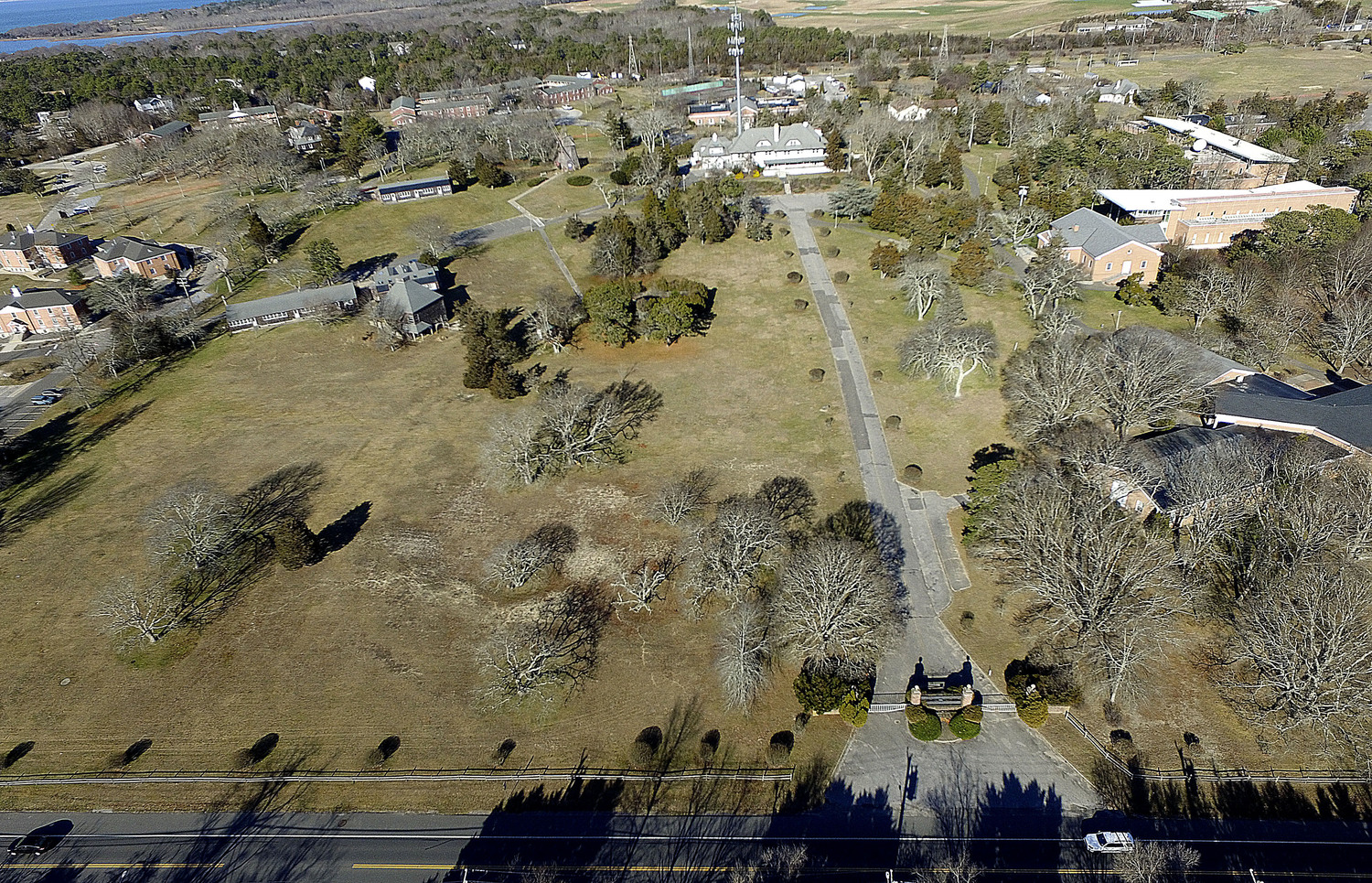
The Stony Brook campus in Southampton.
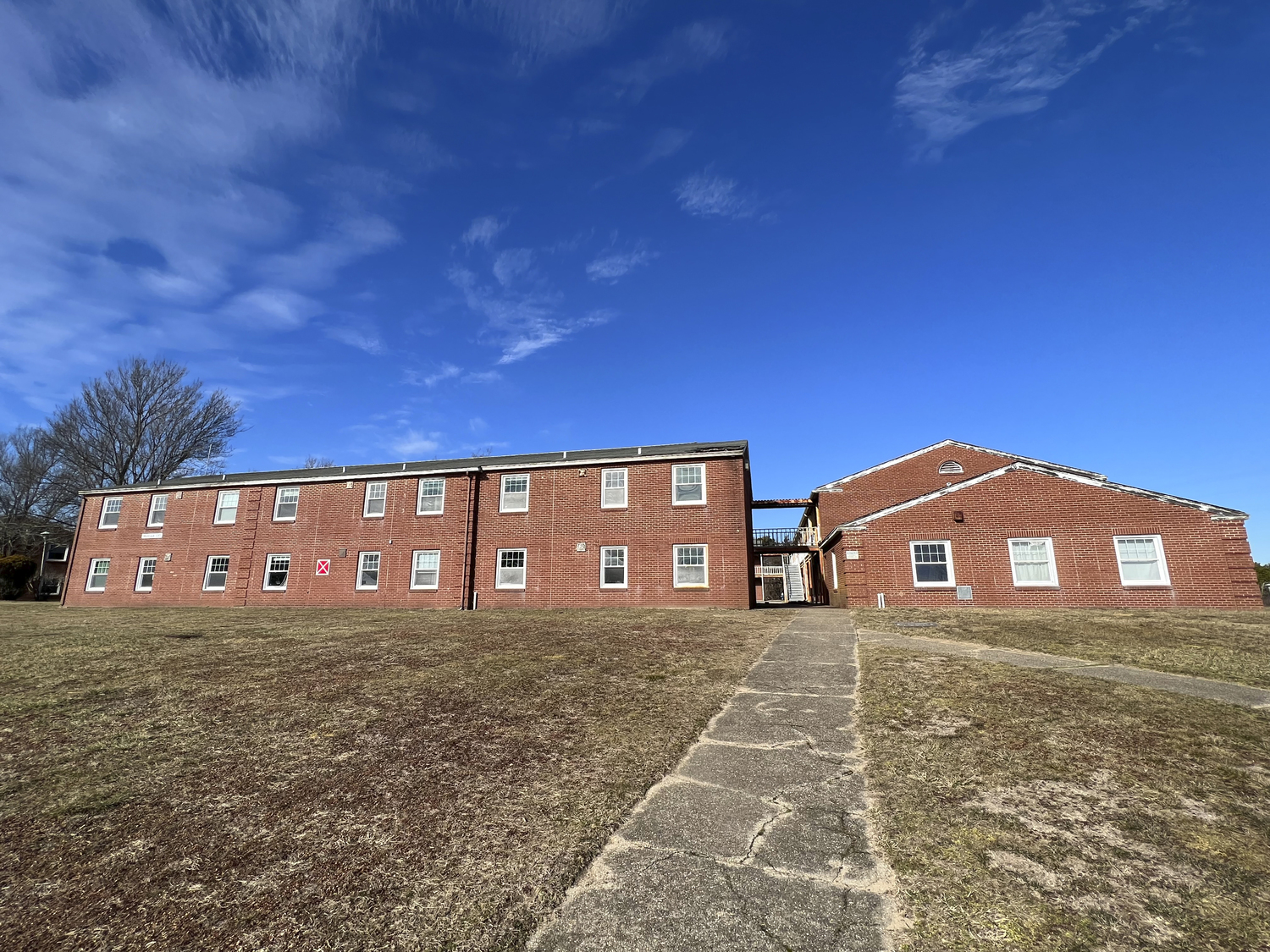
Condemned dormitory buildings on Stony Brook Southamtpon Campus. DANA SHAW
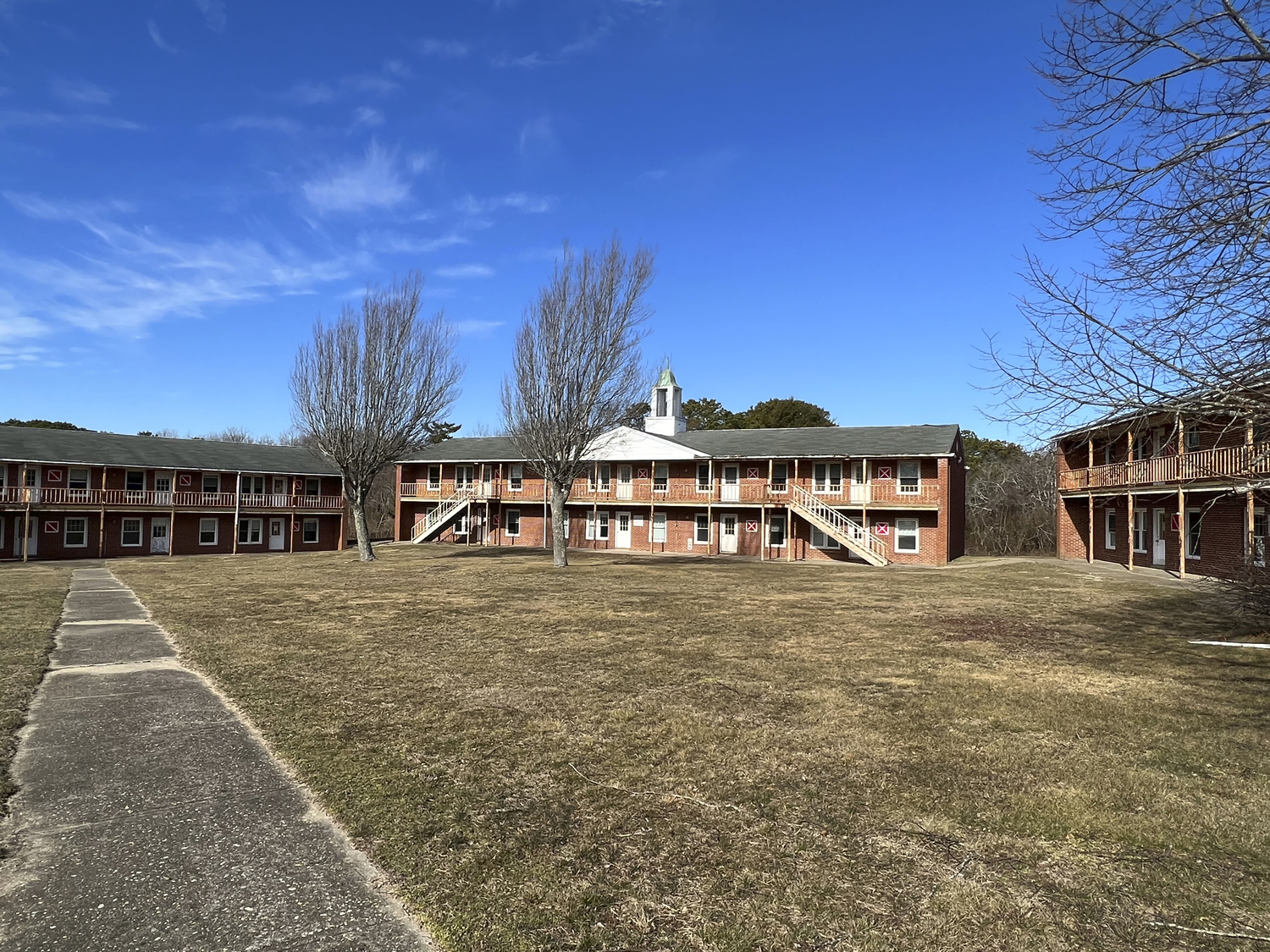
Condemned dormitory buildings on Stony Brook Southamtpon Campus. DANA SHAW
Officials of Stony Brook Southampton propose to engage the Dormitory Authority of the State of New York, which provides construction, financing and other services, to solicit engagement of private developers to address the critical shortage of student and workforce housing using the college campus.
That plan was among infrastructure and housing needs discussed at the Stony Brook Council meeting on May 6, which brought together administrators and educators and summarized future plans for the 82-acre campus, where around 600 students, primarily graduate students, and roughly 50 faculty and staff study and work.
“People simply can’t afford to live here, particularly if they are staff people that are just trying to make their way,” said Jed Shivers, Stony Brook University’s senior vice president for finance and administration. “It’s difficult to both recruit and maintain them. Our problem is inefficient and overly expensive housing in the surrounding area,” he said, for students faculty and staff alike.
The Dormitory Authority, known as DASNY, is “quite interested in getting into this business with us,” Shivers said.
DASNY has expertise in design, management, financing and project completion, and a track record of operating and managing such development, he said, and would create sustainable and environmentally appropriate facilities consistent with the university system’s goals. According to Shivers, DASNY is the premier state agency related to debt issuance for higher education housing.
On the Southampton campus of Stony Brook University, “we’re looking at some hundreds of beds, apartment-style housing primarily dedicated to Stony Brook Medicine,” Shivers said. A slide displayed during his presentation indicated a plan for up to 500 beds.
“We don’t want to put money into this,” he said. “This would probably be built on developer risk.” There will be community engagement throughout the process, he said.
By far, said Paul Harding, the interim associate provost, “the largest challenge for us is housing. It used to be traditionally that our [Master of Fine Arts] students were able to find copious and affordable off-campus housing, which the pandemic just destroyed.”
The discussion followed approval of the state’s 2024-25 budget, which includes $150 million to create the New York Housing for the Future Program.
“I think that the housing component is encouraging,” State Assemblyman Fred W. Thiele Jr., who has criticized what he sees as prolonged neglect of the campus by Stony Brook University, said after the meeting. “A first step would authorize lease of the property to develop the housing. Then I’d anticipate that Stony Brook, after engaging the community, would enter into [a request for proposals] process to try to find potential developers for that site.”
Of the 51 buildings on the campus, 19 are abandoned or otherwise secured, and 14 of those are being evaluated for potential removal to make way for future development, said William Herrmann, vice president for facilities and services.
Since 2021, “we’ve completed or initiated $42 million worth of capital projects” at the Southampton campus, he said, many of which may go unnoticed, such as upgraded HVAC systems. “But we also completed projects that you do notice,” such as a renovation of Atlantic Hall and several ADA accessibility upgrades to the Avram Theater, the student center and residence halls. “And to support enhancing climate research, $26 million has been committed to renovating the Natural Science Building.”
In addition to workforce housing on the northwest quadrant of the campus, proposed future development includes the move of Stony Brook Southampton Hospital from the village to the campus’s northeast quadrant, which has been under discussion since 2019, and a new Long Island Rail Road station, he said.
William Wertheim, the interim executive vice president for Stony Brook Medicine, said that the first question he is often asked is: “Where’s the new hospital?” Fundraising is the Southampton Hospital Association’s responsibility, he said, and it has raised about $60 million of approximately $300 million needed to break ground.
In February, the association named Julia McCormack its president and chief development officer for Stony Brook Southampton Hospital. She is an experienced fundraiser, he said.
“Certainly, if we see the commitment to the housing and hospital, I think the Long Island Rail Road is very interested in restoring a station there,” Thiele said. “That makes perfect sense. At the same time, we’re trying to build the South Fork Commuter Connection,” the coordinated rail and bus system that operates between Speonk and Montauk during peak commuting hours. “If you’ve got a center for employment at the site, we should have a train station.”
Maurie McInnis, Stony Brook University’s president, told the council, “In my four years of working with Albany, the conversation’s different now than it was when I arrived,” crediting Governor Kathy Hochul for a more positive tone. That extends to state legislators, she said: “They are actually willing to have conversations about what it takes for us to continue to invest in public higher education while keeping tuition low.”
An advisory council has been established to plan and brainstorm as to “what makes sense for the campus in light of our plans to move the hospital and affordable housing,” Wendy Pearson, who assumed the role of vice president for strategic initiatives in November, said via video conference.
The advisory council will meet monthly, starting on May 31. “We’re at a really pivotal time in the history of the campus,” Pearson said. “I think how we engage with the community going forward will be key to our success.”
Access to a bachelor’s degree is “super-important as we talk about social mobility,” Pearson said. The moving of undergraduate programs from Southampton to the main campus at Stony Brook, in 2010, “essentially closed off access to an on-site undergraduate program on the East End,” she said. “We really need to think about ways we can open those pathways to a bachelor’s degree, through creative programs,” which she said could include support for hybrid and online programs and the availability of some onsite courses in classrooms that were renovated to support hybrid learning during the pandemic.
But the existing programs in Southampton are “very strong,” she said, particularly the health profession programs, which she said have robust enrollment and are highly ranked and competitive in their recruitment. “We just need to find better ways to support and incentivize the growth we want to see.”
Along with a pathway to an undergraduate degree and expansion of the health care workforce and housing for same, a comprehensive plan for the Southampton campus includes financial sustainability, strengthening of its legacy programs — the Creative Writing and Marine Sciences programs, established in 1993 — and stronger community engagement and support, Pearson said. “We can’t rely on subsidies from the main campus to make the Southampton campus work. Revenue generated on campus needs to better support the programs in Southampton.
“We want to build that momentum and demand for the hospital and workforce housing,” she said, “and pull it all together in a comprehensive way.”
Thiele is cautiously optimistic as to a renewed commitment to action and results at the campus. “This has been a long time coming. I think Stony Brook had really let the campus go for quite a few years, and they’ve reaped that neglect,” he said.
The hiring of Pearson, the new advisory committee, the housing proposal, and the hospital project are “encouraging first steps,” he said, “but that’s all they are. There’s been a lot of rhetoric in the past that has yielded very little for the campus. We’re at the beginning of a process, and, hopefully, these first steps will yield to real commitment from Stony Brook.
“The bottom line is, this is going to take money. … Stony Brook has committed to a planning process. We’re going to want to see them put the resources into implementing that plan.”


