


 4 Photos
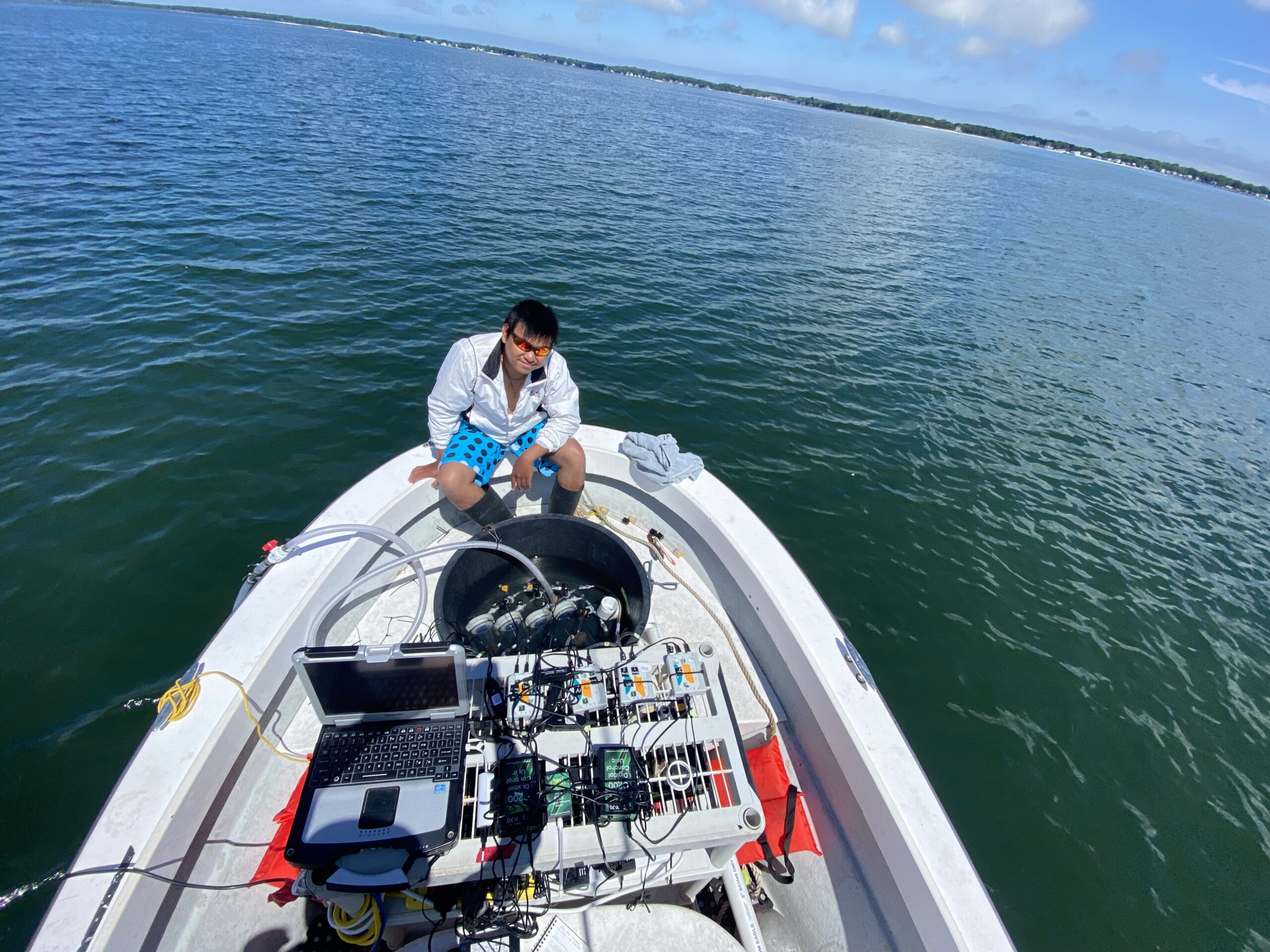
Stony Brook researcher Lucas Wong with the field laboratory equipment he and research partner Jessica MacGregor use to study the respiration of bay scallops in the Peconics to gauge how much physiological stress they are experiencing from various environmental factors.
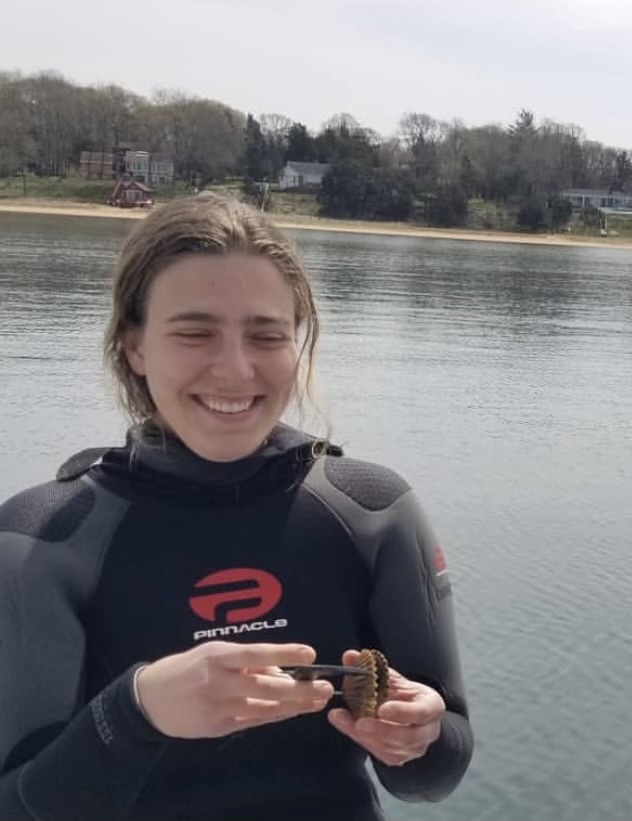
Stony Brook University graduate student Jessica MacGregor measuring a Peconic bay scallop.
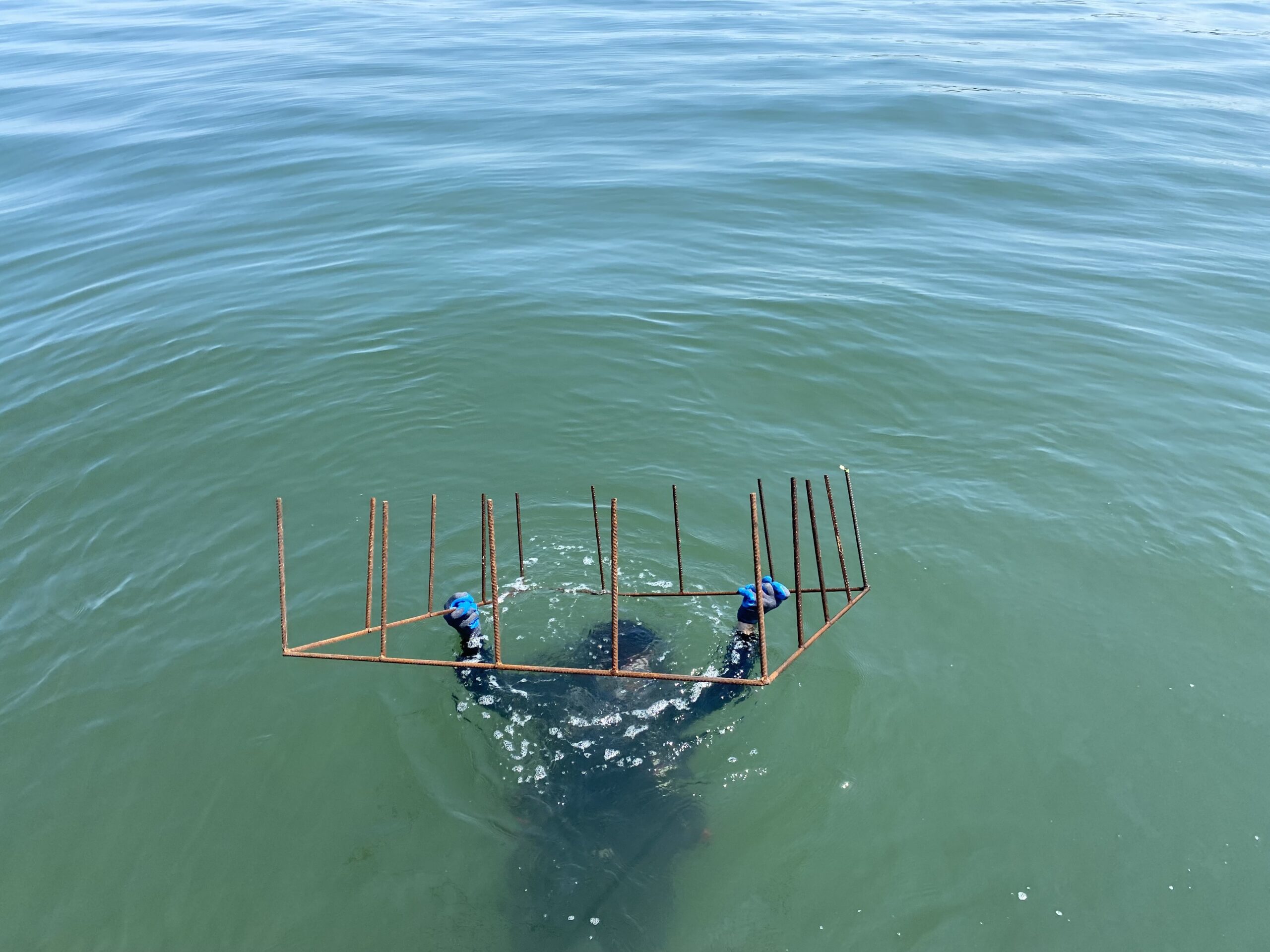
A Stony Brook University biologist raising an exclusion pen that researchers have used to try to protect scallops from being eaten by cow nose rays, in order to gauge how much of an impact the voracious species may be having on scallop populations.
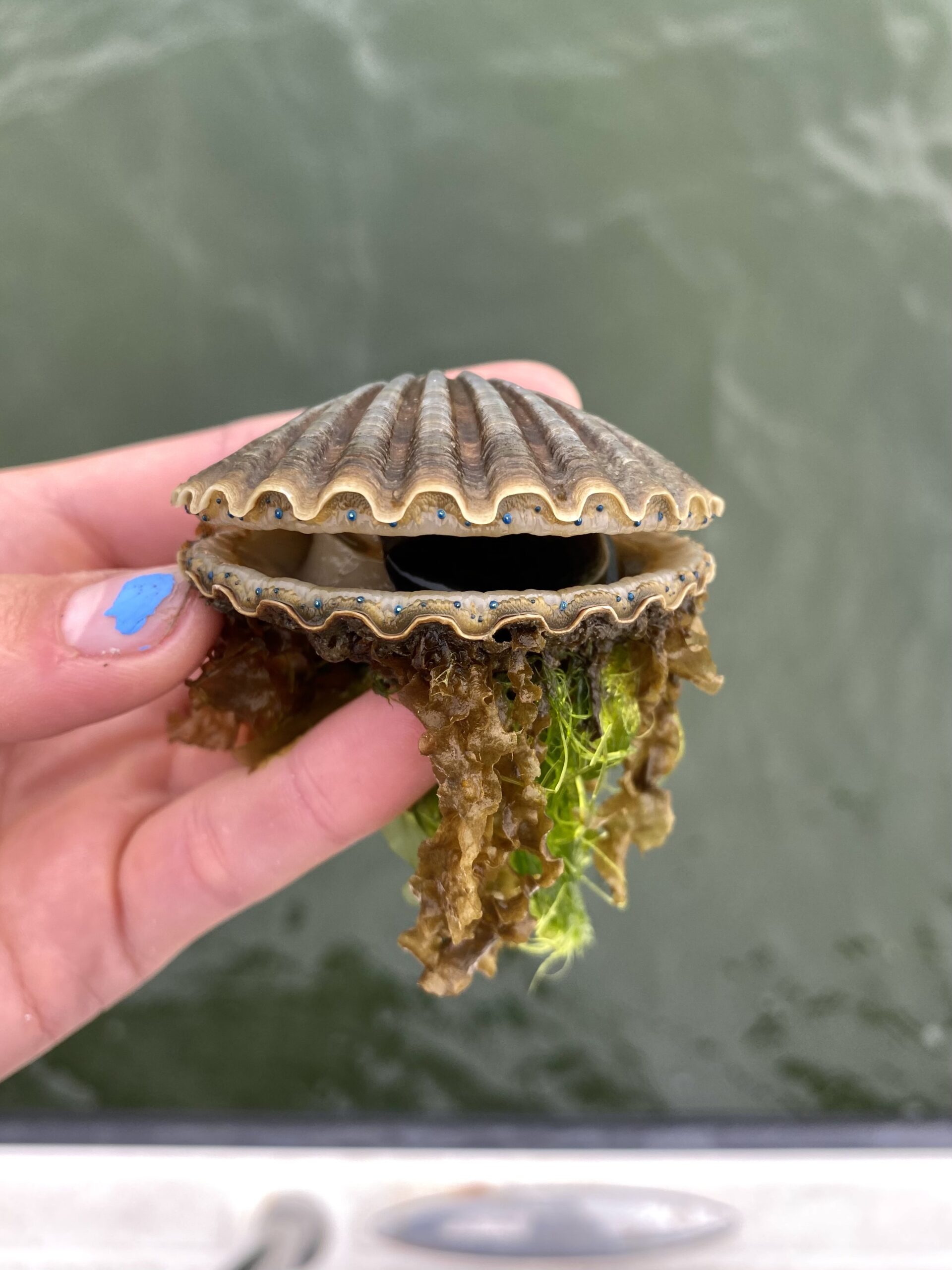
A Peconic bay scallop.
With the local Peconic Estuary bay scallop population being hit by what appears to be another massive summer die-off, marine biologists from around the region are scrambling to figure out why, and to test their various theories with rigorous scientific principles before they resign themselves to a singular cause.
While some scientists are working on a selective breeding program that hopes to tap into what may be genetic proclivities in those few scallops that have survived the devastation in previous years, others are testing theories about the extent to which predators may be playing a role in the die-off.
A young Stony Brook University graduate student is hoping to definitively show whether a voracious species of stingray that arrived in local waters the same year the scallops suffered the first recent summer die-off could be playing a larger role in the disappearance of the scallops than previously believed.
Jessica MacGregor joined Professor Brad Peterson Ph.D.’s lab at the Stony Brook School of Marine and Atmospheric Sciences in 2019, just after the first scallop massacre in the bays was discovered — and just as the abundance of cownose rays that swarmed the bay that year was being looked at as a possible cause.
The conventional wisdom has been that the cownose rays — which can weigh up to 50 pounds each and swim in schools of several dozen — were not likely a major player in the scallop die-offs from previous years, largely because they don’t tend to show up in local waters until August, and the bulk of the die-offs are believed to be happening in mid-July. Also, scientists said in the first year of the die-offs that they were seeing the shells of the dead scallops lying on the bay bottoms where they had died, rather than being pulverized by the rays’ jaws.
But Peterson said that the number of “cluckers,” as the shells of the dead scallops are called by researchers, seen in the wake of the die-offs are not enough to rule out the possibility that predators are to blame for a substantial portion of the scallop deaths.
“We’ve been working with Steve [Tettelbach] and [Cornell Marine Program] to answer two questions: whether the later spawn that might be happening at a time when the warm water physiological compromise of the animals after the spawn might be enough to push them over the edge,” Peterson said, “or whether we have a new potential predator that is causing elevated losses.”
To put the competing theories to the test, MacGregor has devised a system for protecting some scallops on the bay bottom from the crushing jaws of cownose rays, while leaving others nearby vulnerable, and watching to see if the protected individuals survive at higher rates.
The system she devised is fairly simple: a corral of sorts, made of iron rebar welded into a square, with iron bars sticking up a foot or so from the bottom.
The thinking is that the iron spikes will prevent the rays, which are not particularly nimble like fin fish species, from getting at the scallops lying within the protective corral. Other native predators that prey on scallops, like spider crabs and whelks, still would be able to get at them the same as they would those scallops outside the corral.
So if a substantial difference is seen in the mortality of scallops nearby one of her corrals, the cownose rays could be presumed to be the deciding factor.
“It’s a little tricky, because the rays come into the bay in large groups, and we want something that would allow smaller predators to get in but exclude the large predators,” MacGregor said. “Whelks and crabs should be able to crawl between the spikes, but the rays won’t.”
To keep the scallops in the protective area — unlike clams and oysters, scallops are quite mobile and can scoot along the bay bottom by thrusting water through their shells — she tethers them with small lengths of fishing line glued to their shells.
While the cownose rays are just starting to storm into the Peconics — another Stony Brook research team is starting to tag the dusky brown rays with acoustic tabs so that their movements can be tracked — MacGregor said her monitoring of the four sites where she’s set up the exclusion devices have shown high mortality due to predation from other, more common sources. Spider crabs and whelks, each of which leave telltale signature markings on the shells of the scallops they set upon, kill and consume, have proven to be aggressive and fast-acting scallop hunters.
“It’s pretty crazy — we’ll be setting up and putting down the scallops, and we will actually see whelks begin moving toward where we are putting them,” MacGregor marveled. “By the time we are done, they are already moving in to attack.”
She said that in as little as 24 hours, mortality rates of the scallops placed for the experiment were as high as 50 percent.
In parallel to the predator experiment, MacGregor and her lab partners are also testing the other main theory about the scallops’ ill fate: that they are being over stressed by environmental conditions, climate change and their own biological cycle.
Since not long after the first widespread die-off in 2019, the consensus theory about the mortality has been that the scallops are being stressed by water temperatures in the Peconic Estuary that now far exceed historic norms essentially every summer, by a new parasite that has been found in nearly all scallops in the bay, and, finally, the death knell, when they spawn and deplete their already dwindled stores of energy.
“We’re looking at everything — temperatures, salinity, dissolved oxygen, pH levels — that we can use to make inferences about the mortality across the span of the year,” the New Jersey native and University of Maryland graduate, said.
Much like a human might, a scallop put under various levels of stress will, for lack of a better word, breathe harder. So the Stony Brook researchers are measuring their respiration rates to tabulate just how stressed they are by each changing condition in the estuary through the summer. Testing a scallop’s respiration rate is not easy in the field, requiring a contraption worthy of praise by Rube Goldberg himself, with wires and cables and pumps and dials.
“We get some funny looks going through the canal in our little boat with all these wires and computers and a generator in it,” MacGregor said. “But we can take a scallop out of the bay and put it in a chamber and pump water through it and measure the draw-down of oxygen and make some inferences about their stress levels. And we can do that throughout the year as temperatures change and as they spawn. We are really seeing how they are doing at any given moment.”
MacGregor, who expects to complete her master’s work this year, says that she hopes the work she starts during her time at SOMAS will carry over into the work by the next class of researchers passing through the labs of Peterson and other SOMAS professors. With local waters warming steadily in recent decades and little hope of that trend reversing, she hopes that the research of today will be able to guide the thinking of tomorrow.
“We’re all under the influence of climate change, and there’s no stopping that now,” she said. “But, hopefully, we can inform policy, that will help curtail climate change and maybe help restore our coastal systems.”


 Michael Wright on Aug 31, 2022