


 3 Photos

Students enjoy some books in the East Quogue reading garden. AMANDA BERNOCCO

Bruce Phillips III reads a book in the East Quogue reading garden. AMANDA BERNOCCO

Sweatin' For Cash AMANDA BERNOCCO
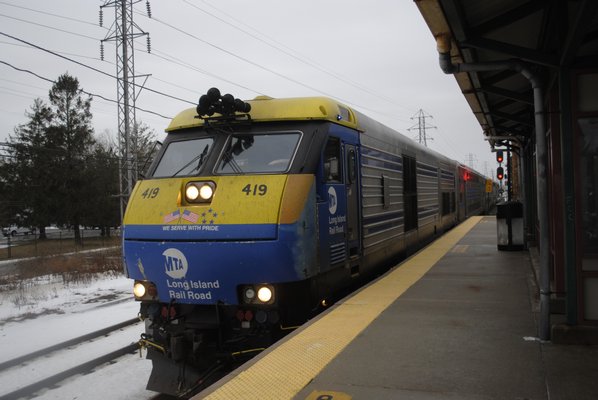
Officials are moving forward with plans to bring extra Long Island Rail Road trains to the South Fork as early as this fall—though some of the logistics still need to be ironed out.
State Assemblyman Fred W. Thiele Jr. said he is working with both Southampton and East Hampton towns to figure out how to address the biggest wrinkle in the plan, which is intended to ease traffic congestion on the South Fork: how to get commuters from the train stations to their actual places of employment.
While those final decisions will be largely left up to the respective municipality, Mr. Thiele ventured that bus service and ride sharing are going to most likely be part of the final solution. “I think there’s room for both,” Mr. Thiele said on Tuesday.
Before anything is finalized, the assemblyman explained, representatives of both towns will have to gauge the interest of transportation companies and draw up estimates for how much such services would cost. Mr. Thiele said he will work to get state funding to help offset some of those anticipated expenses.
Tom Neely, Southampton Town’s director of transportation and traffic safety, said this week that Town Board members intend to discuss the issue at an upcoming work session—though a date has not yet been finalized.
Mr. Neely then deferred all other questions about the plans to Mr. Thiele.
The assemblyman said his next meeting with Long Island Rail Road officials is set for March. During that meeting, he said, he intends to push to get an exact date so the public will be aware of when the extra trains would be available.
The Long Island Rail Road updates its schedule twice a year—once in October and again in May. Mr. Thiele said he is pushing to get the extra trains added this October.
Southampton Town Supervisor Jay Schneiderman noted that he is pushing for two eastbound trains during the morning and afternoon rush hours. The additional trains were largely pushed by local elected officials as one way to help alleviate the South Fork’s chronic traffic issues, especially at the Shinnecock Canal during the morning and evening rush hours.
Southampton Town Councilwoman Julie Lofstad, who lives in Hampton Bays, said she thinks the extra trains have the potential to attract certain workers—such as teachers, hospital staffers and even town employees—who do not have to haul equipment back and forth with them each day. She also acknowledged that it might be unrealistic to expect the region’s contractors, who make up what is known locally as the “trade parade,” to take public transportation.
At the same time, she said discussions should be held to see if the towns could create overnight parking and storage areas for those contractors. “That’s something that I personally am going to push for as well,” Ms. Lofstad said.


 Amanda Bernocco on Jan 17, 2018