



 2 Photos
East End officials gathered in a "working group" at a meeting hosted by Assemblyman Fred W. Thiele, Jr. to discuss the next steps for the Community Housing Fund. COURTESY FRED THIELE
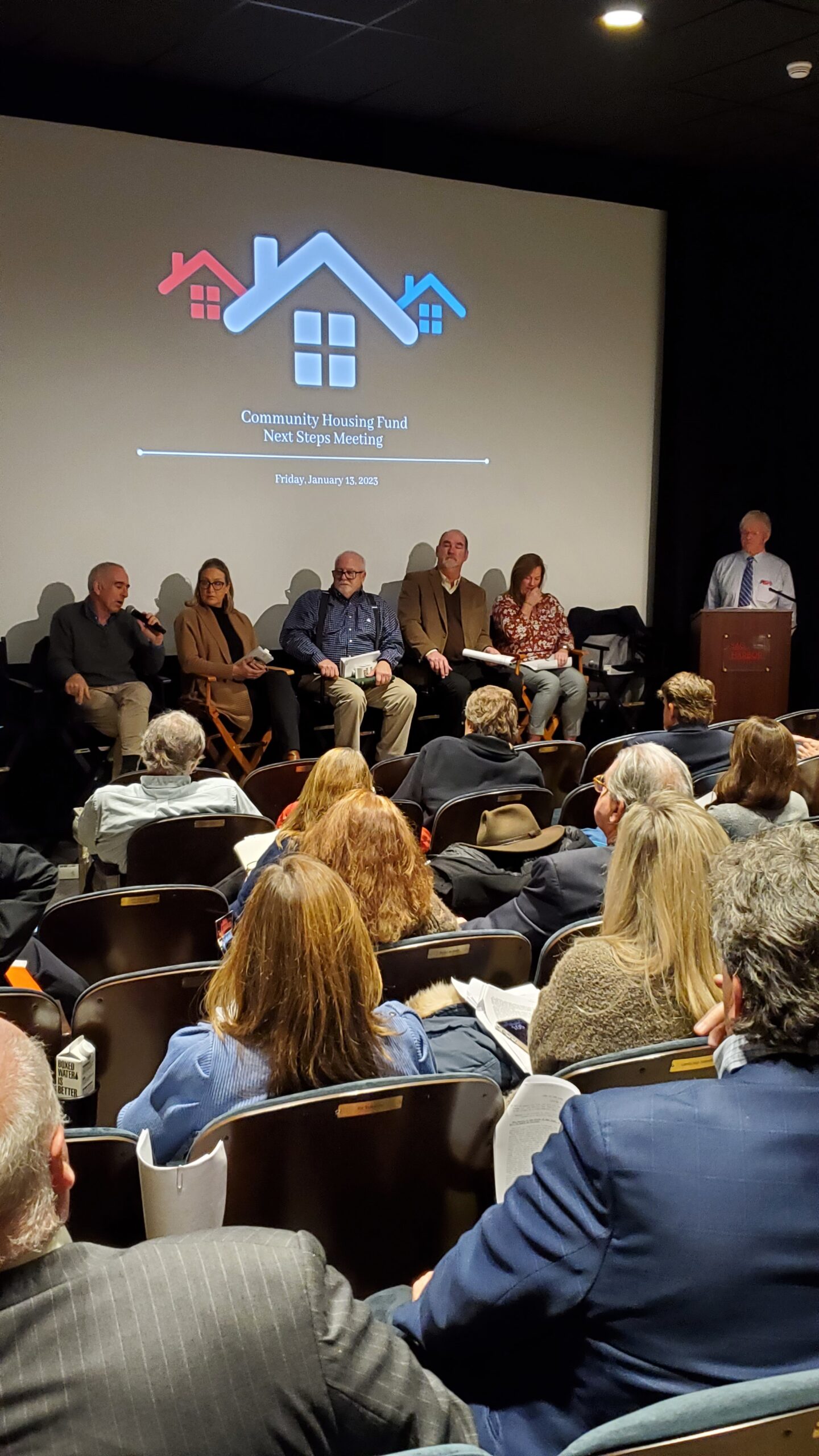
East End officials gathered in a "working group" at a meeting hosted by Assemblyman Fred W. Thiele, Jr. to discuss the next steps for the Community Housing Fund. COURTESY FRED THIELE
The work on the Community Housing Fund didn’t end with the legislation’s passage on Election Day. In fact, according to State Assemblyman Fred W. Thiele Jr., now is the time for municipalities to truly bear down.
Meeting last week with local lawmakers and staff from East End towns and villages, plus advocates, Thiele offered an overview of the legislation, clarifying misconceptions, and helping them to laser in on the answer to the question: “Now what?”
On the South Fork, Southampton and East Hampton town officials are both seeking candidates to appoint to a required advisory board. As with the Community Preservation Fund — which the CHF mirrors in many ways — the advisory board will offer recommendations to their respective elected bodies.
“We’re actively seeking members to participate,” Southampton Town Housing Director Kara Bak said. There’s an application available on the town website.
In East Hampton Town, Supervisor Peter Van Scoyoc said his staff is putting together a list of candidates for the committee to screen. They’ll play an integral role as the program gets underway, he said.
Each committee must have between seven and 15 members, and each must include representatives from the banking, real estate and construction industries, plus three people from local housing advocacy or human services organizations. Each village that participates must also have someone to represent it on the advisory board.
Villages also have to officially “opt in.” Once a village elects to opt in, Bak said an intermunicipal agreement will be crafted between the village and town.
So far, the villages of Southampton, Westhampton Beach and Sag Harbor have said they will opt in.
Said Southampton Village Mayor Jesse Warren: “The village will be moving forward and will be participating. We will also be working to put together an affordable and workforce housing plan over the course of this year so that we are in good position to tap into the new fund.”
“Count us in!” Mayor Jim Larocca of Sag Harbor enthused. His board expects to vote to opt in at its February 14 meeting. A similar vote is expected in Westhampton Beach as well.
In Sagaponack, Village Clerk Rhodi Winchell pointed out that villages can choose to opt in at any time. The opt-in option doesn’t apply for Sagaponack at present, since the village doesn’t currently own any property that fits the bill for building affordable units. However, she said, when and if it did, the discussion would take place.
In North Haven, Village Clerk Eileen Tuohy said her board has been fully supportive of the CHF. Members are waiting for more information regarding what opting in entails, and how the fund would apply to the village.
The Village of West Hampton Dunes has yet to decide, officials said. Quogue Village Mayor Robert Treuhold said his board supports the CHF in principle but they’re still reviewing how it can apply to their village.
In East Hampton Town, there is just East Hampton Village to consider. Mayor Jerry Larsen said this week that the village will participate.
Approved through referendum in November 2022, the CHF legislation enacts a 0.5 percent tax added to the existing 2 percent tax that generates revenue for the CPF, which is dedicated for the acquisition of open space, farmland and historic properties, plus certain water quality protection initiatives.
The first collection of the tax starts in April. As with the CPF, first-time homebuyers are exempt from paying the transfer tax. The legislation also raises the current CPF exemption threshold from $250,000 to $400,000, so those households buying a home for less than $1 million actually pay a lower fee overall.
Home purchase contracts from before April 1 are grandfathered, even if the deals close after April 1. The legal effective date is April 1, but it may take a while to ramp up revenue because of the grandfather clause and lag between contract and closing, Thiele explained.
CHF law requires participating towns to adopt housing plans. In Southampton, the plan was adopted last fall; East Hampton adopted its plan last week. But, Van Scoyoc pointed out, the town’s housing plan has been in existence for years — there just wasn’t the money to implement it.
Speaking to officials at Sag Harbor Cinema last Friday, Thiele emphasized that once towns have the mechanics for collecting the tax in place, and adopt a plan, it’s “extremely important” to continue community outreach to build support. They need to reach out to experts who have completed similar projects elsewhere and learn from the experience of other communities. Housing plans should be honed as priorities are set, Thiele said.
Additionally, the assemblyman believes officials should be cautious about their first project. It should be “a home run” — something that makes a good first impression and is embraced by the community. While passing the CHF took effort, Thiele underscored, “The hard work is ahead for the towns.”


