


 6 Photos
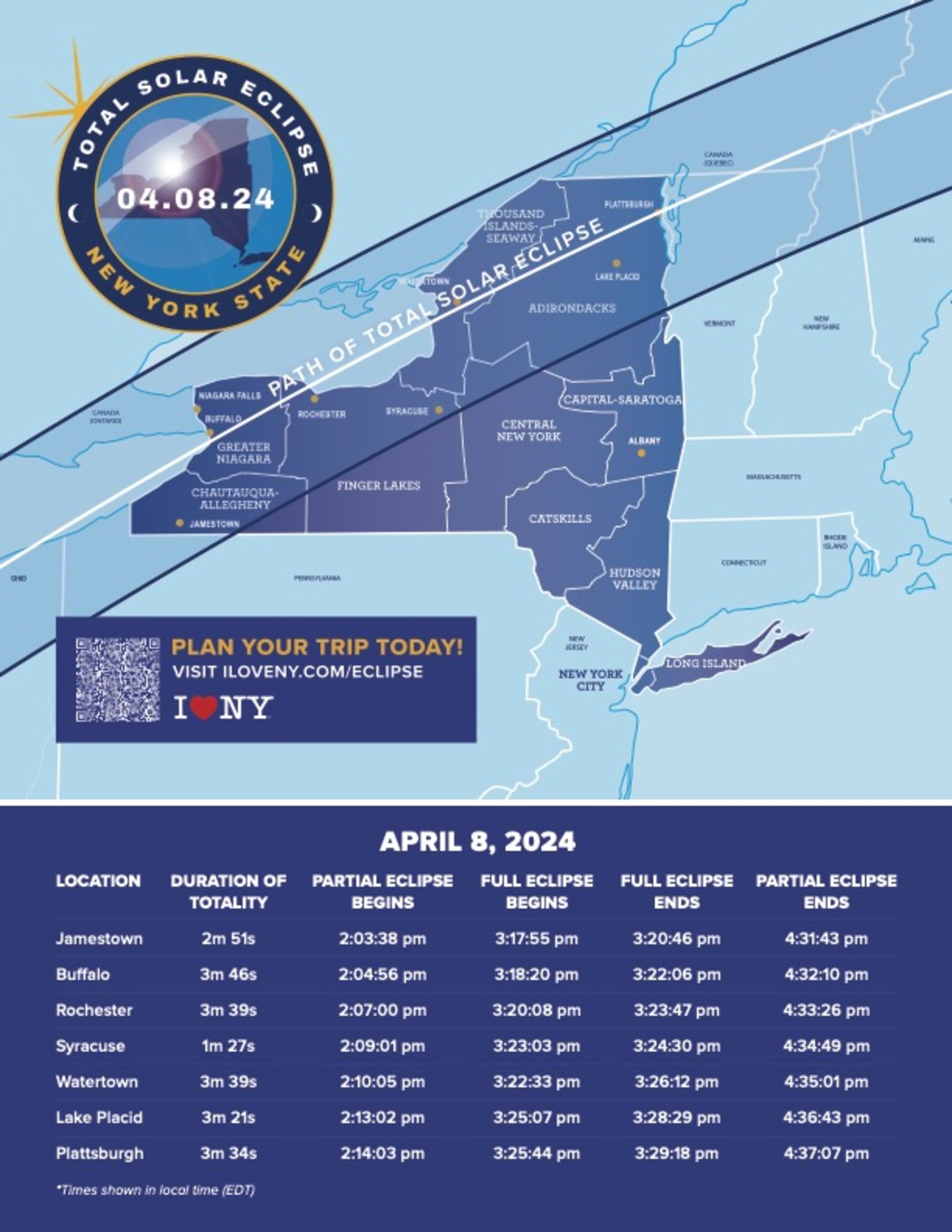
The path of the total solar eclipse in New York. COURTESY I LOVE NY
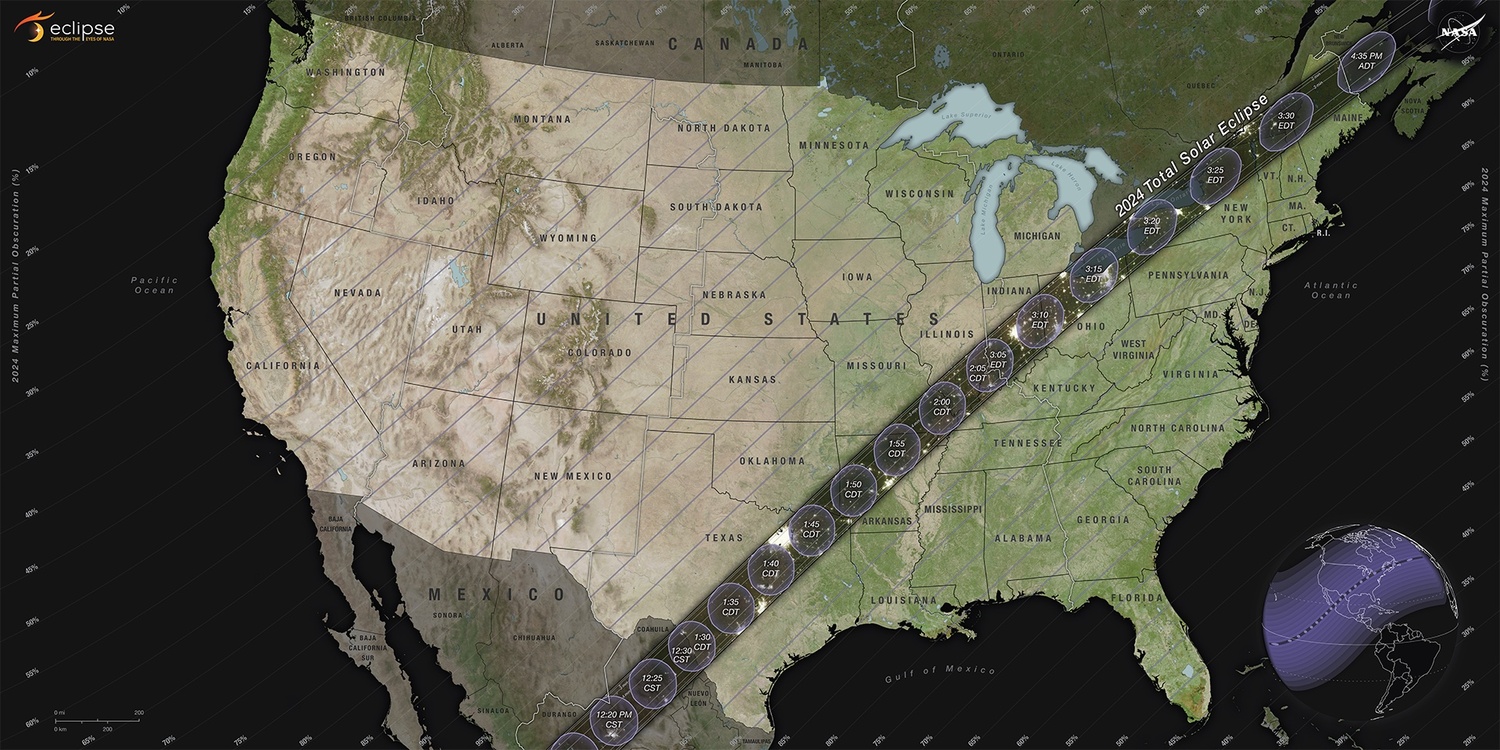
The path of totality and partial contours crossing the United States for the 2024 total solar eclipse on April 8. NASA'S SCIENTIFIC VISUALIZATION STUDIO
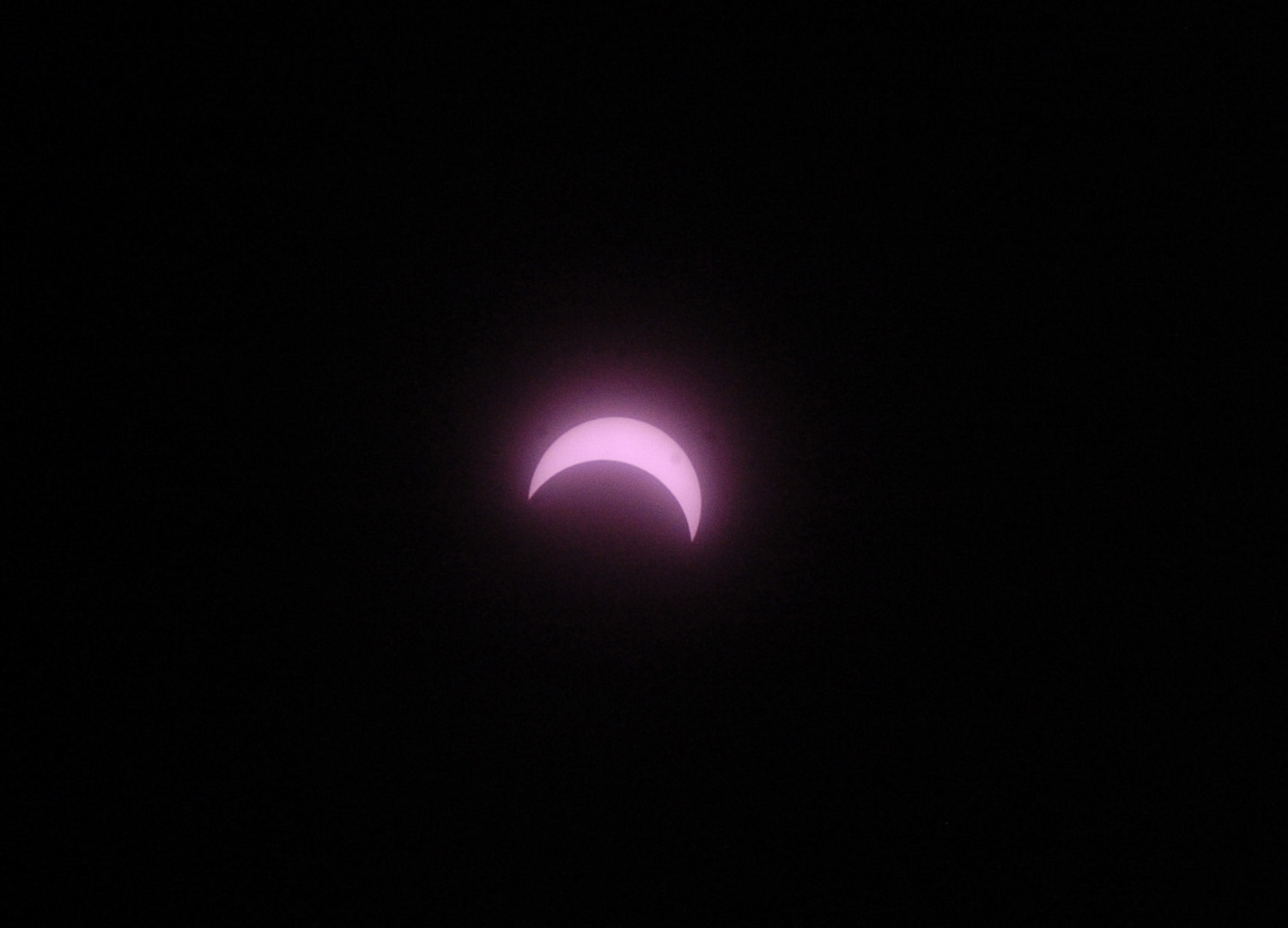
The August 2017 partial solar eclipse. DANA SHAW
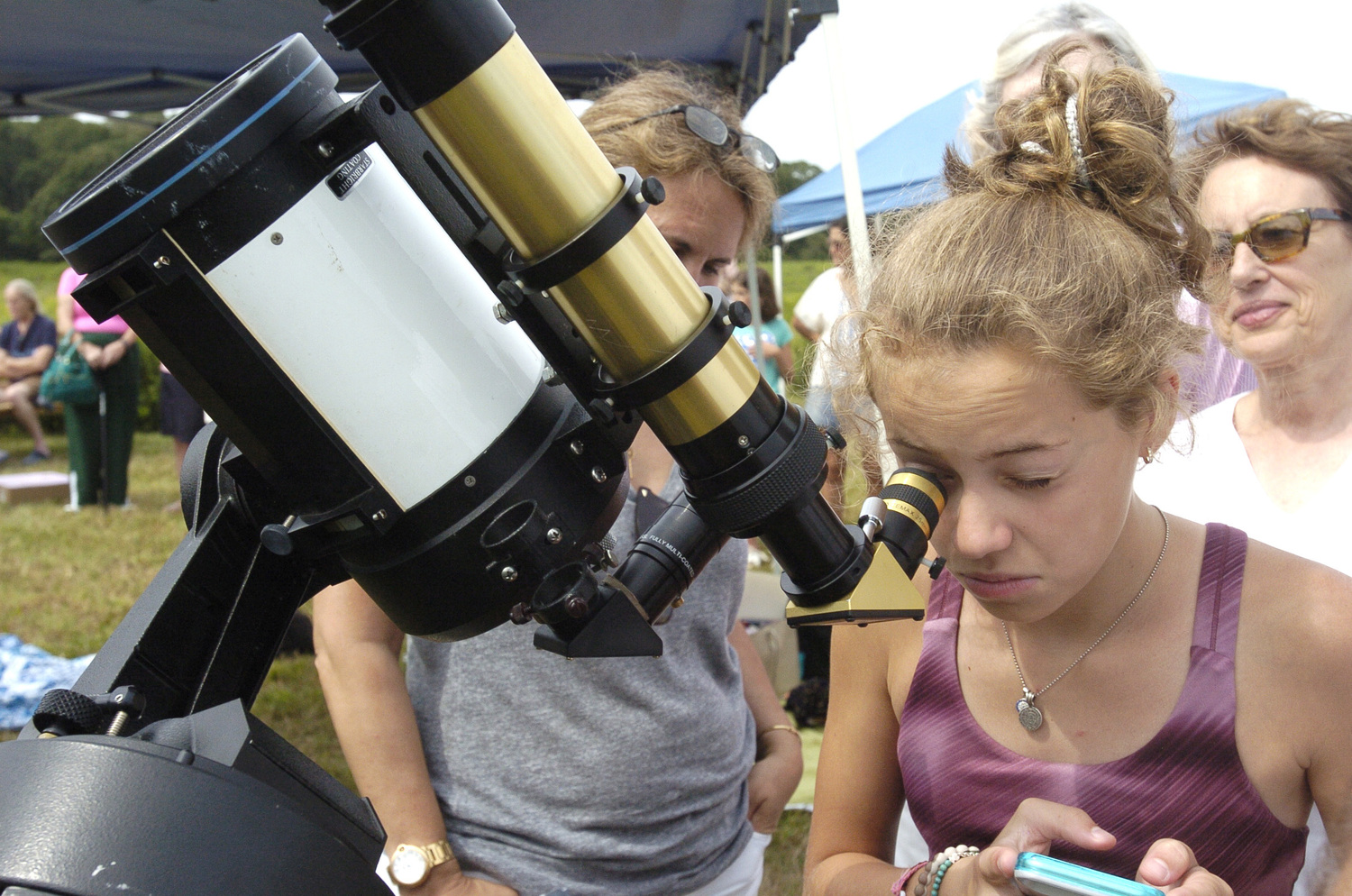
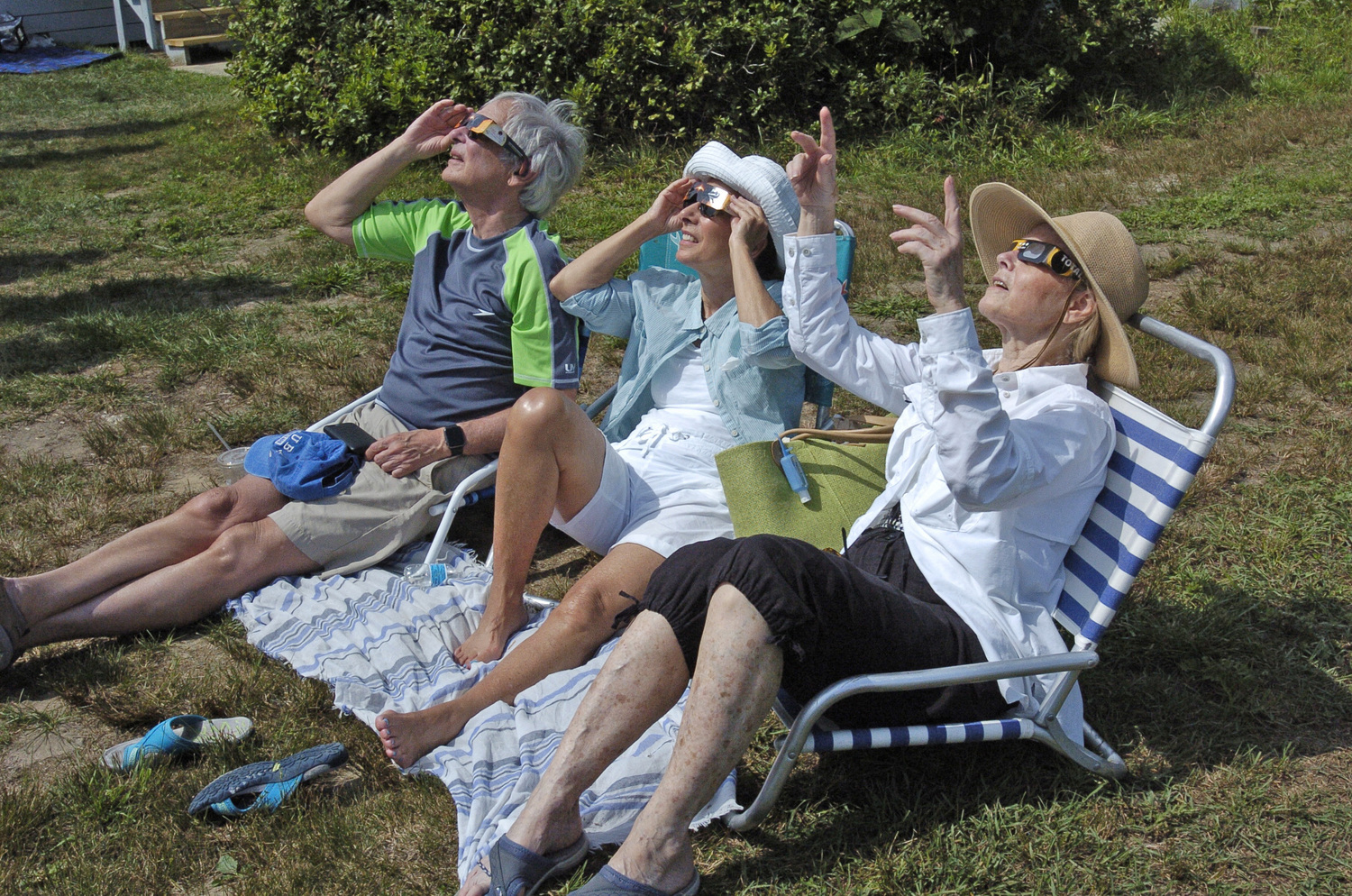
Folks watch the August 2017 partial solar eclipse at the South Fork Natural History Museum. DANA SHAW
Folks watch the August 2017 partial solar eclipse at the South Fork Natural History Museum. DANA SHAW

Folks watch the August 2017 partial solar eclipse at the South Fork Natural History Museum. DANA SHAW
William Taylor has seen plenty of lunar eclipses in his lifetime. He’s seen his share of partial solar eclipses, too.
But he didn’t realize what he was missing until he saw his first total solar eclipse.
It was seven years ago, in Vonore, Tennessee, with his sister and countless strangers from all over the world by his side. It was the first total solar eclipse in the United States in 37 years, he noted, and he didn’t quite know what to expect.
He looked up when the crowd started to cheer.
“The first thing you notice is that a tiny little chip disappears out of the sun,” he said. “This is called the moment of first contact. And if you wait just a little while, more and more of the sun starts to disappear.”
When it was over, he could only describe it with one word: a “revelation,” he said.
“If you’ve seen a 90 percent partial solar eclipse, which is what we’re going to get on Long Island in a few days, you might think that a total solar eclipse is about 10 percent better than that,” said Taylor, senior educator at Hamptons Observatory in East Hampton. “But in my experience, the total solar eclipse that I saw was about a million times better than any partial solar eclipse I’d ever seen, any lunar eclipse I’d ever seen, any astronomical event.
“It’s really a spectacular event. And it’s really hard to describe to someone what it’s like.”
This Monday, April 8, a total solar eclipse will cross parts of North America, including more than a dozen states from Texas to Maine, as the moon passes between the Earth and the sun, which will be in a direct line.
On the East End, the partial solar eclipse will begin at approximately 2:13 p.m., with maximum coverage at 3:27 p.m., and is expected to end around 4:37 p.m.
At the heart of total solar eclipses is a coincidence, explained Taylor, who is a NASA solar ambassador. The reason the sun and moon appear to be the same size, he said, is that the sun is 400 times bigger than the moon — but it is also 400 times farther away.
“There is a beautiful symmetry for people here on Earth, unique in all the solar system and who knows how many light years around,” he said.
The people who see this phenomenon are in the center of the moon’s shadow when it hits Earth. And though the East End is not in the “path of totality,” locals will be able to see up to 90 percent coverage, whereas areas in northern regions of the state will experience what Taylor described, weather permitting.
“When the moon conceals the surface of the sun, you see things that you normally cannot see in ordinary life,” he said, “or even in your stargazing life.”
The total solar eclipse will offer a rare opportunity to see the sun’s corona — the star’s atmosphere that appears as white clouds shooting from its circumference. Solar prominences could be visible, too, which are massive loops of plasma that rise from the sun’s surface as giant mauve eruptions.
“In 1860 or thereabouts, one of these storms happened on the surface of the sun,” Taylor said, “and blasted such a huge amount of electrically charged particles towards Earth that it short-circuited every single electrical device on the planet Earth at that time.”
At the beginning of a total or partial eclipse, the sky will start to darken, as if it were dawn or dusk. It is possible to see the whole solar system lined up, too, Taylor said, though Venus will be most prominent on Long Island.
“It’s a strange feeling,” he said of a total solar eclipse. “With your modern understanding of what an eclipse is, you know it’ll be over in four and a half minutes — you know it’s not the end of the world, you know the sun is just hiding and it’s not gone forever. But there’s a part of your animal brain that sees the sun disappearing in the daytime sky and has this fear that it will never come back again.”
Two East Hampton institutions will host viewing parties — the first, at LongHouse Reserve, from 1:30 to 4:30 p.m., and another on the East Hampton Library lawn, starting at 2 p.m.
“We encourage people to take advantage of this unique opportunity,” Southampton Town Public Safety and Emergency Management Administrator Ryan Murphy said, “but we also encourage them to do so safely.”
Solar eclipse viewing glasses — which use solar filters that transmit just 1 millionth of the sun’s visible light — are mandatory, Taylor emphasized. Regular sunglasses will not do the trick.
“Do not ever look at the sun directly through binoculars under any circumstances, but even during a partial eclipse. You’ll go blind,” he said. “If you look at the sun with your naked eye, you naturally have a tendency to flinch away. It happens every day — we accidentally look at the sun and we turn away.
“During a partial eclipse, you might be a little bit more fascinated, you might want to look. But it’s dangerous and it’s useless,” he continued. “You can’t make anything out. That’s why partial eclipses are very hard to see without the proper equipment.”
The next total solar eclipse in the United States is expected to fall on August 23, 2044 — but it won’t be until 2079 that it returns to New York again.
“There’s something very friendly about eclipses,” Taylor said. “It is like a visitor coming to our planet — almost. It’s something beautiful. It’s something unexpected. But people did not always see eclipses as friendly or beautiful or something worth traveling to.
“For most of human history, eclipses were horrifying to people because they didn’t understand what was going on and they just wanted the moon back,” he continued, “or they wanted the sun back — especially the sun.”
In upstate New York, the total solar eclipse will clock in around three minutes, Taylor said, though where he’ll be in Texas for the path of totality, he could get nearly four minutes to enjoy the phenomenon.
“Once you’ve seen one, you really feel like you want to see them all, if you can,” he said, “because it’s an amazing experience.”


 Michelle Trauring on Apr 3, 2024