


 8 Photos
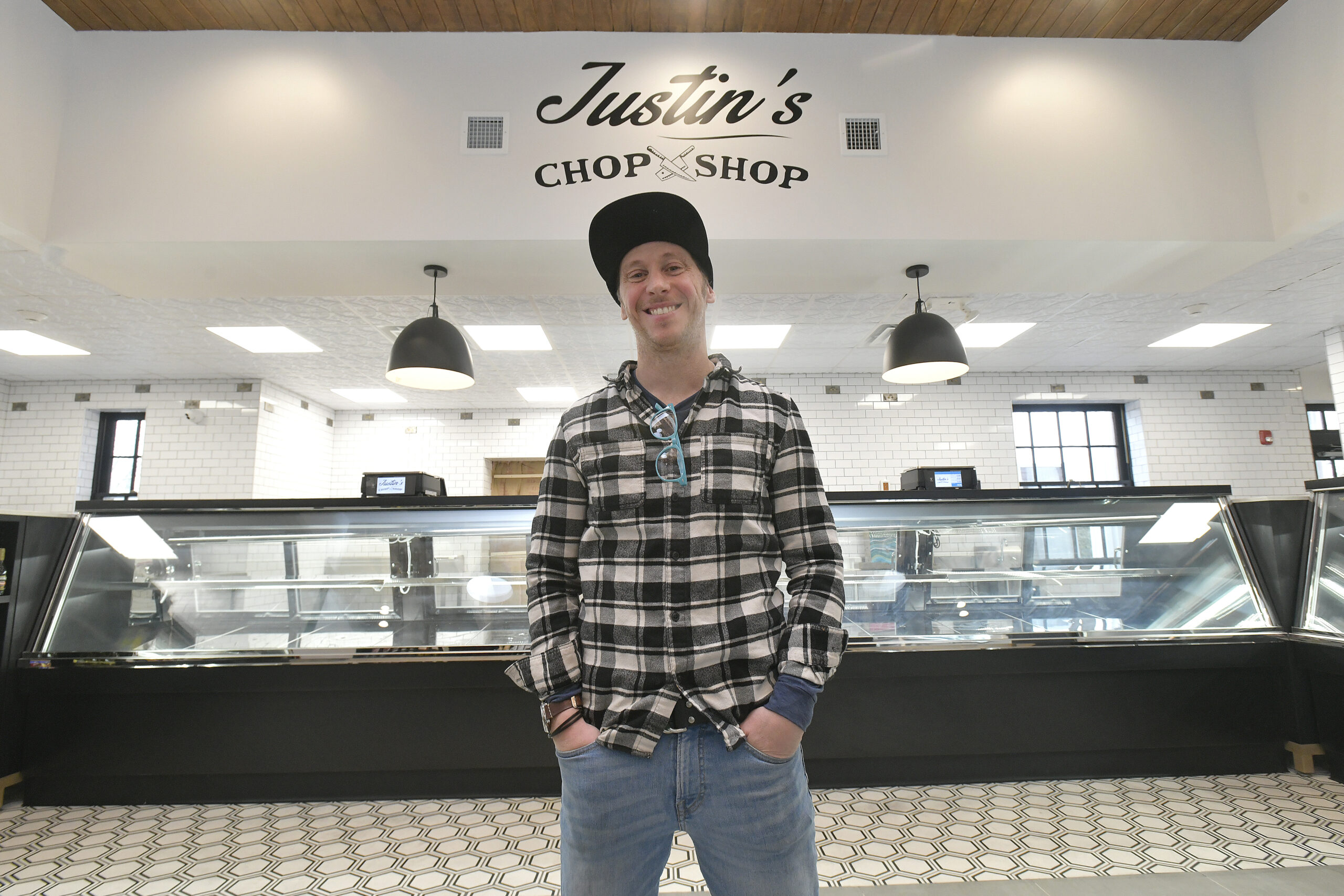
Justin DeMarco at the new location of Justin's Chop Shop in Westhampton Beach. DANA SHAW
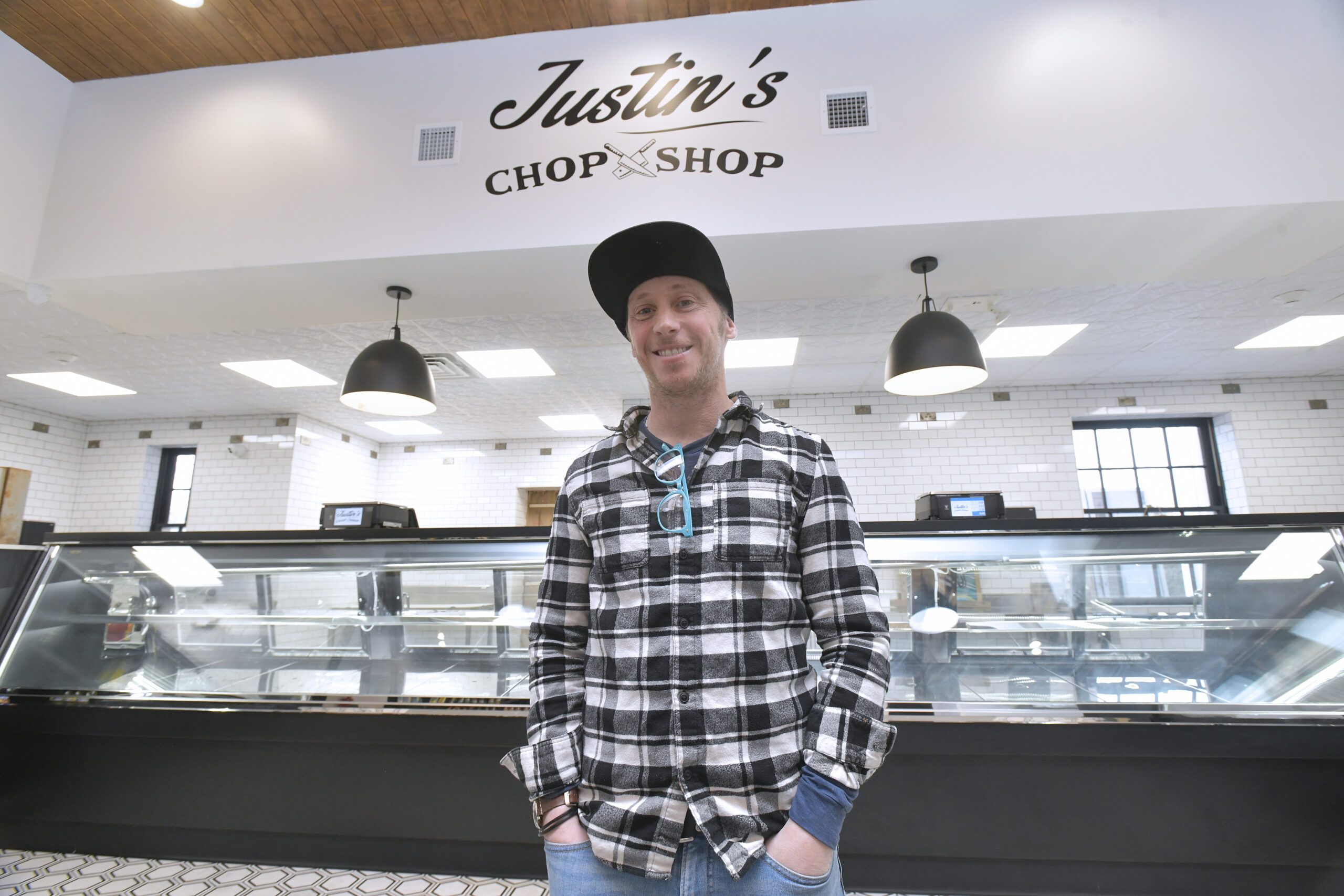
Justin DeMarco at the new location of Justin's Chop Shop in Westhampton Beach. DANA SHAW
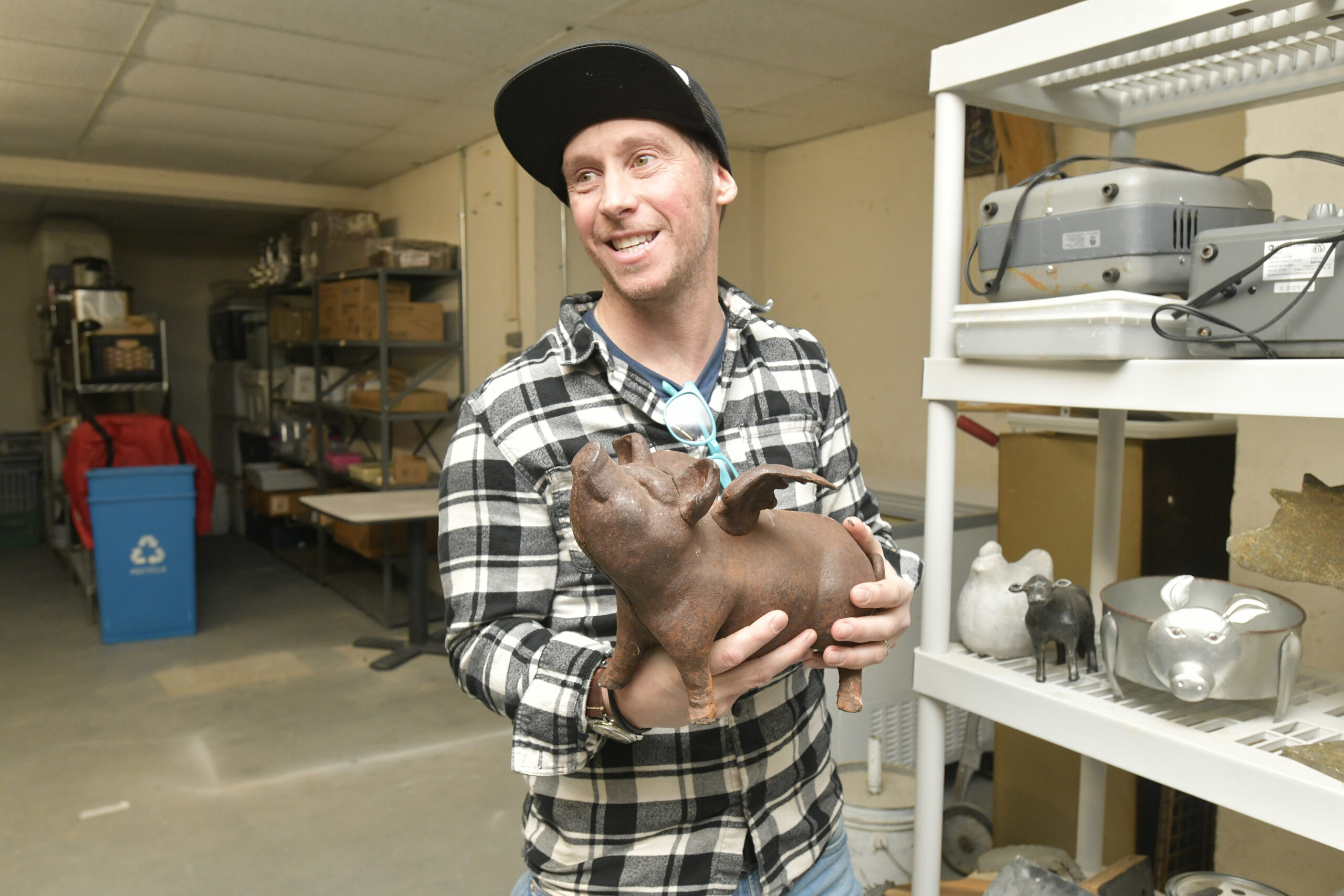
Justin DeMarco with the cast iron statue of a winged pig that depicts the idiom “If pigs could fly,” given to him by a friend. DANA SHAW
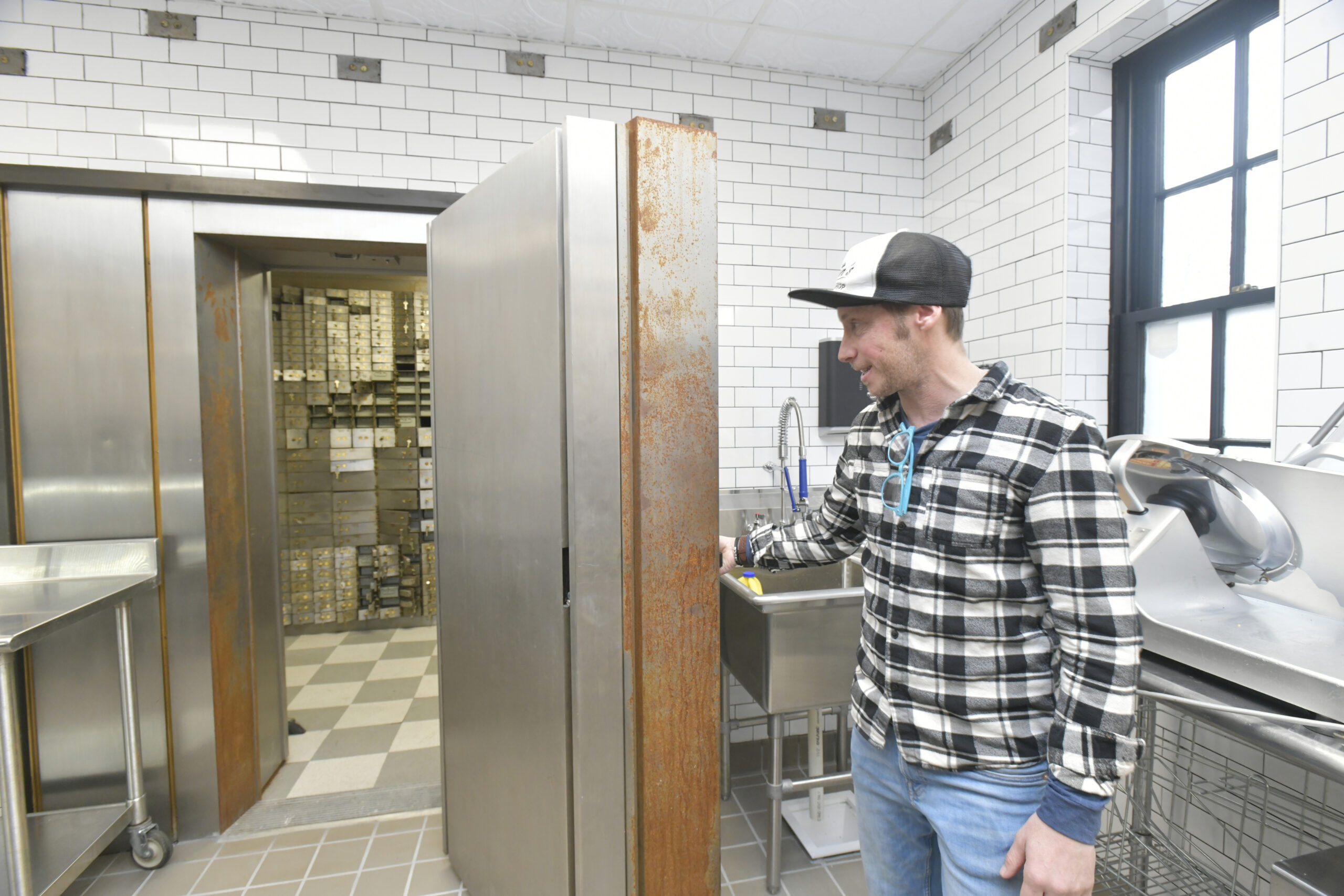
The vault of the former Sterling National Bank/ Astoria Federal Savings Bank still resides in the shop. DANA SHAW
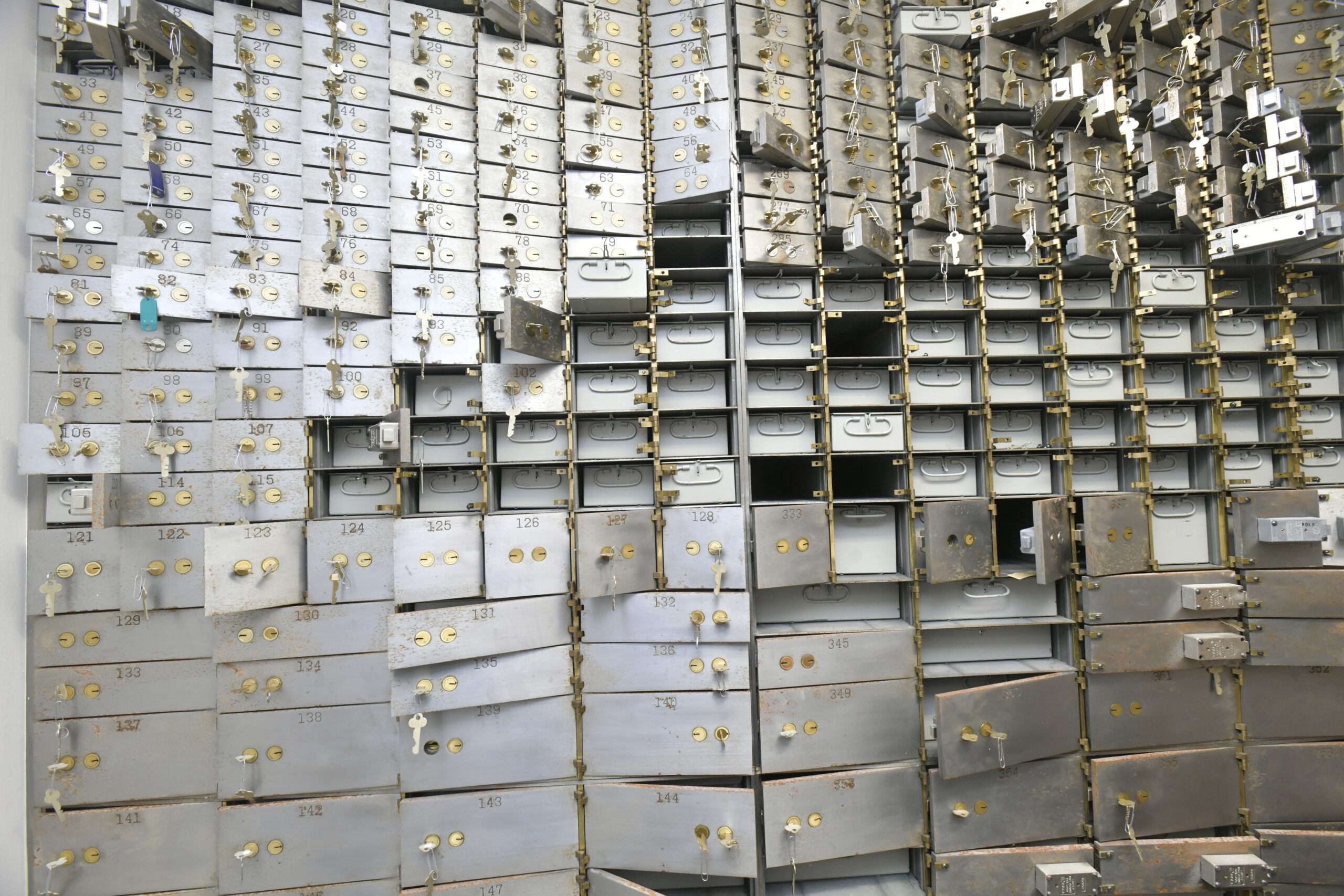
Safety deposit boxes with keys inside the vault. DANA SHAW
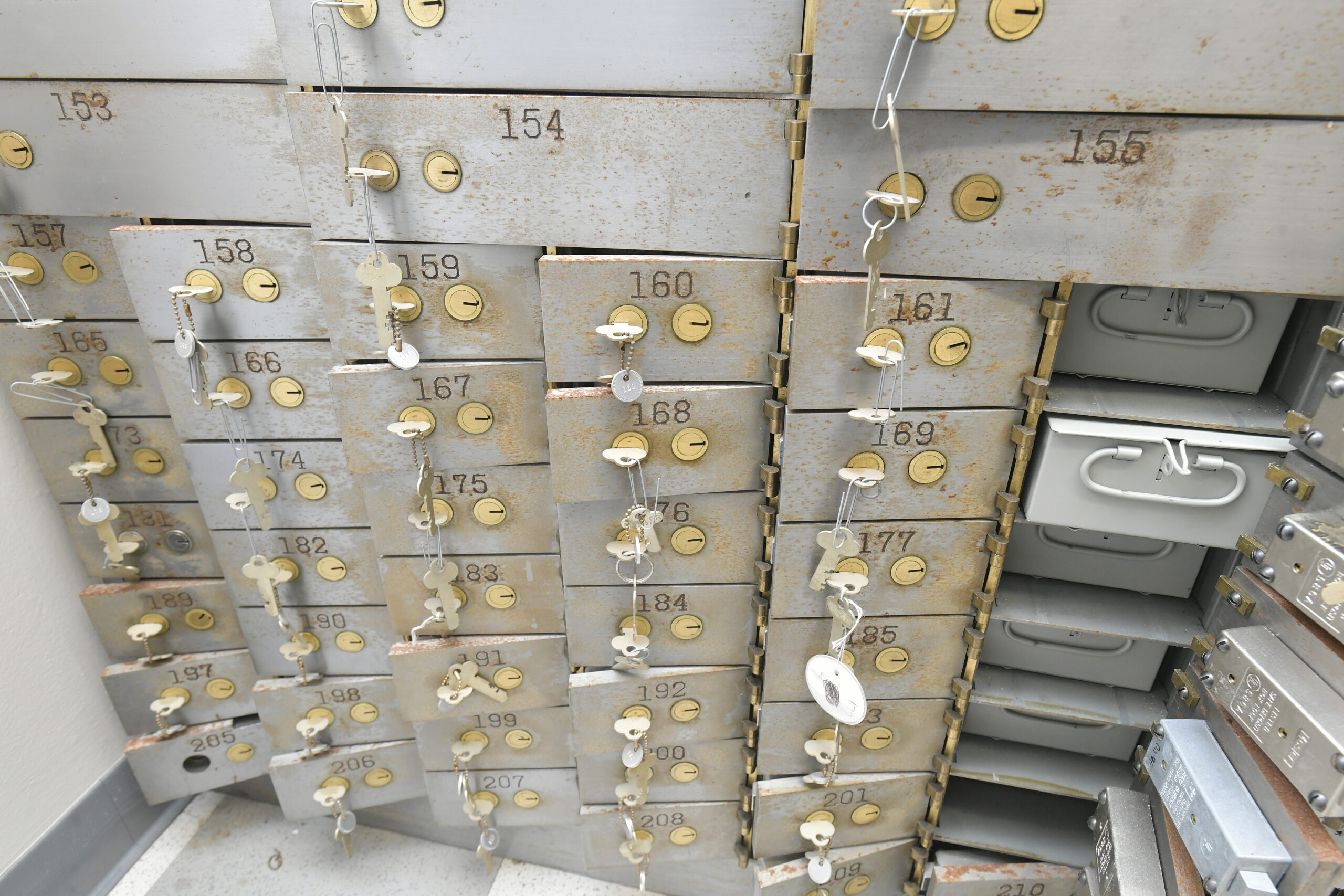
Safety deposit boxes with keys inside the vault. DANA SHAW
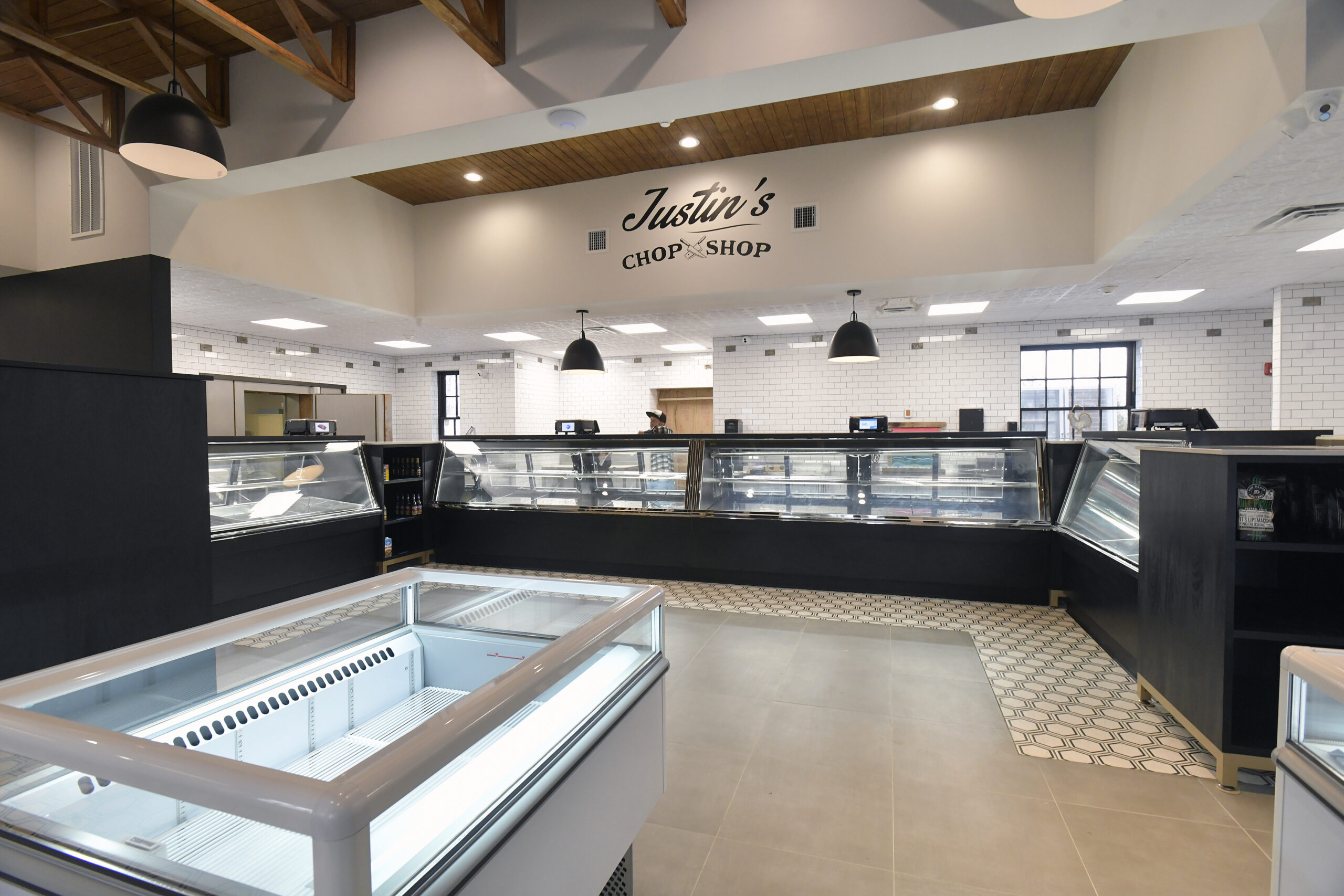
Justin DeMarco hopes to open the chop shop in Westhampton Beach hopes to open on Friday. DANA SHAW
About 2,300 square feet of the shop's main floor’s 3,000 square feet will be devoted to retail space. DANA SHAW
Wooden trusses, tin ceilings, gleaming stainless steel, traditional subway tiles, sleek black cases, safety deposit plates peppered throughout the site — and, of course, the cheeky Justin’s Chop Shop logo — transformed a utilitarian bank into a vibrant, welcoming space on Sunset Avenue in Westhampton Beach.
That’s no surprise, given the proprietor’s amiable persona. Village resident Justin DeMarco, 41, prides himself on getting to know his customers.
For the entrepreneur who has operated his small butcher shop on Mill Road since 2011, food is the conduit to making people happy.
“I don’t know that food is my passion,” he admitted. As a youngster, it was seeing delighted reactions from friends and family that interested him in making interesting dishes.
That the new Justin’s Chop Shop — set to open later this week — found its home in a vacant bank provides an irony of sorts. DeMarco was interning on Wall Street and had his sights set on a career in finance when the financial crisis in 2007 left him jobless. He considered pursuing a master’s degree at the NYU Stern School of Business, but his uncle, Eugene Grimes, gave him life-altering advice: “Everybody’s gotta eat. Buy that butcher shop out east.”
DeMarco opened Justin’s Chop Shop in 2011, “with no clue of what I was doing,” he recalled.
He may not have known meat, but he knew how to connect with people. “I talk to the blue collars and the high finance people. Everyone’s the same, just different bank accounts,” he said.
Meeting on Thursday, January 19, to offer a tour of the new shop, DeMarco revealed a secret to establishing great customer relationships: He takes notes.
DeMarco kept track of the scores of customers who visited his Mill Road shop, writing down details about the cars that pulled in and requests the drivers made, and kept the notes taped to his meat case. “I did that for months and months,” he remembered. That was key to building connections with customers who are now eager for a peek inside the new shop.
The transformation from Sterling National Bank — it was Astoria Federal Savings Bank for years before converting to Sterling — to the gourmet market has taken two years. The proprietor effervesced with enthusiasm as he opened the doors for a look-see prior to a planned opening this Friday, January 27.
Gutting the building was a challenge: Bulletproof glass weighed hundreds of pounds, as did old oak appurtenances throughout the 1970s-era building. “Everything was heavy, heavy,” DeMarco pointed out.
The municipal review process included an array of inspections and applications, but DeMarco noted that village officials were nothing but supportive, encouraging and open-minded.
A modern butcher shop with an old school feel was DeMarco’s vision, shared with his partner and the shop’s architect, Valentino Pompeo.
Soaring ceilings feature the wood trusses and tin panels for a vintage vibe that contrasts with industrial-feel lighting and foot after foot of shiny stainless steel and glass cases. Custom built to specifications crafted in collaboration with his staff, the cases are designed to be easy to clean and easy to repair, with everything piped to drains. DeMarco oversaw the process of building the cases at Paul Zambuto’s shop in Yaphank.
One wall boasts another custom feature: a massive, modern-style shelving unit.
“You go into a market and a lot of times, there’s just racks. It gives a generic feel. It’s very common,” DeMarco said. He approached a friend whose family owns the California Closets franchise on the East End: “I said, ‘I would love you to build me one piece to stage my beautiful high-end products.’”
The result of that relationship is the single-largest unit California Closets has built, he said. “It’s a feather in their cap,” the shopkeeper added.
DeMarco’s friend Anthony Devincenzo ended up building all the shop’s cabinetry. Everything of the highest quality, and built on risers for ease of cleaning. “We’re super proud of this — everything matches,” DeMarco said.
Matching meat, poultry and fish cases were also built by a friend who’s been servicing his store for 10 years now.
About 2,300 square feet of the main floor’s 3,000 square feet will be devoted to the retail space. DeMarco seemed just as proud of the ADA-compliant bathroom, with a self-cleaning toilet, and a separate closet for a slop sink and mops, as he is of a super-high-tech combination oven that’s a convection and microwave oven in one. He reports that his chef, Brian Szostak, keeps telling him to quit playing with the new appliance.
Pride is a feeling that flashes, again, across DeMarco’s face, when he speaks of Szostak. “He’s a super-talented chef and has a very creative mind,” he said. “What takes me four hours to do, perfecting a flavor, Brian can do in 15 minutes.”
At the back of the store, the bank vault is still intact. Throughout construction, DeMarco’s been giving away the old numbered safety deposit boxes to customers and friends. If the numbers have meaning — say, as the digits on a child’s sports jersey — DeMarco passes the box along. How he’ll use the vault is still under consideration. It could be a wine room, or a dry aging room for meat.
A huge basement is key to another of DeMarco’s hopes — that he can sell merchandise at a reasonable price.
“I know my store has its price point,” he acknowledged, noting that with such a small space, in order to survive he had to offer the high-price-point items. The term “gourmet market” carries a connotation that items will be expensive, he pointed out. But, with 3,000 square feet of storage space in the basement, he can buy certain items in bulk and keep many more on hand in refrigerated walk-ins.
Still another good friend and customer, the owner of a fast food franchise, gave him a bounty of storage racks, cutting that expense from DeMarco’s budget.
The basement also plays host to a feature that demonstrates DeMarco’s desire to care, not just for customers but for his employees as well. Compressors for all the refrigerated cases upstairs are located in the basement. That means workers don’t spend the day toiling in the din of the compressors. “It wears on you,” he said. Similarly, the kitchen boasts a quiet air circulator, as well as windows offering natural sunlight.
“Work is stressful,” DeMarco said. “The kitchen has sunlight, it’s quiet. The workers are not stressed. It’s really important for me to try to keep them happy.”
And when customers come and make a withdrawal of a tasty lunch or dinner from the bank-turned-market, they can sit on the patio and have a post-shopping beer: Justin’s Chop Shop has approval for beer and wine and outdoor seating for 14.
The basement is home, temporarily, to one more interesting item, something passed on to him from still another dear friend: A cast iron statue of a winged pig that depicts the idiom “If pigs could fly.”
Offered in response to an unlikely event, the phrase is apt for a path that’s taken a would be Wall Streeter to Westhampton Beach market owner, and an old bank to a new butcher shop.


