


 1 Photo
NULL
Voters in the Tuckahoe School District on Tuesday resoundingly defeated a proposal by the School Board to renovate a house adjacent to the school grounds to provide housing for the district’s superintendent.
The measure was defeated by a margin of more than three-to-one, 249-70, although turnout was small: Tuckahoe has approximately 1,800 registered voters.
If approved at the polls, the proposal would have allowed the district to spend $95,000 from a reserve account to renovate a 1,600-square-foot house located on property the district purchased last year for $515,000. At the time, the School Board said it was purchasing the half-acre property in case it needs to expand the school’s facilities in the future. District officials said the property could potentially be used to provide extra classroom space to meet an expanding student population. Tuckahoe School enrolls approximately 360 students in prekindergarten through the eighth grade.
According to the Board of Education’s most recent proposal, however, the district would have renovated the existing house in the meantime and rented it to newly hired Superintendent-Principal Joseph Dyer at “a fair market rate,” according to School Board President Robert Grisnik.
Mr. Dyer, who took over the district this year, currently rents a home with his wife in Shinnecock Hills, in the Tuckahoe district. He earns $155,000 a year.
The board had proposed to use money from a $650,000 reserve fund, money unspent in past budgets, so that it would not add to the tax bills of residents this year. But critics of the idea said that the money was coming out of the pockets of taxpayers eventually anyway.
“It’s ridiculous,” said Cindy Beeker, a district parent and a public school teacher after casting her ballot on Tuesday evening. “It’s not the way to spend money in hard times. People are struggling. It was purchased to expand the school. If they want to do something, they should tear it down and build something for the children.”
Another “no” voter, Justin Zack, said he was against “excess” spending at a time when money is tight for many residents. “I don’t think they should be spending money right now,” he said.
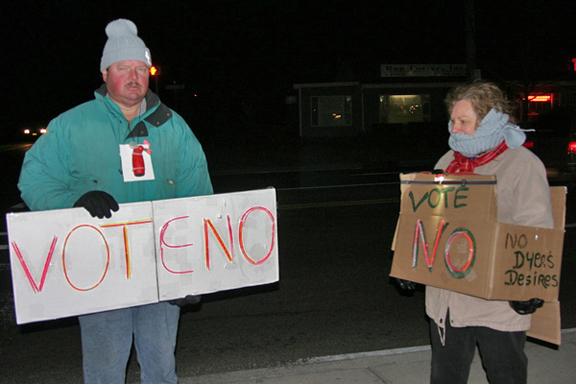
Outside the school during the vote, residents Doug Unger and Diane Sadowski wore lighted homemade signs around their necks and braved the freezing cold to urge others to “Vote No” on the proposal.
“That is not a good use of money,” Mr. Unger said.
Richard Warren didn’t listen—he was one of the 70 residents who voted in favor of the idea. He said that spending money to improve and maintain a school property seems like a wise investment, much as the $175,000 the district spent last year on a new playground was. And while Mr. Dyer had taken the job already anyway, having a house to offer at a reasonable rent could help the district attract candidates in the future.
“It’s an opportunity for the school to provide housing that could be attractive in terms of maintaining good, quality people,” he said. “This is a tough place to live.”


 Michael Wright on Dec 22, 2010