


 4 Photos
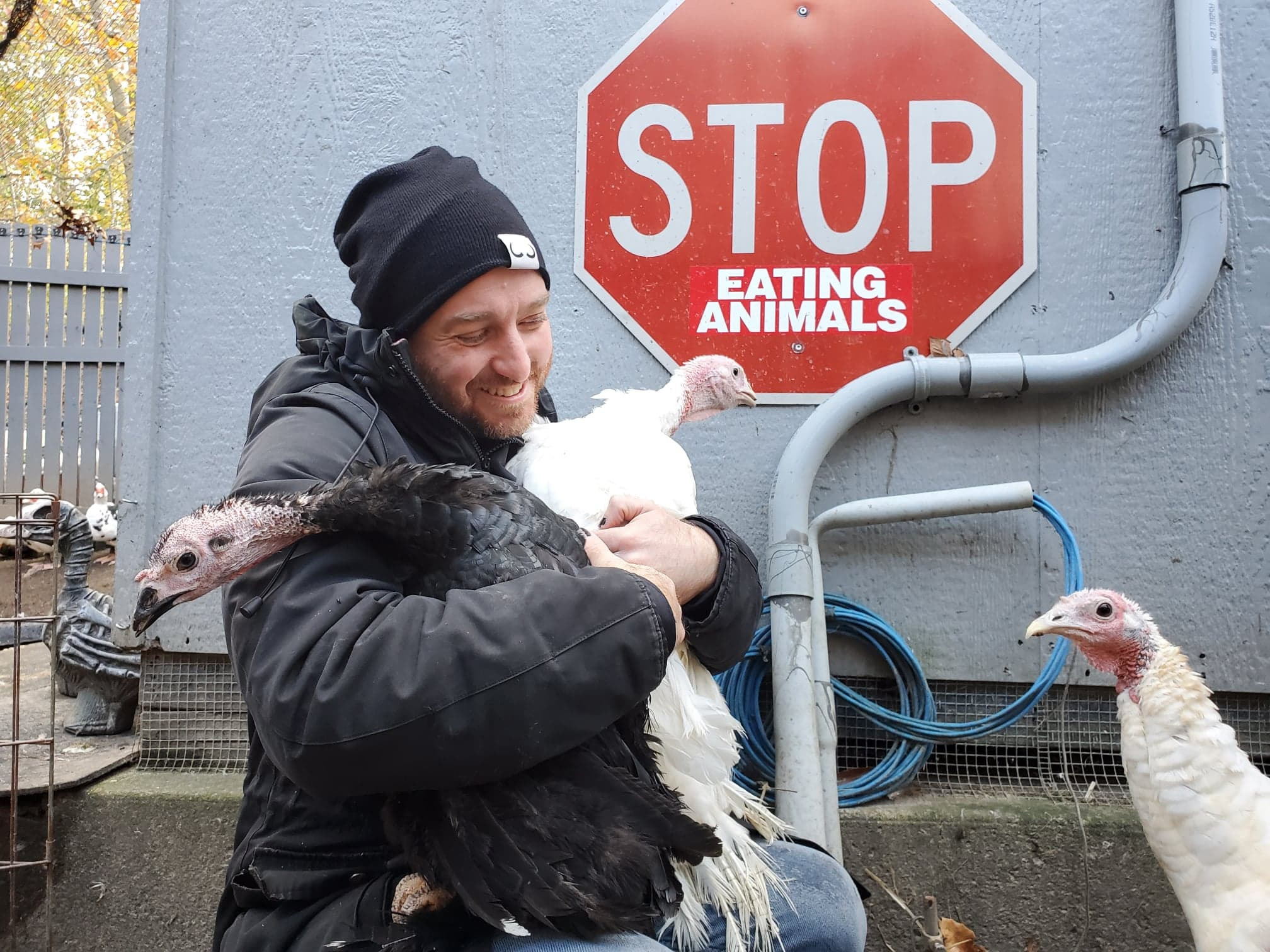
Ahead of the holiday, Humane LI has rescued a trio of domestic turkeys potentially bound for Thanksgiving tables. Organization President John Di Leonardo posed with the threesome, including one ( bottom, right) that was treated at the Evelyn Alexander Wildlife Rescue Center in Hampton Bays. COURTESY HUMANE LI
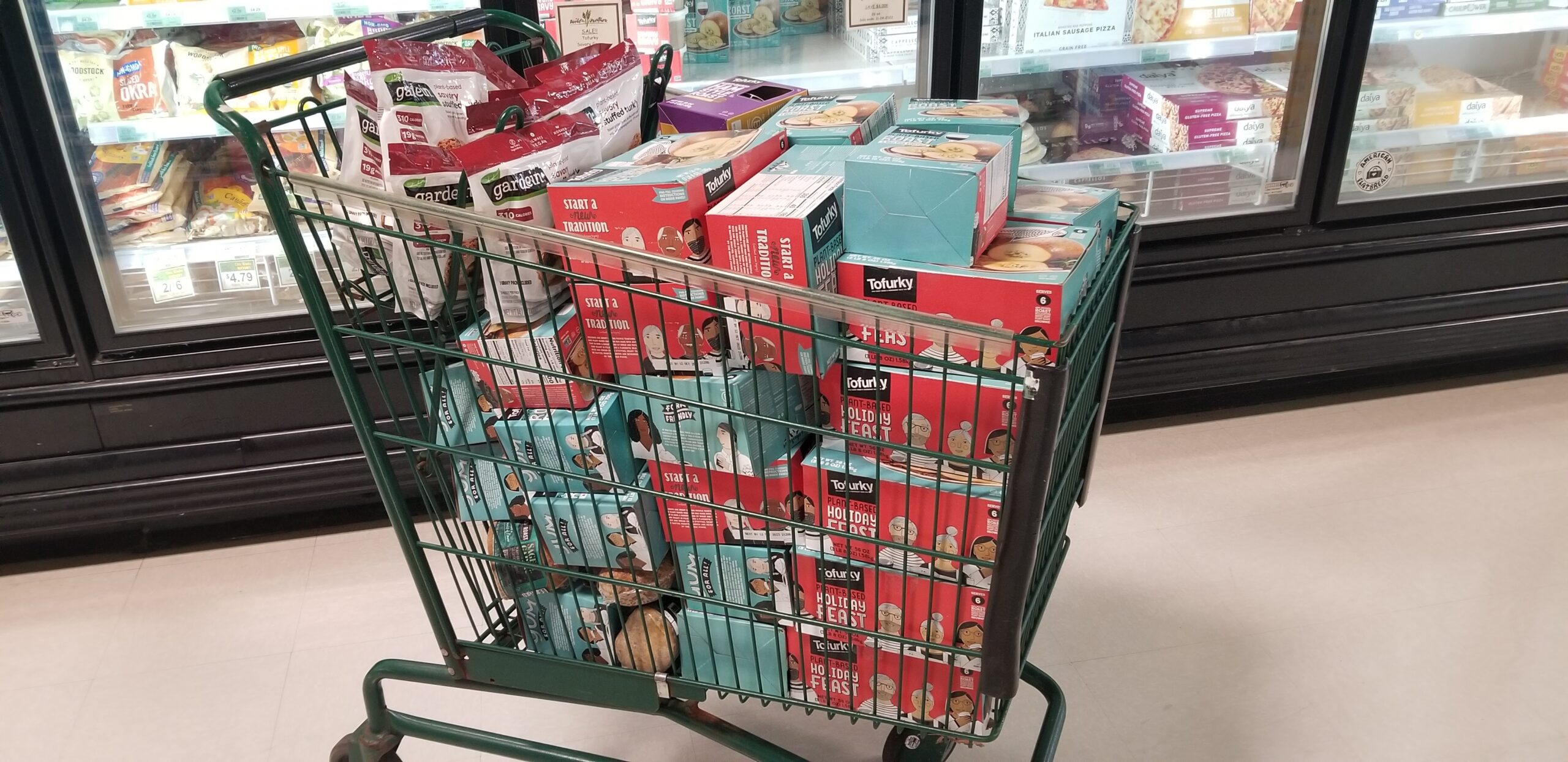
Humane LI loaded up a cart with tofurkeys at Wild by Nature in Hampton Bays to deliver to animal rescue counterparts. COURTESY HUMANE LI
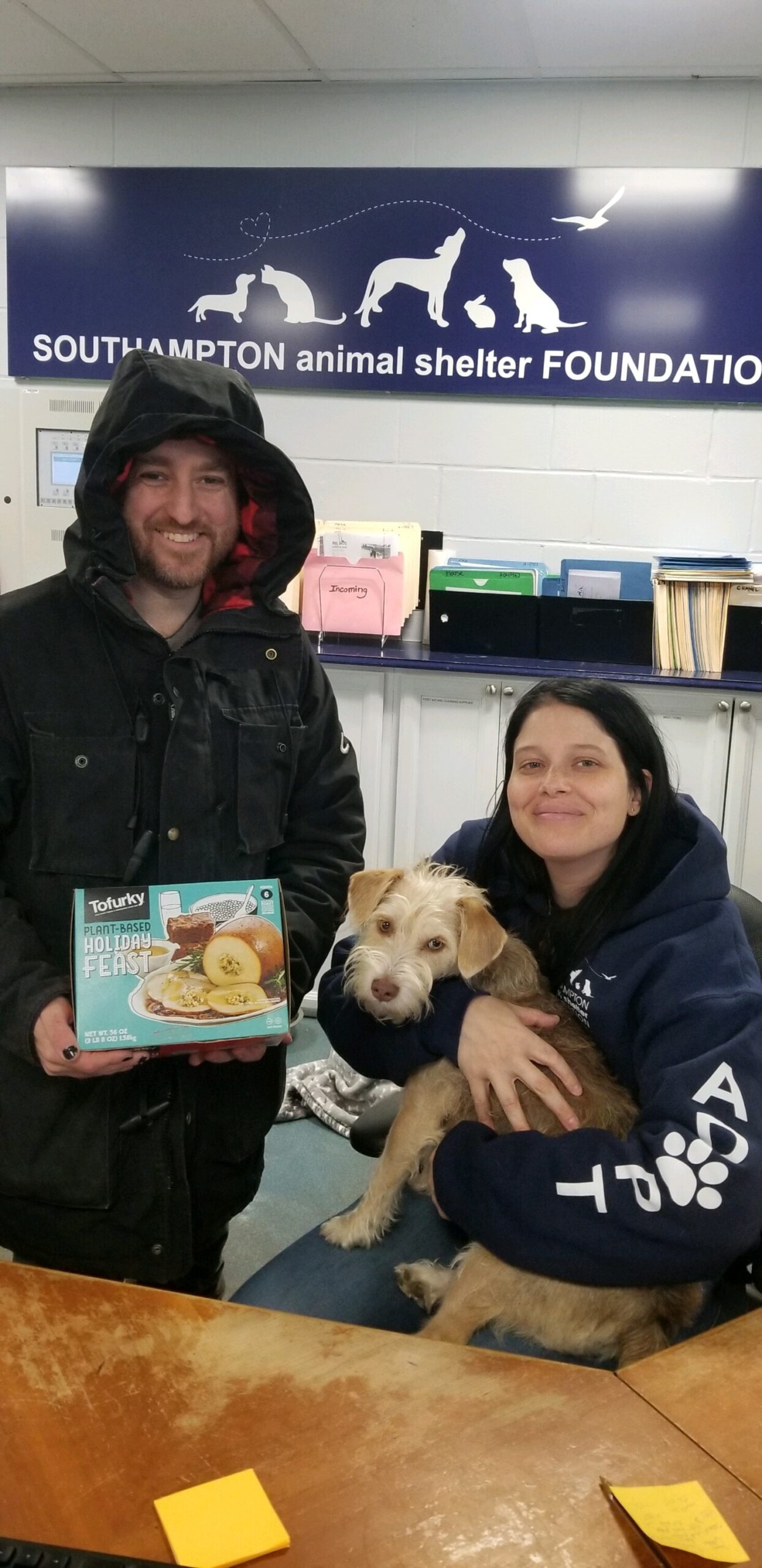
Humane LI president John DiLeonardo delivered tofurkey to Ally Burke, seen holding Jolene, of the Southampton Animal Shelter Foundation last week. COURTESY HUMANE LI
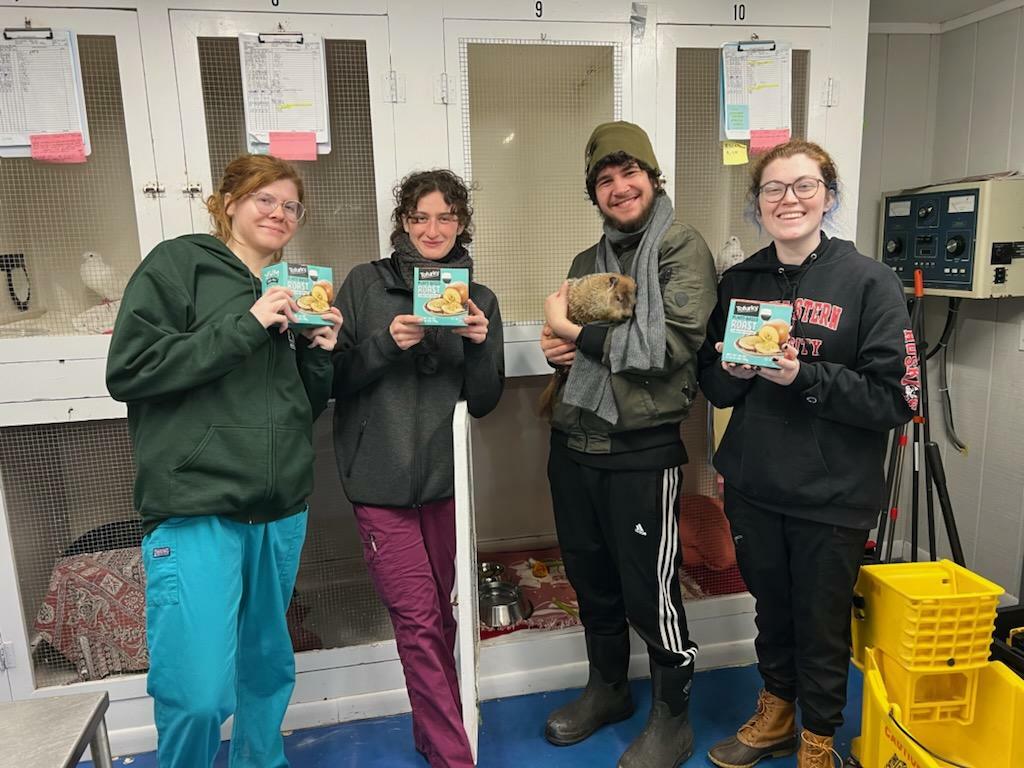
From left to right, Mary Tracy, Grace DeNatale, Ryan Gilmartin, and Rose Lynch and Allen the groundhog with tofurkey brought by Humane LI. COURTESY HUMANE LI
Four domestic turkeys, including one found on the South Fork, escaped the Thanksgiving dinner table and will live out their days at sanctuaries, thanks to the work of Humane Long Island and the Evelyn Alexander Wildlife Rescue Center.
John Di Leonardo, president of the Riverhead-based Humane Long Island announced the rescues on Thursday, November 17, along with plans to donate 1,000 vegan meals in New York City and on Long Island.
Two of the turkeys were surrendered to his organization by a New York City slaughterhouse in exchange for vegan tofurkey roasts.
Every year, Di Leonardo manages to convince slaughterhouses to exchange live turkeys for vegan meals. “It’s nice to find common ground with them,” he said.
A third turkey was rescued in Elmont, in Nassau County, and the local bird was found in Hampton Bays. It had apparently been hit by a car, according to Adrienne Gillespie, the Wildlife Center’s hospital supervisor.
Based on the condition of her feathers and feet, the South Fork hen looked to be a younger turkey, but over a year old. It had been in a yard hanging out with the wild turkeys when it was apparently hit by a car in October.
Normally, the center focuses on rescuing wild animals and when they responded, rescuers saw it was domestic. “But she was in such bad shape, we decided to try and help her,” Gillespie said.
The hospital supervisor had praise for Dr. Karen Johnston at the Hampton Veterinary Hospital in Speonk, who treated it for free.
The turkey sustained a fractured pelvis and dislocated leg and spent over a month in cage rest, Gillespie reported.
The turkey couldn’t be released back into the wild like the center’s other rescues of wild animals often are. It would be a “sitting duck” among other, bigger wild birds, whose feathers are dark — it is mostly white.
And, thanks to the center’s relationship with Humane Long Island, rescuers were able to contact Di Leonardo and he found a place for the turkey at Woodstock Farm Animal Sanctuary, where it can be monitored in case its injuries act up and cause pain. It was better off going back to being a farm animal, Gillespie said.
Di Leonardo rescues turkeys from slaughter each Thanksgiving.
In a release announcing the initiative, he noted, “With avian flu killing off 6 million turkeys nationwide, which is nearly 14 percent of U.S. production, and news now breaking that nearly 40 New York City and Long Island live slaughter markets have been shut down this week due to yet another outbreak of this deadly disease, it has never been a better time to help animals and your health by taking animals off your plate.”
Asked to speculate how the hen came to be loose in the Hamptons, Gillespie said it may have wandered away from a local farm. It may have gotten over a fence. Center staff posted about finding it on social media, but no one came to claim the turkey. It also could have been dumped locally, like a ferret rescuers found in an area parking lot. Gillespie pointed to another relationship, with the Southampton Animal Shelter Foundation, which will take domestic animals the center finds and put them up for adoption.
The hen didn’t seem as frightened of humans as wild turkeys are. They’ll hiss and flap their wings in captivity. The hen was quite docile and “a good girl,” Gillespie said. She said the center sees injured turkeys rarely, maybe once or twice per year.
As a reward for their care of animals, Di Leonardo brought staff at the center and the Southampton Animal Shelter Foundation tofurkey loaves, after purchasing 100 of them at nearby Wild By Nature.
Wild turkeys are native to North America and, according to the New York State Department of Environmental Conservation website history, may have predated the earliest human inhabitants. Turkeys were hunted to near extinction during the mid-1800s. Some crossed over from Pennsylvania in 1948 and the state population began to regenerate after 100 years.
On Long Island, they were introduced from flocks upstate during the 1990s and their population rapidly increased — to the point where a hunting season opened. But they are legally protected as a game species in New York. There are highly regulated hunting seasons in the state.
Locally, Gillespie said wild turkeys are “everywhere” adding, “And it’s a good thing, because they eat the ticks.”


