


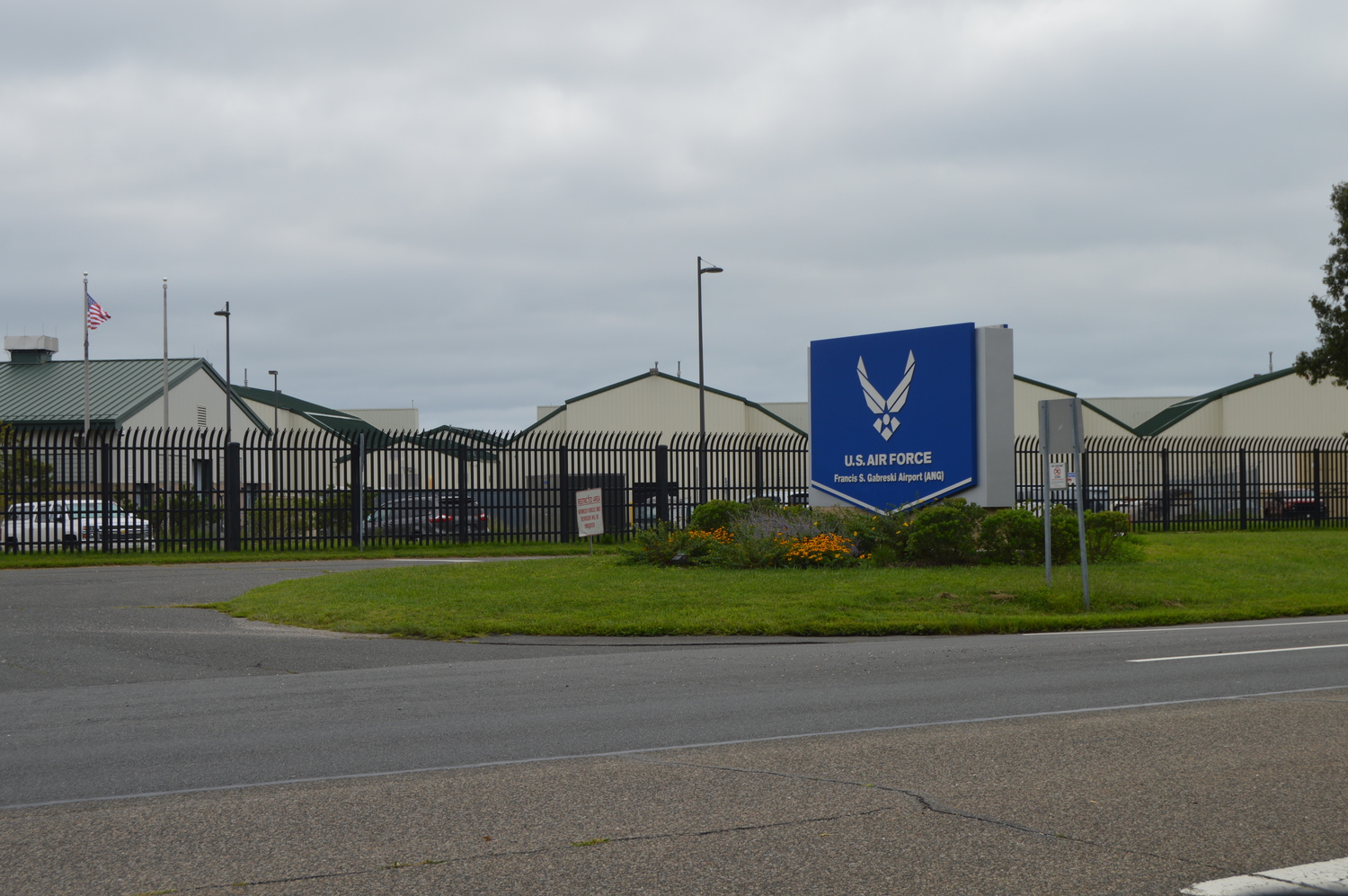
 1 Photo
U.S. Army headed to Gabreski Airport in search of PFAS, or so-called "forever chemicals." TOM GOGOLA
The Town of Southampton is poised to sign a right-of-entry agreement with the U.S. Army to allow it to access properties owned near the Gabreski Airport Air National Guard Base in Westhampton, where the Army will test for the presence of polyflouroalkyl substances, or PFAS.
PFAS are otherwise known as a “forever chemicals” and are present in commercial materials including firefighting foam, the suspected contamination culprit at and around the sprawling Gabreski facility. Part of the airport grounds was historically used as a firefighting training area.
The Army will conduct a remedial investigation for PFAS, drill test borings and collect soil samples over the next 40 months, according to a resolution that the Southampton Town Board was to vote on this week before a winter storm pushed off a February 13 meeting to February 15. The resolution, once it’s voted on, would green light an Army right-of-way agreement on the town-owned land.
According to the New York State Department of Environmental Conservation, elevated PFAS levels were first detected in water-supply wells located south of the airport in 2014. The substance, along with a related substance known as PFOS, were added to the state’s hazardous substance list two years later to make remediation possible under the state Superfund program; Gabreski was identified as a state Superfund site.
Westhampton Beach homes that used private drinking wells discovered to be contaminated with PFOS and PFAS have been switched over to public water.
In 2020, U.S. Senator Kirsten Gillibrand mentioned groundwater contamination in Westhampton during a Senate hearing devoted to PFAS and PFOS contamination, noting that “PFAS is also hurting families near the … Gabreski Air National Guard base in New York.” Gillibrand has since introduced legislation seeking to restrict the manufacture and use of PFOS and PFAS.
In 2022, Newsday reported that following a site inspection at Gabreski, the federal government had awarded a $4 million contract to a Dallas-based engineering firm, the U.S. Army Corp of Engineers and the Air National Guard for the “remedial investigation” of PFAS and PFOS on the Gabreski property.
That effort was spearheaded by U.S. Senator Chuck Schumer, who in 2023 championed a ruling by the United States Environmental Protection Agency that proposed a first-ever national drinking water standard “for six different PFAS known to occur in drinking water,” according to a Schumer press release. He noted that $10 billion in the 2021 Infrastructure Investment and Jobs Act had been earmarked to identify and clean up PFAS.
“This proposal will spur clean-ups and radically reduce health impacts that could flow from long-term exposure to PFAS,” Schumer said at the time.


