


 3 Photos
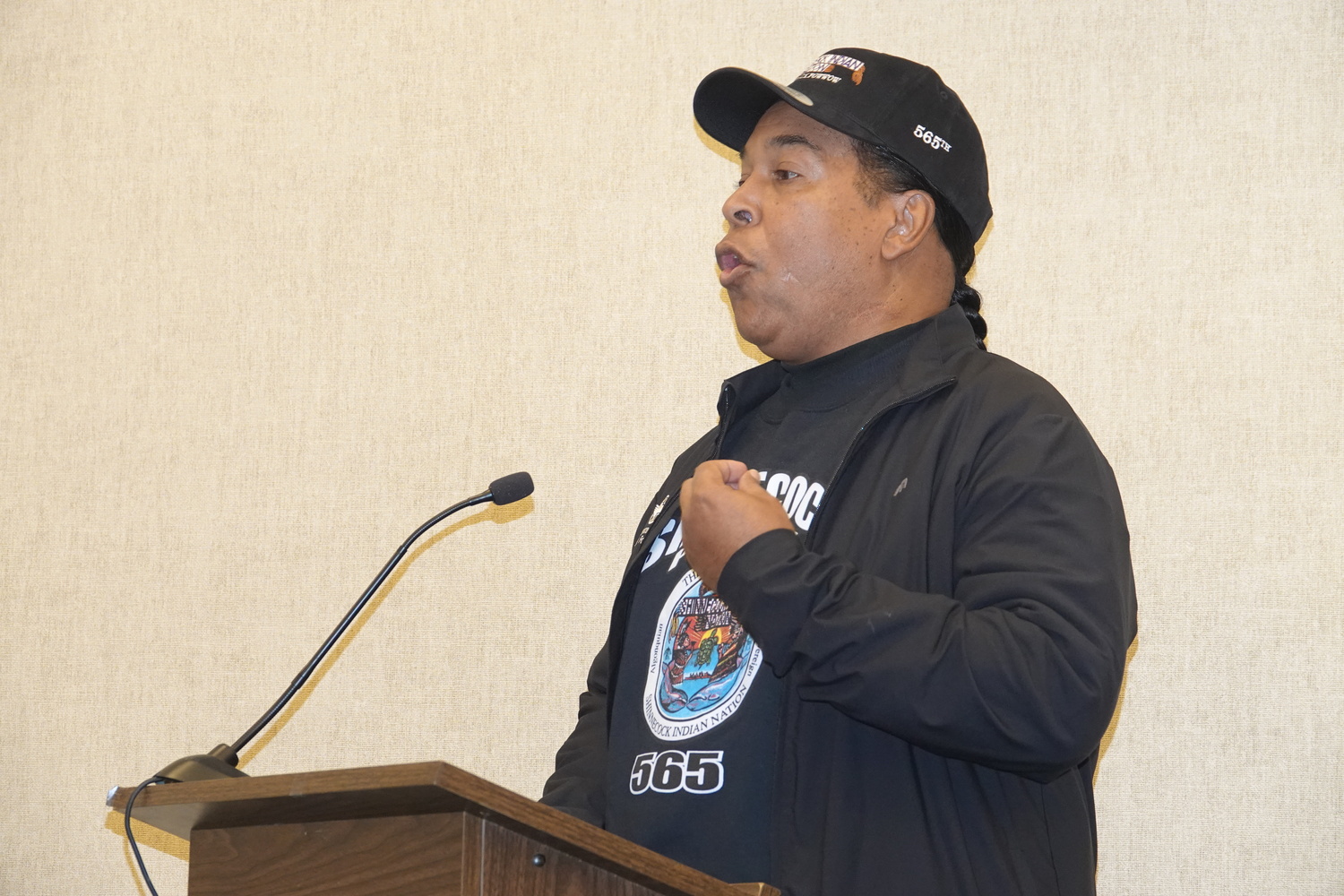
Lance Gumbs, the vice-chairman of the Shinnecock Nation Council of Trustees. MICHAEL WRIGHT
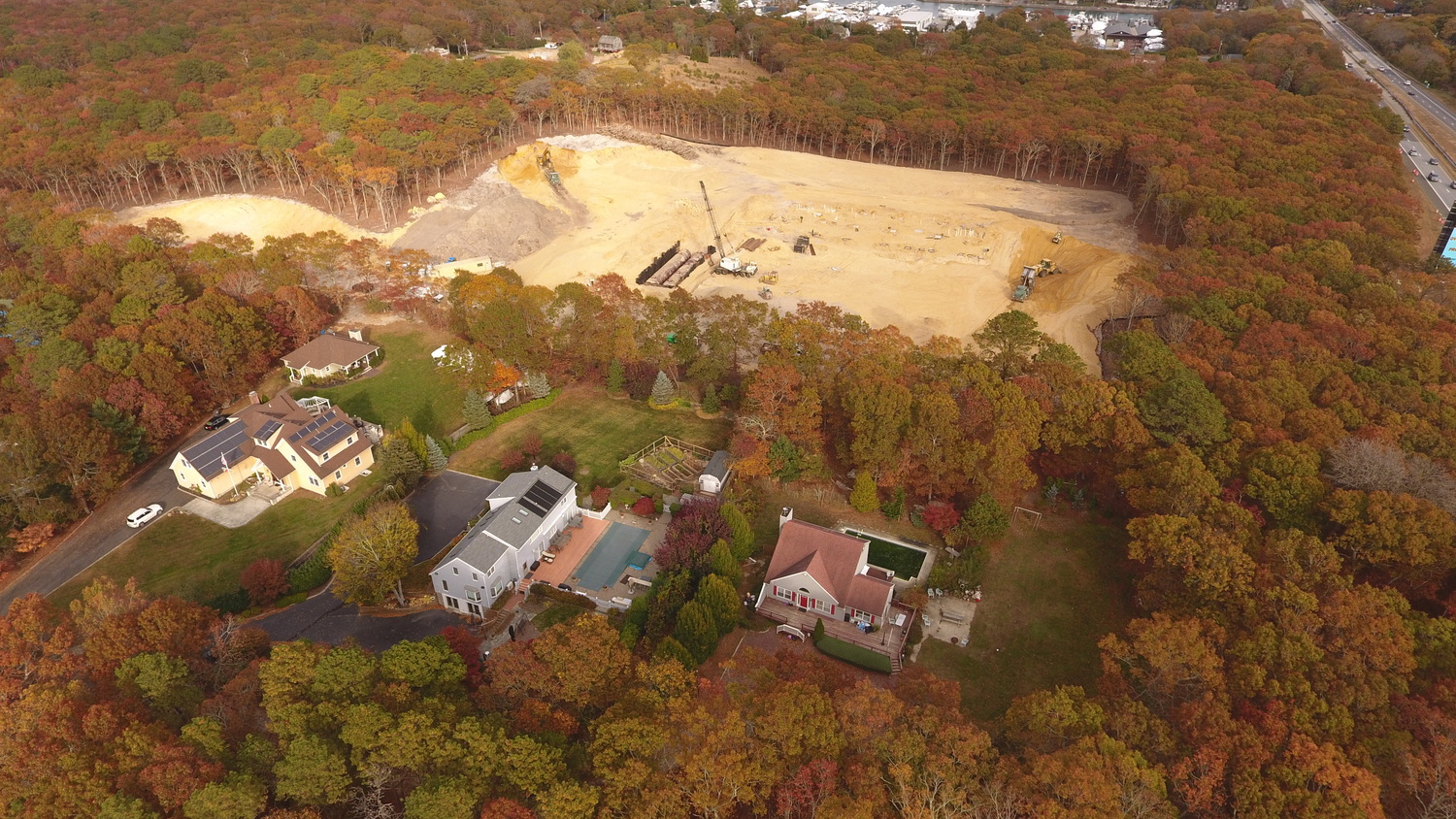
The gas station construction at Westwoods is ongoing but Southampton Town is expected to request a restraining order to halt the work while its legal challenge to the tribe's sovereign authority over the property is adjudicated.
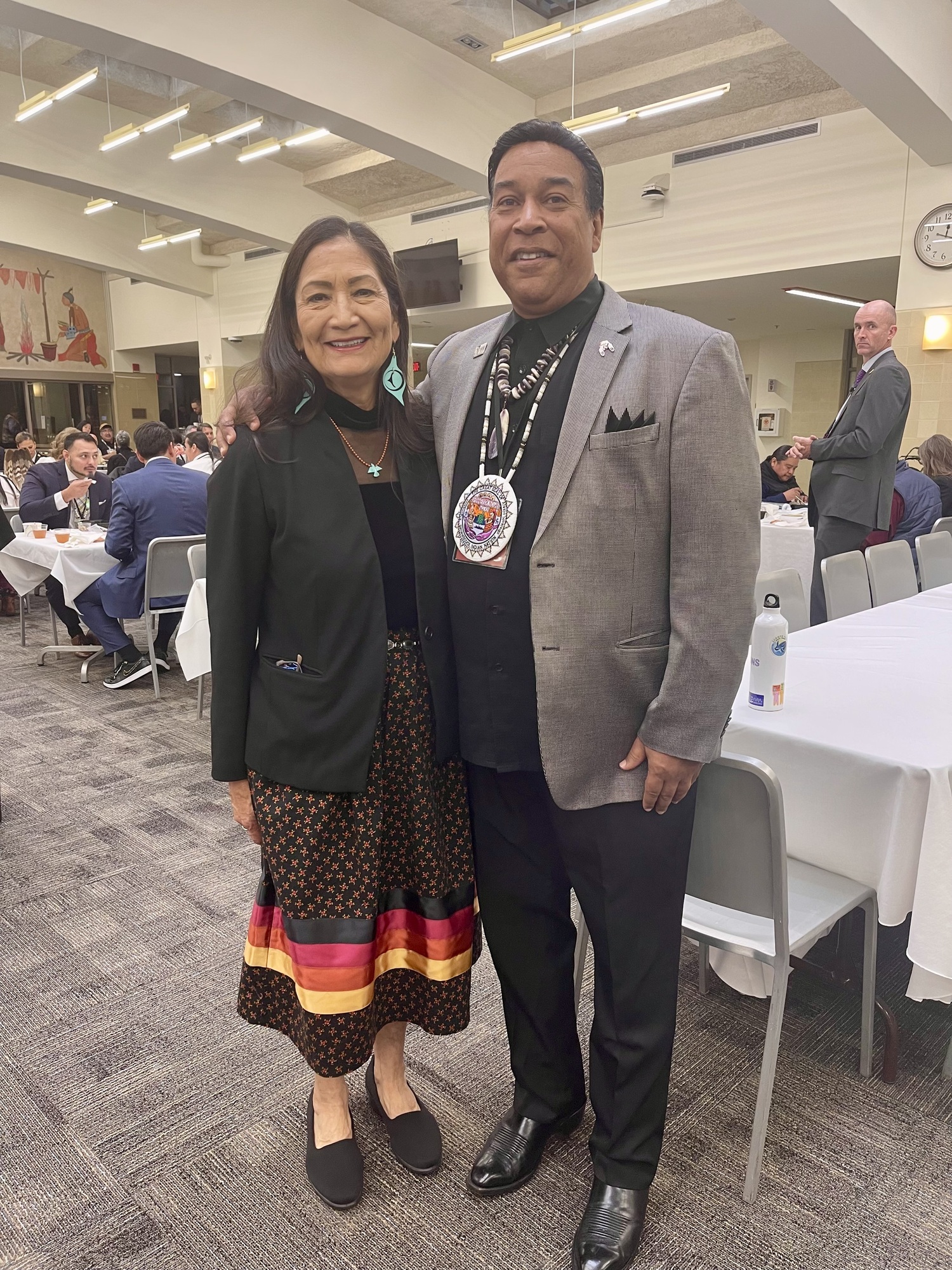
Gumbs, the vice chairman of the Shinnecock Nation Council of Trustees, with Deb Haaland, the U.S. Secretary of the Interior, earlier this year.
Members of the Shinnecock Nation last week celebrated the issuing of a finding by the U.S. Department of the Interior that they say validates their claims that the 79-acre parcel in Hampton Bays known as Westwoods is “aboriginal territory” that the tribe has occupied “since time immemorial” — phrasing with potentially significant relevance to the ability of the tribe to develop the property free from local government oversight.
The letter was issued on January 2 by Bryan Newland, the assistant secretary of the Department of the Interior for Indian Affairs. He said that after an extensive examination of the tribe’s title claims to the Westwoods property, he was instructing the Bureau of Indian Affairs to record the Westwoods property in the BIA’s Trust Asset and Accounting Management System as a parcel of “restricted fee” land.
“The department examined the land title status of the Westwoods parcel and determined that it is within the nation’s aboriginal territory, that the nation has resided within its aboriginal territory since time immemorial and has never removed therefrom, and that Westwoods is within the purview of the Nonintercourse Act and is therefore restricted against alienation absent consent of the United States,” the letter says, referring to the federal statutes that first created “Indian reservations” for displaced Native Americans and prohibited any Indigenous nation’s lands to be taken, traded or purchased without consent of the U.S. Congress.
Newland’s letter comes in the wake of Southampton Town filing a lawsuit challenging the Shinnecock’s right to develop the property because the land was supposedly traded away in the 1600s, extinguishing the sovereign rights land owned continuously by a Native American tribe might otherwise carry. The lawsuit, filed by the town on December 20, asks a state court to halt the tribe’s ongoing construction of a gas station on 10 acres of the Westwoods property that abuts Sunrise Highway.
The foundation of the town’s claims are two 17th century documents that seem to indicate Native American leaders — one of them not even Shinnecock — had sold or traded away the lands surrounding and including Westwoods to European settlers.
But Shinnecock leaders say that the two deals the town cites referred simply to land “west of Canoe Place,” and that to the Shinnecock at that time what is now called Westwoods would have been considered wholly a part of the region that European settlers had dubbed Canoe Place — in reference to it being a common canoe portage, because it was the narrowest neck between the two bays.
The lands those deeds referred to would have been well beyond the Canoe Place region, which was at the time the site of the tribe’s main settlement, they say.
The nation has also argued that the conveyances should have long ago been deemed legally invalid because they did not comply with the laws of the Connecticut colony — which eastern Long Island was governed by at the time — that required any such deed conveyance to be validated by the English crown.
Tribal leaders applauded the recent finding from the Department of the Interior.
“I’m ecstatic right now — this is the greatest thing that has happened for our tribe since the federal acknowledgment,” Shinnecock Council of Trustees Vice Chairman Lance Gumbs said, referring to the federal recognition granted to the Shinnecock in 2010. “The protection of our lands is as important as the federal acknowledgment, because it solidifies our holdings against this modern-day land grab by the town.”
Lisa Goree, chairwoman of the Shinnecock Nation Council of Trustees, said that the tribe had asked the Interior Department to make a determination of Westwoods’ status after the New York State Department of Transportation sued the Shinnecock for erecting two electronic billboards on the sides of Sunrise Highway, which runs through the Westwoods property.
A state court ruled on that lawsuit last month, saying that the tribe did not have the right to construct the billboards despite its sovereignty — though the ruling did not directly address the legal status of Westwoods. Last week, the tribe’s attorneys filed a motion asking the judges in the case to set aside the decision in light of the letter from the Department of the Interior.
They said that they hoped the letter would force the town officials to rethink their own legal posturing.
“This reaffirms what the nation has always known, for centuries,” Goree said last week. “This is nothing new to us, of course, but I am sure it is something the town has been waiting to confirm. Whether they will pull back on their lawsuit because of this, I don’t know — that is up to them.”
Town Supervisor Maria Moore said the town does not plan to do that.
She questioned whether the letter from Newland really imparts as much legal weight as the Shinnecock have implied that it does.
“We’ve asked them to provide the information that the author of the letter is basing it on — what was he looking at to come to that determination,” Moore said. “The conclusion they reached is that it’s held ‘restricted fee,’ but all that means is that the property can’t be transferred to others without consent of the federal government. That is a far cry from saying it is still aboriginal title. It’s two separate standards.
“So we’re proceeding with the litigation until we get clarification,” she added. “This is something that was litigated in a 40-day-long trial in federal court with a very detailed decision. Now this two-paragraph letter is supposed to settle it? This doesn’t give them license to do whatever they want without regard for existing law, and it seems that is how [the tribe is] interpreting it.”
The legal challenge to the construction of the gas station stands on two main claims: that the Shinnecock do not have “aboriginal title” to Westwoods because of the disputed 17th century deed transfers; and that, regardless of the status of the land, the tribe should still not be free to develop it completely unfettered from local oversight because of a landmark U.S. Supreme Court ruling in a lawsuit between the Oneida Nation and an upstate city, Sherrill.
The town lawsuit closely follows the arguments in previous cases against the tribe’s claims of sovereign authority over Westwoods — one brought by Southampton Town in 2004 to halt plans for a casino at the property, and the more recent DOT lawsuit over the construction of the Sunrise Highway billboards.
The state court sided with the DOT in its decision last month, citing the Sherrill case and saying that the tribe’s sovereignty does not free it from local regulatory authority, because allowing such an exception would be too disruptive to standard norms of development along state roadways.
“Even if the nation’s aboriginal title to Westwoods had not been extinguished, the nation would not be able to do whatever it wants on the land because, under settled federal law, an Indian tribe cannot exercise its sovereignty in ways that significantly disrupt settled expectations,” the town’s lawsuit reads, borrowing phraseology directly from the Sherrill decision that was also referenced in the recent state court decision.
The town’s lawyers claim that in addition to the 17th century deed conveyances, there is “little to no evidence that the nation occupied or used the Westwoods parcel” in the late 17th and 18th centuries, which they say is indicative of the land having been seen as abandoned by the tribe.
Gumbs, the vice chairman of the tribal Council of Trustees, says that the town and its attorneys are grossly — or conveniently — misinterpreting the deed conveyances and that the land was never abandoned, it just was used less often and mostly as “wood lots” for gathering firewood after the arrival of European settlers began cramping their traditional seasonal movements.
He said that the language barrier between the Shinnecock people of the 17th century and the European settlers may have sometimes led to misunderstandings of what was being conveyed in agreements between the two, but that the Shinnecock have never not occupied Westwoods.
“We’ve never relinquished those lands. That land has never been taxed. We have had our ceremonies over there for centuries and centuries — just like we did today,” Gumbs said on Christmas Eve. “We shared the land. We didn’t have land ownership, and to say that we gave the land away or that we sold the land or the land was conveyed, we consider that a modern-day land grab.”


 Michael Wright on Jan 2, 2025