


 1 Photo
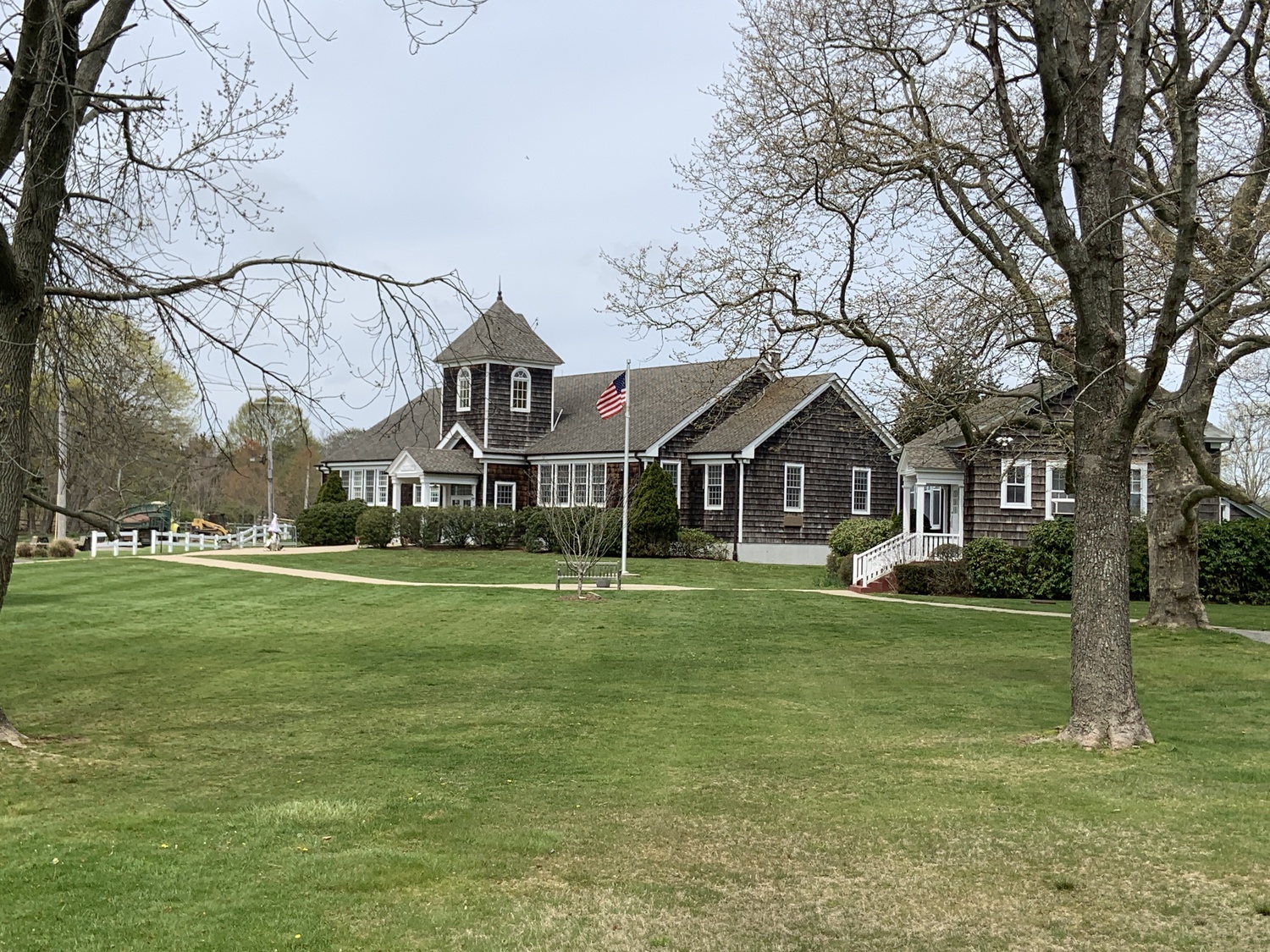
The Wainscott School. STEPHEN J. KOTZ
Just six people turned out Monday for the Wainscott School District’s annual budget hearing as Superintendent Debra Haab and School Board President David Eagan reviewed the factors that have combined to push the district to the financial brink this year.
An influx of 20 new students, including two who arrived over spring break, blew a hole in the small district’s current budget and will require sharply higher spending in the coming year.
All told, the proposed $6.16 million budget represents a spending hike of 49.27 percent over the current year’s $4.13 million budget and requires a 66.11 percent increase in the tax levy.
Based on current assessed values for the East Hampton Town side of the district, if the budget is approved, residents can expect to see their taxes rise from $202.66 to $396.20 per $1,000 of assessed value. A sliver of the district also lies in Southampton Town, and for residents there, the increase would be from $11.56 to $22.59 per $1,000 of assessed value. The discrepancy in tax rates is due to the fact that Southampton bases its assessments on 100 percent of a property’s value
Because the proposed budget exceeds the tax cap, a supermajority of 60 percent is required to pass it when voters go to the polls on Tuesday, May 16. Voting takes place from 1:30 to 8 p.m. at the district’s old schoolhouse.
“The people I have spoken to aren’t particularly pleased with the result, but they understand,” Eagan said prior to the meeting. “Nothing we have proposed is discretionary. This is a straight math issue.”
Besides the budget, the district is asking voters to approve a $1 million proposition to plug a shortfall in the current budget created by the tuition fees the district had to pay to neighboring schools.
Wainscott educates students in kindergarten through third grade at its schoolhouse and tuitions out the students in grades four through 12. This year, the district has educated 28 students in-house and sent 92 students to other schools.
Haab told the audience that the district was billed approximately $600,000 in tuition for three special education students, adding that transportation costs alone for one student can be as high as $100,000.
If the budget does not pass next week, Haab said the district would be allowed to put a second budget up for a vote next month. If that vote fails, the district would have to petition the state legislature to allow it to raise the taxes necessary to close the budget deficit.
School Board candidate Melanie Hayward asked if the district had sought tuition reductions from the East Hampton, Sag Harbor, and Bridgehampton school districts, which currently receive Wainscott students. Haab said the district had spoken to Bridgehampton, but had yet to broach the topic with Sag Harbor and East Hampton.
Asked if the district had ever been required to operate on a contingency budget, Eagan replied that there would be very little difference in the budget that is currently being proposed because “we don’t have that many discretionary expenses” such as sports teams or after-school programs.
Some in the small audience questioned if the new arrivals were living in legal housing. Eagan has said that he believed some families were being forced to double up in homes as the number of affordable rentals dwindle. While Eagan said that overcrowded rentals had contributed to the district’s plight, he said enforcing the zoning code was a question for the town. “Those issues are not in our bailiwick and we are not entitled to get involved,” he said.
Wainscott officials have also sounded the alarm about a proposed affordable housing development on Route 114 in the district. East Hampton Town has estimated the development will send as many as 35 more students to Wainscott, but Eagan has said the district’s own analysis points to much higher numbers. However, the impact of that development would not be felt on the district until 2025 at the earliest.


 Stephen J. Kotz on May 10, 2023