


 5 Photos
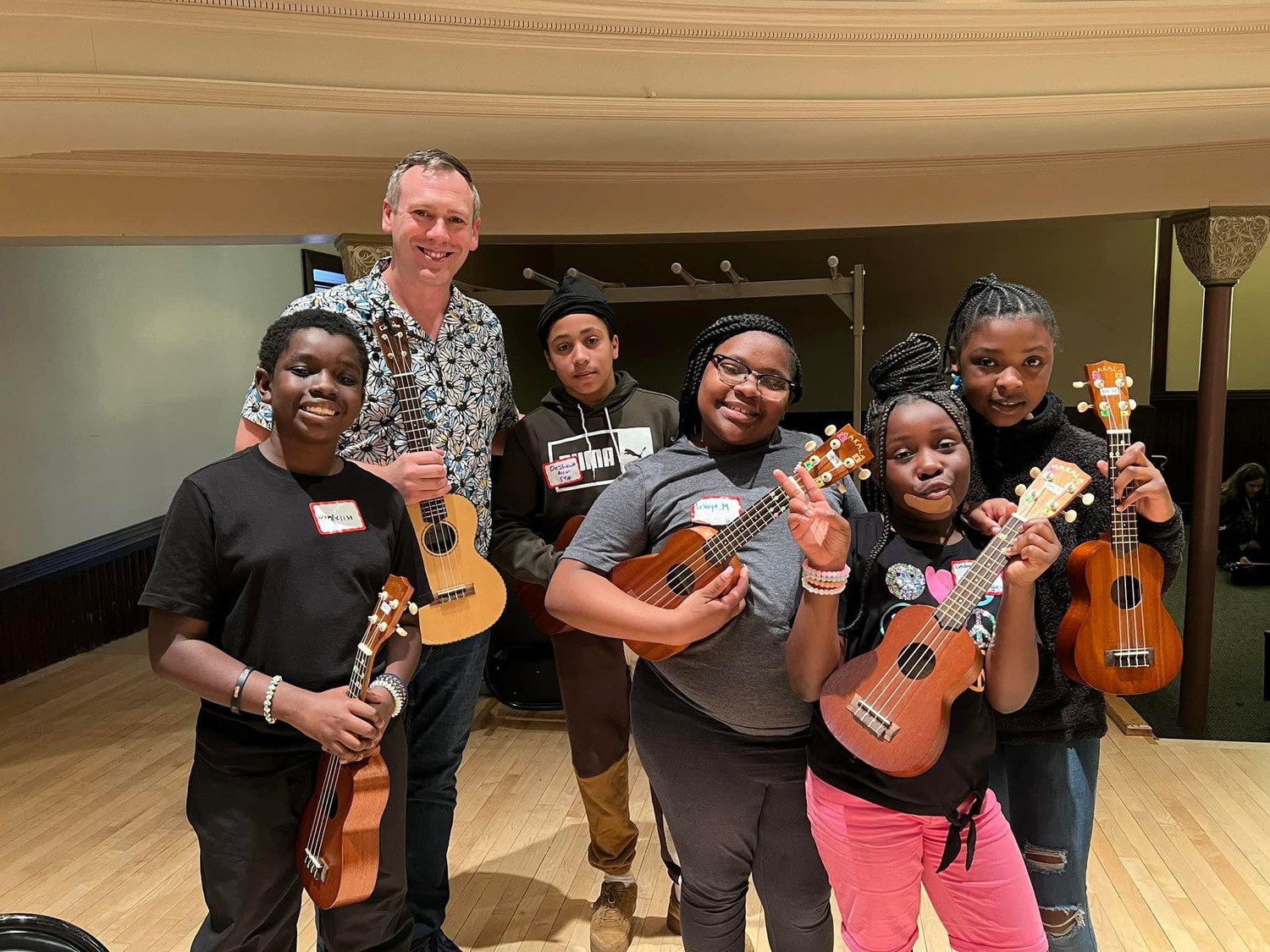
Zachary Arenz, a music teacher at Flower City School Number 54 in Rochester, was recently named the 2024 New York State Teacher of the Year. COURTESY ZACHARY ARENZ
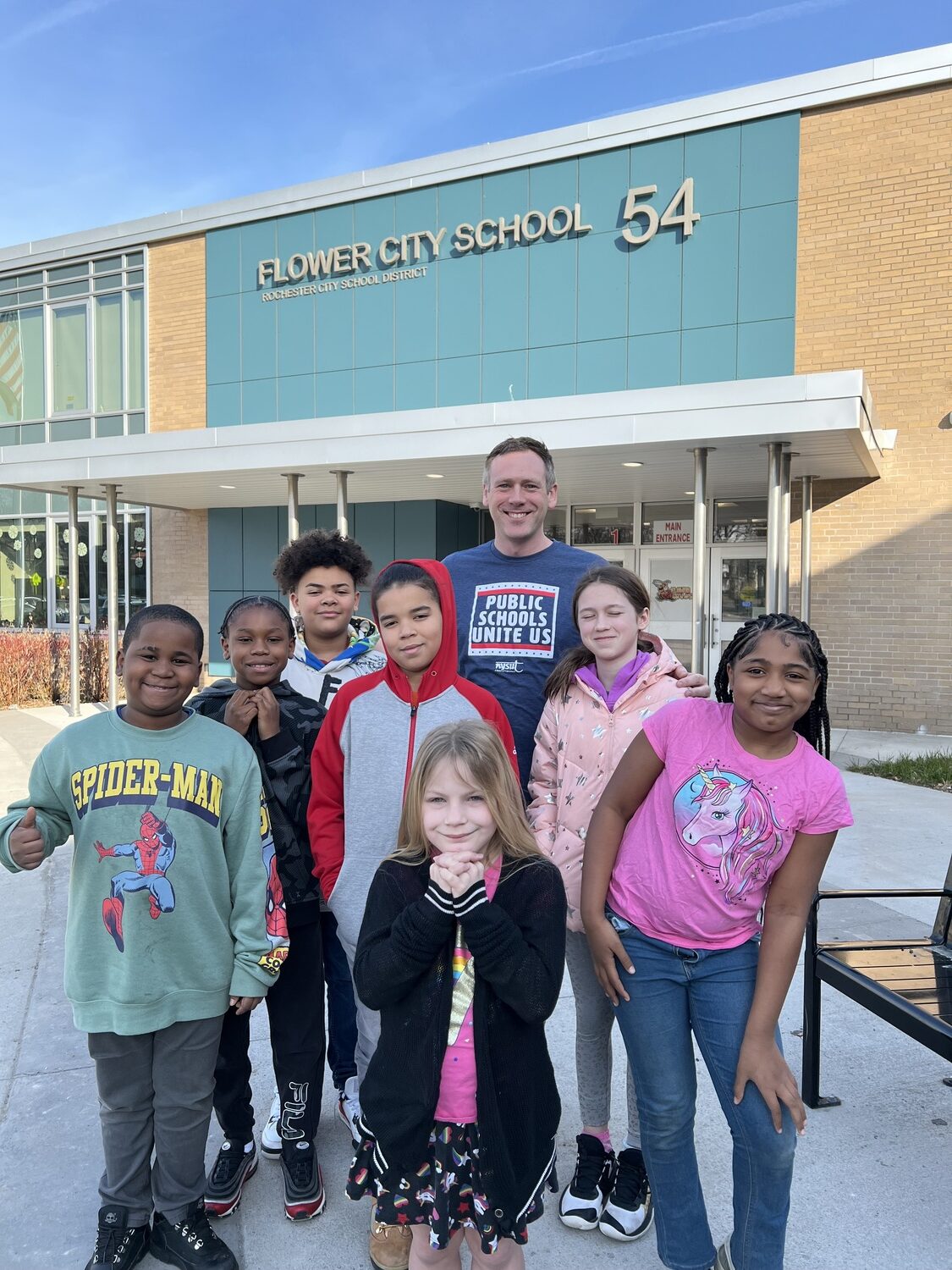
Zachary Arenz, a music teacher at Flower City School Number 54 in Rochester, was recently named the 2024 New York State Teacher of the Year. COURTESY ZACHARY ARENZ
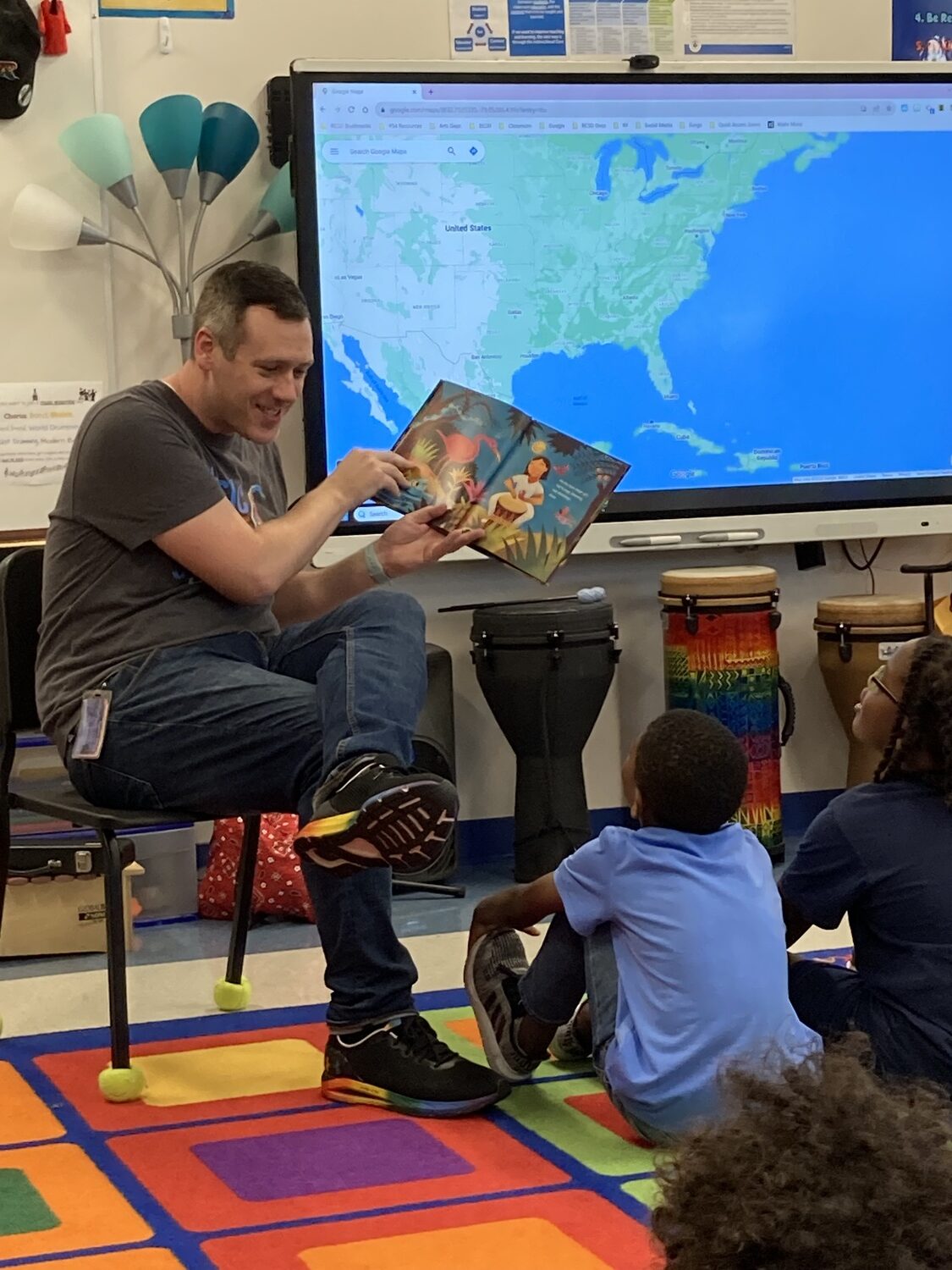
Zachary Arenz, a music teacher at Flower City School Number 54 in Rochester, was recently named the 2024 New York State Teacher of the Year. COURTESY ZACHARY ARENZ

Zachary Arenz. COURTESY ZACHARY ARENZ
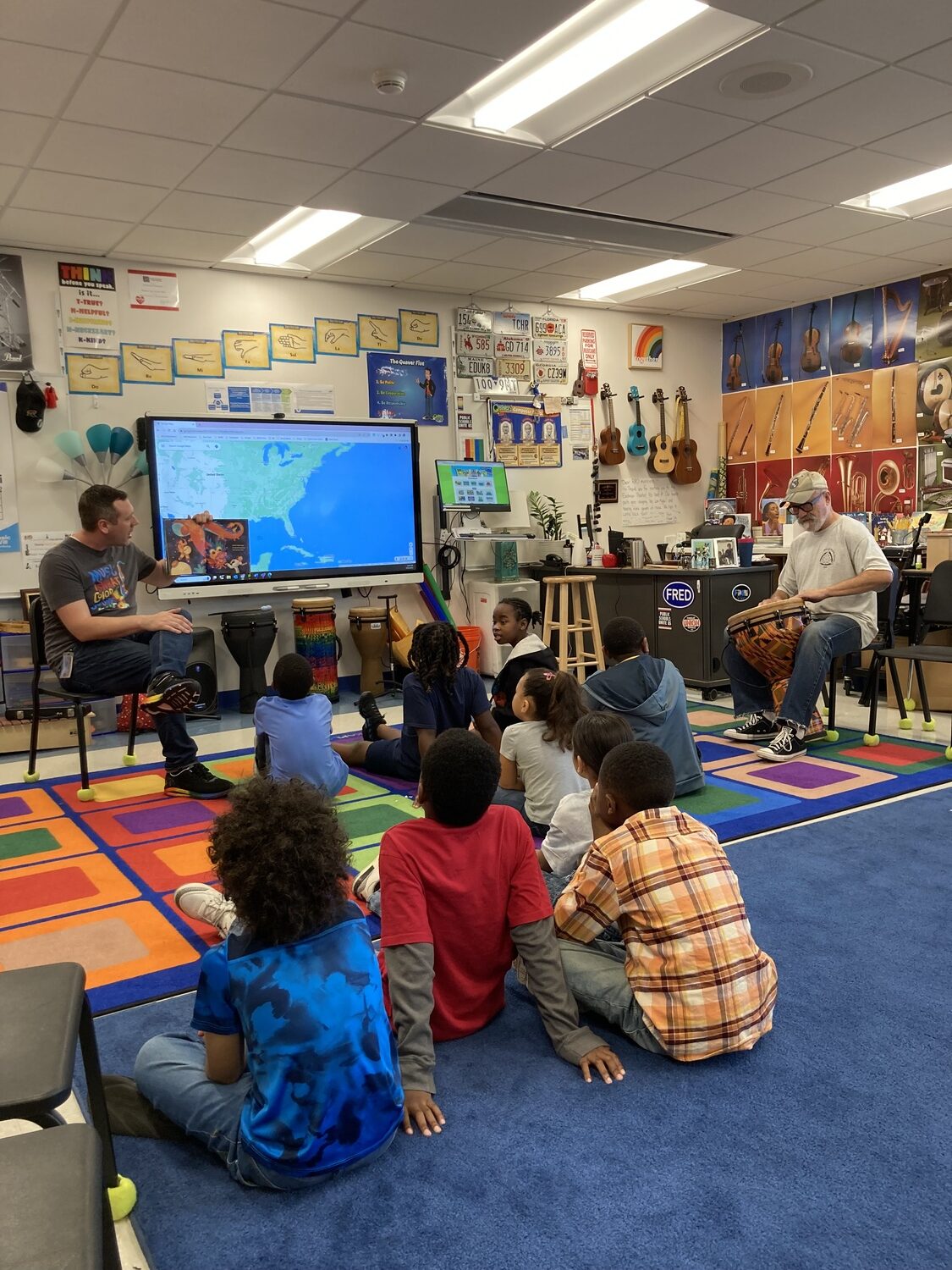
Zachary Arenz, a music teacher at Flower City School Number 54 in Rochester, was recently named the 2024 New York State Teacher of the Year. COURTESY ZACHARY ARENZ
It’s easier to ask Zachary Arenz what instruments he doesn’t play rather than list the ones he does.
But there was a time when he only knew his way around one — the clarinet, in fourth grade at Hampton Bays Elementary School. Clicking the wind instrument into place and playing with the band, it simply made sense, he said.
Today, the 36-year-old sees that look of recognition on the faces of his own students at Flower City School Number 54 in Rochester, where he was recently named the 2024 New York State Teacher of the Year.
There, he not only teaches music to 330 students — kindergarten through sixth grade — but also encourages them to lean into their own fears, uncertainty and vulnerability.
He has adopted that model in his own life — leaving the East End in 2006 to pursue a career as a music teacher, taking a job abroad and returning home only to move across the state, diving headfirst into an urban district.
“Walking into the school was scary and intimidating at first, but I just connected with all of the kids that I had,” he said. “To give them an instrument, to teach them how to make those first few notes, the smile that they bring, I could have found it in any other building, but I felt at home — and I just never wanted to leave. I’ve never wanted to leave.”
Arenz also can’t remember a day when he didn’t want to be a teacher, he said, but it wasn’t until high school that he realized he could marry his future profession with his passion.
After graduating in 2006, he studied music education at the State University of New York at Fredonia, where he completed both his undergraduate and master’s programs.
“In reflecting, I was definitely a little bit of a hermit, homebody-type kid, so really breaking away from home and putting 500 miles distance was a big life change for me,” he said. “It reminded me, I am capable of being independent, back when I was 17, 18 years old.”
An even bigger move came next, when he took his first job teaching classroom music to seventh through ninth grade students at a bilingual school in Sweden, and mentored ninth-graders to prepare for high school and career opportunities by creating academic and social goals.
He returned home in 2013, only to find a teaching bubble across the state — an oversaturated job market that pushed him into substitute teaching — until the Rochester City School District reached out about a long-term music teaching position at the elementary school, which turned into a full-time job.
“I had no intention of working in an urban school,” he said. “There’s a lot of teachers who have their heart and mind set on that. I didn’t.”
Arenz took the position and ran with it. During his tenure, he has started three music groups — a modern band, where the students learn garage band-style instruments, and two ukulele ensembles — in addition to the fourth through sixth grade band that he leads.
He also looks for unique ways forge connections, such as teaching a Somali folk song on a western classical instrument, like the clarinet.
“If I can draw that bridge between the two cultures, dynamite,” he said. “I don’t have to teach ‘Hot Cross Buns.’ I can use another song and accomplish the same task.”
In Arenz’s classroom, there is room for the great European classical composers to sit side by side with musical legacies from around the world — often choosing those of his students that are marginally included in the textbook, if at all, he said.
It isn’t uncommon for him to ask the children to teach him a song from their cultures, he said, putting the power of the teacher into the hands of the students — and letting them lead.
“I am, by no means, an expert in anything that I do,” he said. “We are all on a path of learning. We all have the opportunity to open a new door and to peek in. To take on those moments of feeling uncomfortable in the service of learning more only benefits my students — so the more often I can put myself into those situations, the better off my students will be at the end of the day.”
He paused. “The fact that I’m a white male educator teaching in an urban elementary school has a lot to do with that,” he continued. “I don’t know that eight years ago I would have said what I just said.”
Arenz strives to create a space where his students feel included and comfortable, in a similar way that he did as a child. He wasn’t a traditionally strong student himself — he didn’t love English, math, social studies, or science — but he came alive when he played music.
“Those students still exist in our schools, so we need to provide them that same ability to find that passion,” he said. “When a student tells me that band is the reason they came to school today, that’s a moment that you can’t take for granted. Ever.”
Navigating the socio-economic fabric of Rochester is one of the toughest parts of his job, Arenz said. Inside his classroom, he — with the help of donors — keeps a community closet fully stocked. There are winter coats, shirts, socks and underwear, as well as hygiene items, such as shampoo, body wash, deodorant and lotion.
“The moment the cold weather starts, I already have coats to give kids next year, so I don’t have to see a student come off the bus when it is 10 degrees and snowing outside,” he said. “I know that, before that, I’ve already helped to take care of them. That’s hard, emotionally.”
In the classroom, Arenz strives to keep his lessons fresh and exciting — and as soon as he starts to feel stuck, he knows he needs to learn something new. That sensation first came about five years ago, he said, when he hatched the idea for the modern band.
Except he didn’t play guitar, drums or bass. “I could noodle my way around a keyboard okay,” explained the musician, whose primary instrument is bassoon.
He added the garage band ensemble to his repertoire and, once the district reopened during the COVID-19 pandemic, he launched his new project. It was reenergizing, he said, for both his students and himself.
Against the backdrop of his recent state recognition, he finds himself in the same position again — of looking at his program and wanting to push to the next level.
“I know that 36 is young in a teaching career. I have 21 years to go and I’ve reached this point very early, it feels, in my career,” he said. “But by no means should I let this be the peak — and I don’t want to plateau at this point.
“There’s a lot of room to grow and, in that uncertainty, I don’t know what the future holds,” he continued. “No part of me, though, could ever leave teaching behind. I will always have to have my fingers in those pots, because that’s who I am. That’s who my self is.”


 Michelle Trauring on May 29, 2024