


 1 Photo
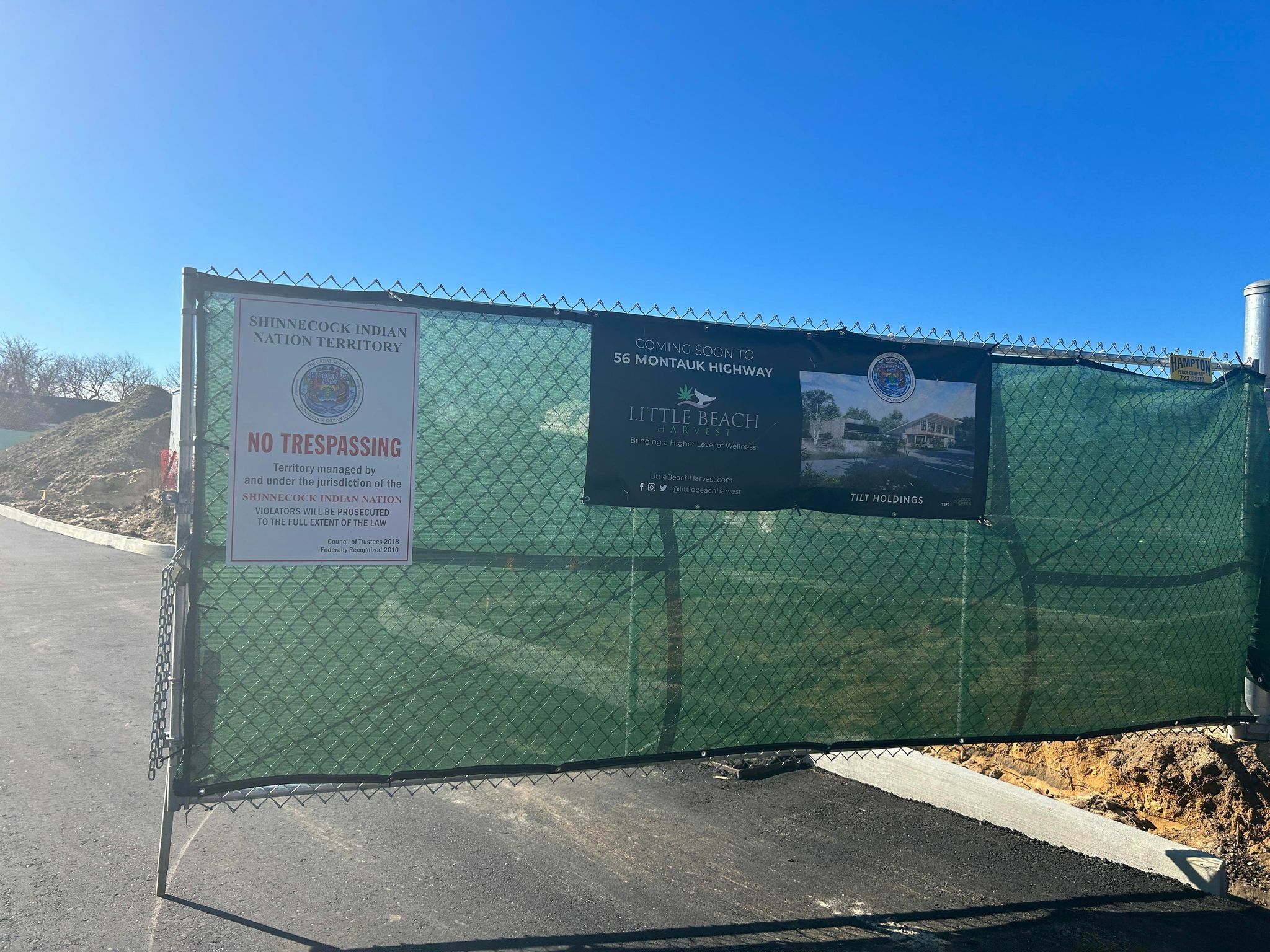
With work underway at the Shinnecock Nation's cannabis dispensary, Southampton Town officials continued to eye their marijuana zoning regulations. KITTY MERRILL
Just four towns in Suffolk County — Babylon, Brookhaven, Riverhead and Southampton — decided to allow the retail sale of marijuana within their borders under the state’s recent cannabis legalization measure.
At the Southampton Town Board’s January 5 work session, Supervisor Jay Schneiderman noted that the town’s counterparts have already adopted their zoning regulations related to cannabis establishments — but Southampton has fallen behind.
The Shinnecock Nation expects to open its new dispensary in May, and members are already selling cannabis at smoke shops on the territory, as are members of the Unkechaug tribe at the Poospatuck reservation in Mastic.
“Marijuana is already for sale in the Town of Southampton,” Schneiderman said, “and we’re not getting any of that sales tax revenue.”
The state imposes a sales tax of 13 percent on marijuana purchases — counties get 4 percent of it, and share with towns, with the towns getting 3 percent and the county retaining 1 percent. The sales on tribal land would not be subject to local or state sales tax.
Town officials crafted their zoning regulations and considered them last year but decided to wait and see what state regulators — who have the ultimate authority over licensing and such aspects of placement as hours of operation, signs and setbacks — would do.
The state released its guidance, followed by draft regulations, at the end of December. A comment period on the rules ends next month, on February 13.
Deputy Town Attorney Kathleen Murray suggested that local officials weigh in after they study the rules. Comparing the guidance to the proposed regulations, she said that, so far, she hasn’t found discrepancies.
“I didn’t see anything we couldn’t live with,” Schneiderman said.
More specificity was added related to the definition of a community facility and how far from those a cannabis retail shop must be, “which is helpful,” Murray opined.
“Much of what we debated and contemplated, they’ve clarified,” said principal planner Michelangelo Lieberman, the retail marijuana point person in the town’s Land Use Department.
The town’s original proposal would have allowed the retail sale, by special exception permit, in village and highway business zoning districts, as well as districts slated for light industry. It crafted setback rules — pot shops can’t be sited within 500 feet of a school, or within 200 feet of a house of worship, daycare facility, active park or recreational facility, museum, village green, youth center, or library.
Schneiderman deemed the setbacks described by state officials “pretty good.” State regulations allow for 500-foot setbacks from all community facilities, as well as schools.
A cannabis retail outlet can’t be near any other dispensary, a regular retail shop or one providing medical marijuana, according to the original town proposal. To ensure that the location restrictions are enforced, potential purveyors would have to provide the town with an inventory of all dispensaries in town.
State law allows for drive-thru facilities, and Murray said, she’s looking to find out if the town’s existing code related to drive-thru establishments is preempted by the state.
The original draft had certain provisions related to County Road 39, ruling the retail shops out along that major road, with the exception of a small swath east of David Whites Lane.
Following board discussion, Schneiderman decided to put forth a revised version of the code regulations that will allow the shops in highway business and shopping center business zones, removing them from the village business and light industrial zones.
Councilwoman Cyndi McNamara said she couldn’t support allowing retail in the light industrial zone, since it’s so scarce and was designed to provide contractors space.
When discussions first began, Schneiderman said local officials thought they could have input regarding purveyors who want to set up shop in town. The proposed state legislation reduces the perceived authority, however. Town officials may weigh in with the same advisory opinions they’re asked to offer regarding liquor licenses.
Last November, the New York State Cannabis Control Board approved its first round of retail dispensary conditional licenses. Some 28 licenses for business owners with a previous cannabis conviction or a family member with a previous cannabis conviction, along with eight nonprofit organizations got the green light.
While the seven Long Island licenses went to businesspeople based up-island — three in Suffolk County — that doesn’t mean Southampton may not see its own retail establishments. The business owners don’t have to open shops where they live. They can choose to set up in municipalities that allow the retail sale, in Suffolk County, two-thirds of which — Brookhaven, Riverhead and Southampton — are neighbors.
In 2021, then-Governor Andrew Cuomo legalized the sale of adult use marijuana. Municipalities could opt-out of allowing the sale within their borders, but they couldn’t regulate its use, aside from typical “no smoking” parameters. The towns that did opt in could regulate the sale through their zoning laws. However, state law prohibits municipalities from making zoning regulations so strict as to prohibit marijuana shops by default.
While the Town of Southampton opted in on dispensaries and social-consumption spaces, its incorporated villages — Sagaponack, Southampton Village, Quogue, Westhampton Dunes, Westhampton Beach, and North Haven — all opted out. Sag Harbor, which straddles the townships of East Hampton and Southampton, also opted out.


