


 1 Photo
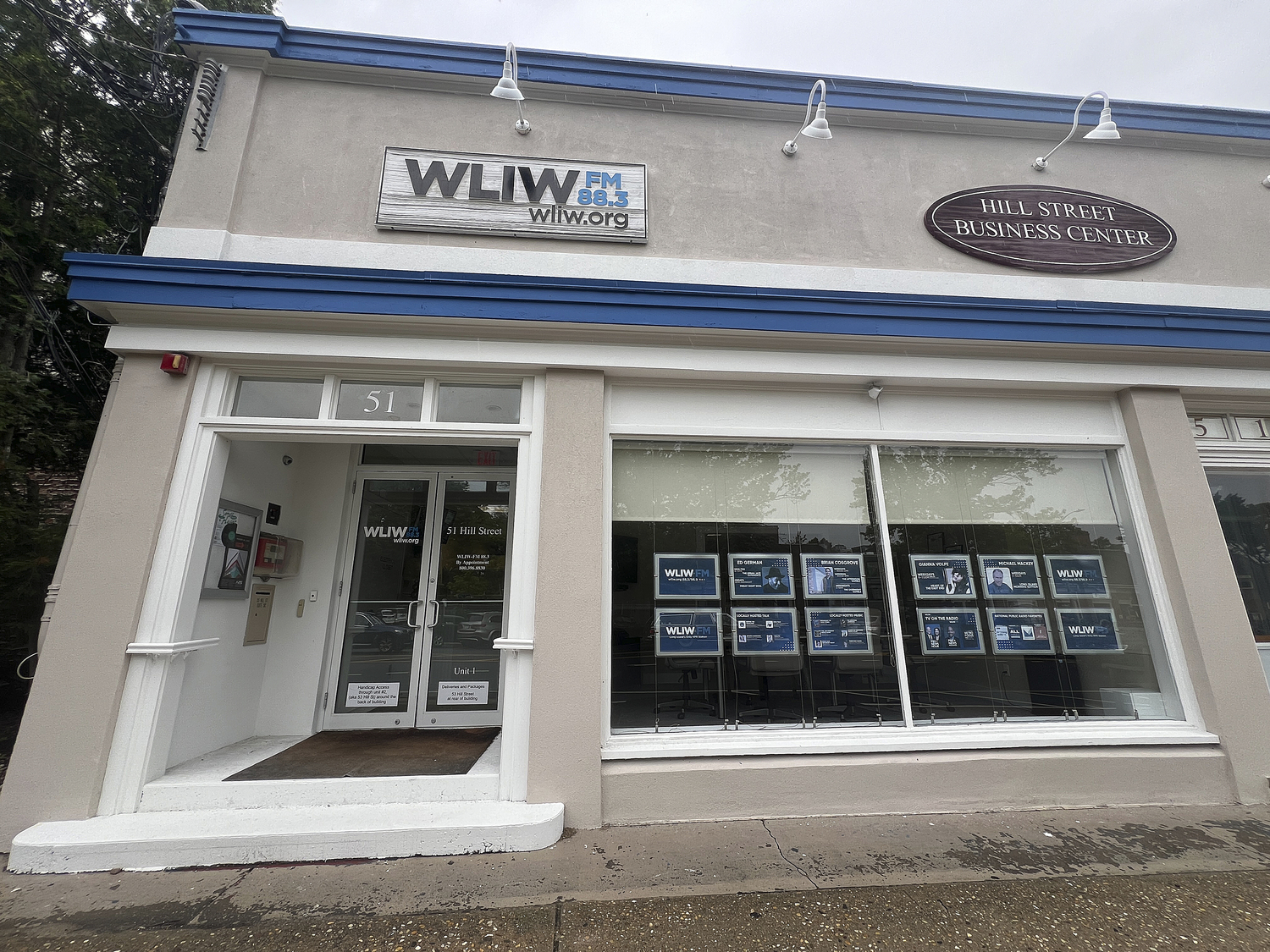
WLIW-FM in Southampton. DANA SHAW
WLIW-FM of Southampton has joined in a suit challenging President Donald Trump’s recent executive order, “Ending Taxpayer Subsidization of Biased Media,” that he signed in May.
Earlier this month, the local NPR station, which is owned by the WNET Group of New York City, filed a friend of the court brief supporting the effort by other NPR stations to overturn the president’s executive order.
But it may not matter if the suit is successful, as the Republican majority in Congress is already weighing two other options to cut off federal funding, and thus cripple public broadcasting in this country.
“It’s a distressing time — it’s really an inflection point,” said Bob Feinberg, the chief counsel for the WNET Group. “This is an existential threat to a very important, independent voice in our media landscape.”
Besides the president’s executive order, which is being challenged on grounds that the president does not have authority to eliminate funding that has been approved by Congress, as well as a free speech argument, the Corporation for Public Broadcasting faces a threat from a rescission bill, which, Feinberg said, is attempting “to claw back” $550 million in funding for each of 2026 and 2027.
That measure has already been approved by the House and is currently before the Senate, which has until July 18 to act.
Funding for the Corporation for Public Broadcasting has also been eliminated in the massive tax cut and spending bill, “the One Big Beautiful Bill Act,” which has been approved in differing versions by both the House and the Senate and is waiting for both sides to reconcile the differences in the two.
The effort to silence public media has been around since almost as long as it has. The Corporation for Public Broadcasting was created in 1967 during the administration of President Lyndon B. Johnson as a congressionally chartered nonprofit entity that distributes the funding it receives to NPR and PBS stations across the country, according to a formula based, in large part, on how much funding they are able to generate on their own.
The Corporation for Public Broadcasting is funded two years into the future as a means to prevent Congress from using its power to punish public media for airing programs it disagrees with.
“This is a clear example of the federal government using its power to direct or punish speech with which it disagrees,” Feinberg said on a recent edition of “Behind the Headlines,” a radio program co-sponsored by The Express News Group and WLIW.
Feinberg said every Republican president except Gerald Ford has tried in one way or another to kill or curtail public media, and the Trump administration has the clearest path to do so.
Despite Republican charges that public media is biased against their views, both NPR and PBS are rated among the most trustworthy media in opinion polls.
The elimination of federal funding would be devastating for public media, Feinberg said. Every $1 in federal funding leads to $7 more in donations.
“This is not a situation where we can just make up the missing funding by reaching out to the Ford Foundation,” Feinberg said. “That won’t work.”
He said the $550 million that would be axed next year in the rescission bill amounts to about $1.38 per American. By contrast, he said, Great Britain spends approximately $400 per year for each taxpayer. Without that funding, he said rural stations may be forced off the air entirely.
Public radio and television stations provide their programing free of charge, Feinberg said. While 97 percent of American homes have at least one television set, 30 percent of Americans have no internet connections. “These people can get free signals over their TV sets if all else fails,” he said.
Public television and radio can also issue emergency alerts and provide a way for first responders to communicate, Feinberg continued. The service they provide is also important in sparsely populated areas and in “news deserts,” where traditional media outlets, such as newspapers, have gone out of business.
Feinberg urged listeners and viewers, who want to make their voices heard, to go to protectmypublicmedia.org, which provides them with the ability to submit a letter to their representatives and offers other tools to help them fight the threat.


 Stephen J. Kotz on Jul 2, 2025