


 2 Photos
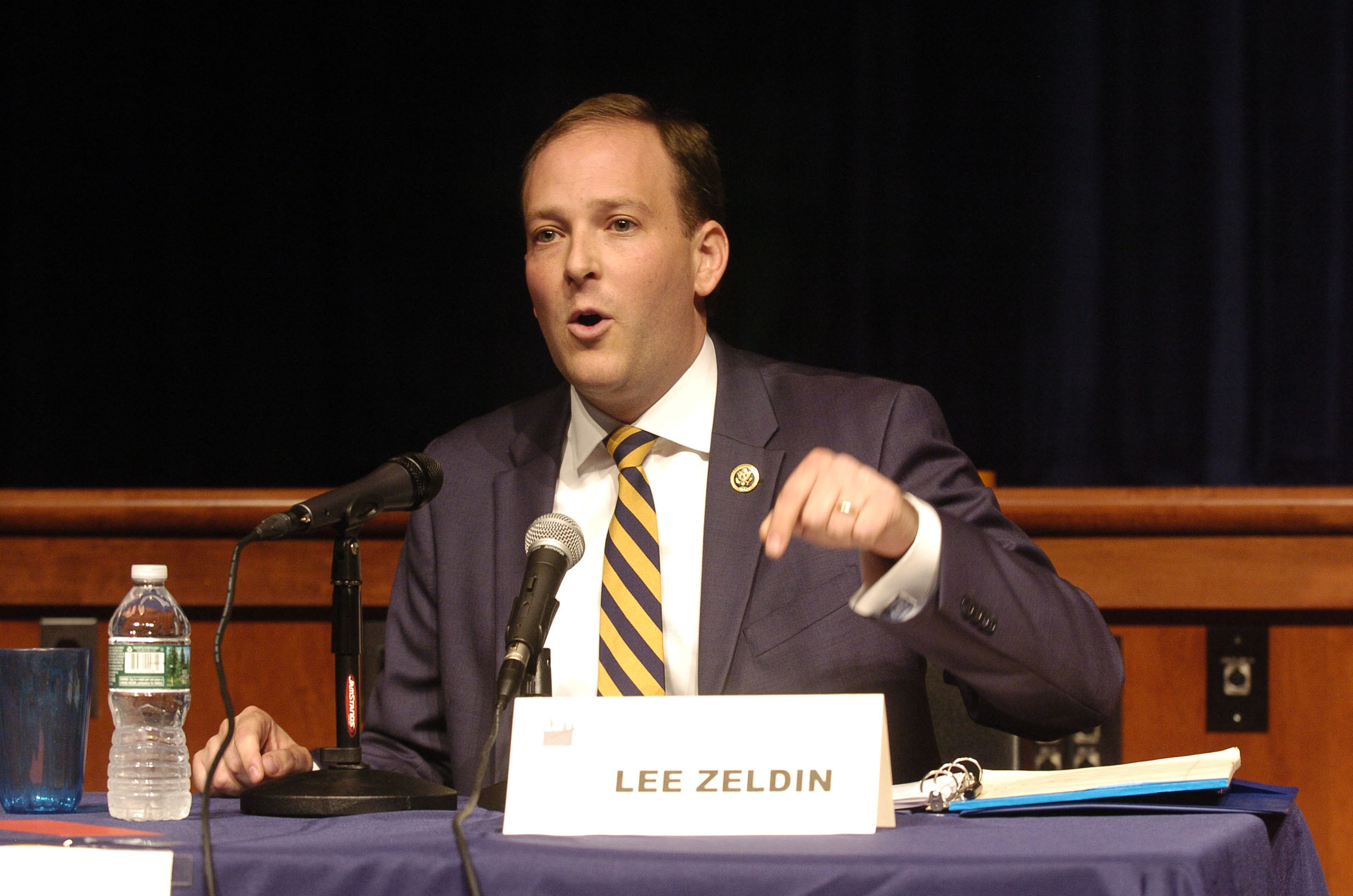
U.S. Representative Lee Zeldin
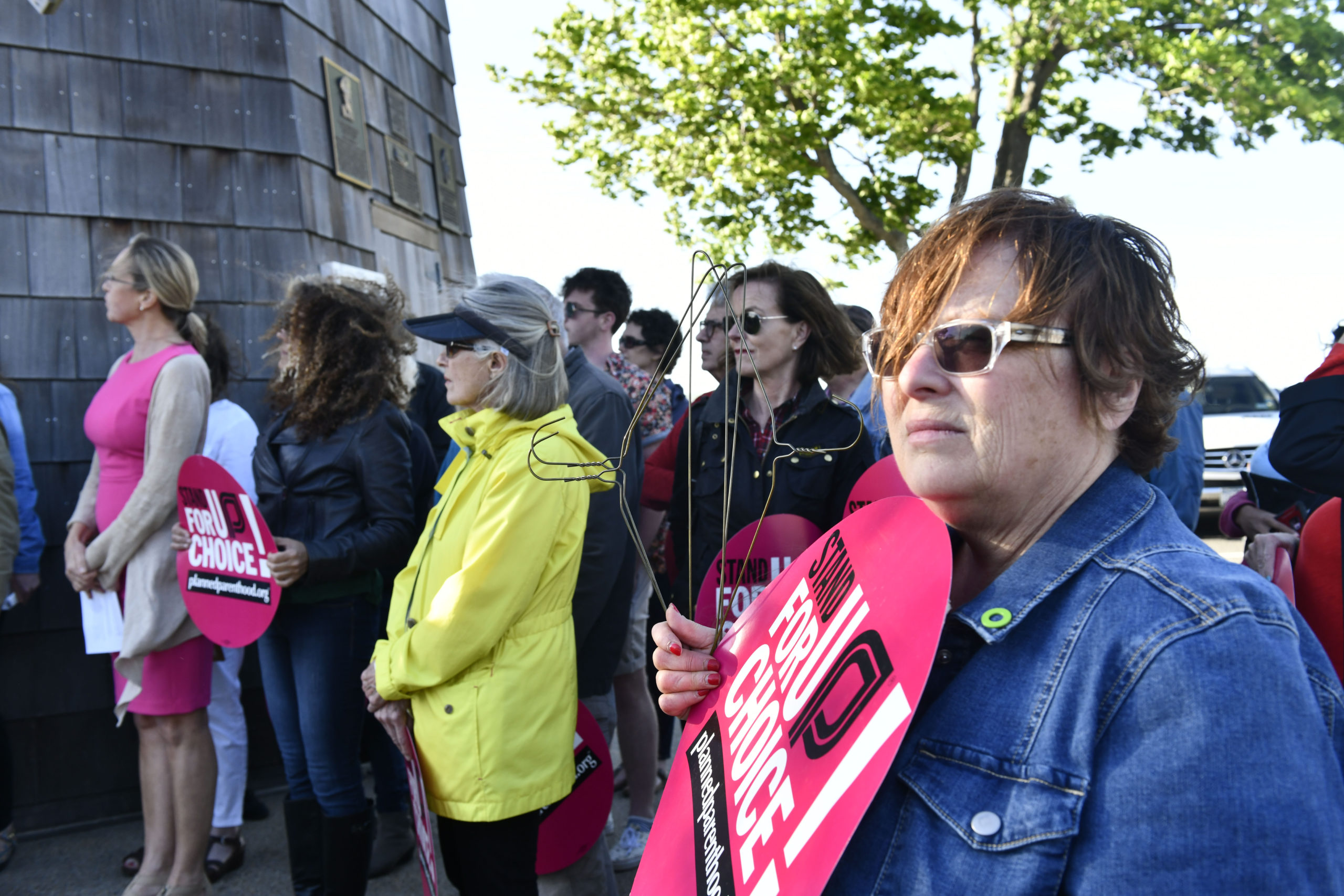
Protestors at an abortion rights rally in Sag Harbor in 2019. PRESS FILE
U.S. Representative Lee Zeldin, the Shirley Republican who represents the East End, joined with more than 200 fellow GOP lawmakers last week in asking the U.S. Supreme Court to consider overturning Roe v. Wade, the landmark 1973 court decision that legalized abortion at the federal level.
The Republican lawmakers, who were joined by two Democrats, filed an amicus curiae, or friends of the court, brief in the case of June Medical LLC v. Gee, asking the court to uphold a Louisiana law that would sharply curtail access to abortions.
The brief, which was drafted by attorneys with Americans United for Life, an anti-abortion organization, also called for the court to consider overturning Roe v. Wade, describing the decision as a “radically unsettled precedent” 46 years after it was handed down by the court. It noted that “virtually every abortion decision since has been closely divided.”
Mr. Zeldin’s participation in the action drew swift condemnation from his Democratic challengers.
“I believe this request of the Supreme Court reflects a very extreme perspective that really does show that Lee Zeldin is out of touch with the majority of voters in our district,” said Suffolk County Legislator Bridget Fleming, who recently announced that she will seek the Democratic nomination to run against him in November.
“I think it is as strong and offensive an attack they have launched against Roe v. Wade that I can remember,” said Perry Gershon, a Democratic challenger whom Mr. Zeldin defeated in 2018 and who has announced his candidacy for the party’s nomination again in 2020.
Opponents of the Louisiana law, which would require physicians who perform abortions to have admitting privileges at nearby hospitals, say it would unduly restrict women’s rights to the procedure, and say only one physician in the entire state would be able to meet its requirements. Supporters argue that the law would protect the health of women seeking abortions.
In a statement issued through his office, Mr. Zeldin stressed that aspect of the argument and sidestepped the broader implications of the Roe v. Wade debate.
“When it comes to intrastate policy, states reserve rights to protect their citizens how they best deem fit, including women in vulnerable situations,” he said, “and ensuring these locations maintain the same standards as any other outpatient surgical clinic is vital to the health and lives of their patients. Requiring that providers have admitting privileges to nearby hospitals is well within the states’ purview of protecting its residents. I encourage the Supreme Court to issue a ruling that is consistent with states’ rights and safeguards women’s health.”
Ms. Fleming rejected that argument.
“The Louisiana law that is being challenged is part of a framework of local laws that are designed to eat away at a woman’s right to make health care decisions,” she said. “That’s the sole purpose of these laws — to chip away at women’s basic rights.”
Mr. Gershon said abortion is one of several wedge issues that divide the voting public and suggested that Mr. Zeldin is using it to motivate his base. He said the move could backfire: Many independent voters consider themselves pro-choice, he said, adding, “If they feel that the status quo is in jeopardy, they start to care more.”
Mr. Zeldin was also rebuked by Vincent Russell, the president and chief executive officer of Planned Parenthood Hudson Peconic.
“We are not surprised Congressman Zeldin signed on to this amicus brief. He has a long history of opposing access to reproductive health care for the people of Suffolk County,” he said in an emailed statement. “This is another tactic by anti-reproductive health politicians to impose their views, when nearly 7 out of 10 Americans support Roe v. Wade. Abortion care is safe and legal, and we will continue to keep it that way.”
Over the decades, though, Republican-dominated state legislatures have passed laws making it more difficult for women to obtain abortions. The court brief also argues that abortion has long been a divisive issue, and that two of the Supreme Court justices who ruled in favor of Roe v. Wade have since “repudiated it in whole or in part.”
The conservative effort to ban abortions has been bolstered by the 2016 election of President Donald Trump, who campaigned on an anti-abortion platform. President Trump has appointed two conservative justices, Neil M. Gorsuch and Brett M. Kavanaugh, to the Supreme Court. Meanwhile, the liberal stalwart on the bench, Ruth Bader Ginsburg, has experienced a number of health scares.
A broad swath of Republican lawmakers signed on to the friends of the court brief, including 39 U.S. senators and 166 members of the House. Those signing on included House Minority Leader Kevin McCarthy of California, Republican Whip Steve Scalise of Louisiana, and Liz Cheney of Wyoming, the head of the Republican Conference and daughter of former Vice President Dick Cheney. They were joined by two conservative Democrats, Collin C. Peterson of Minnesota and Daniel Lipinski of Illinois.
Although Senator John Thune of South Dakota, the second-ranking Republican, signed on, Senate Majority Leader Mitch McConnell did not. Nor did several other Republicans, including Maine Senator Susan Collins, who are facing reelection challenges.


