


 1 Photo
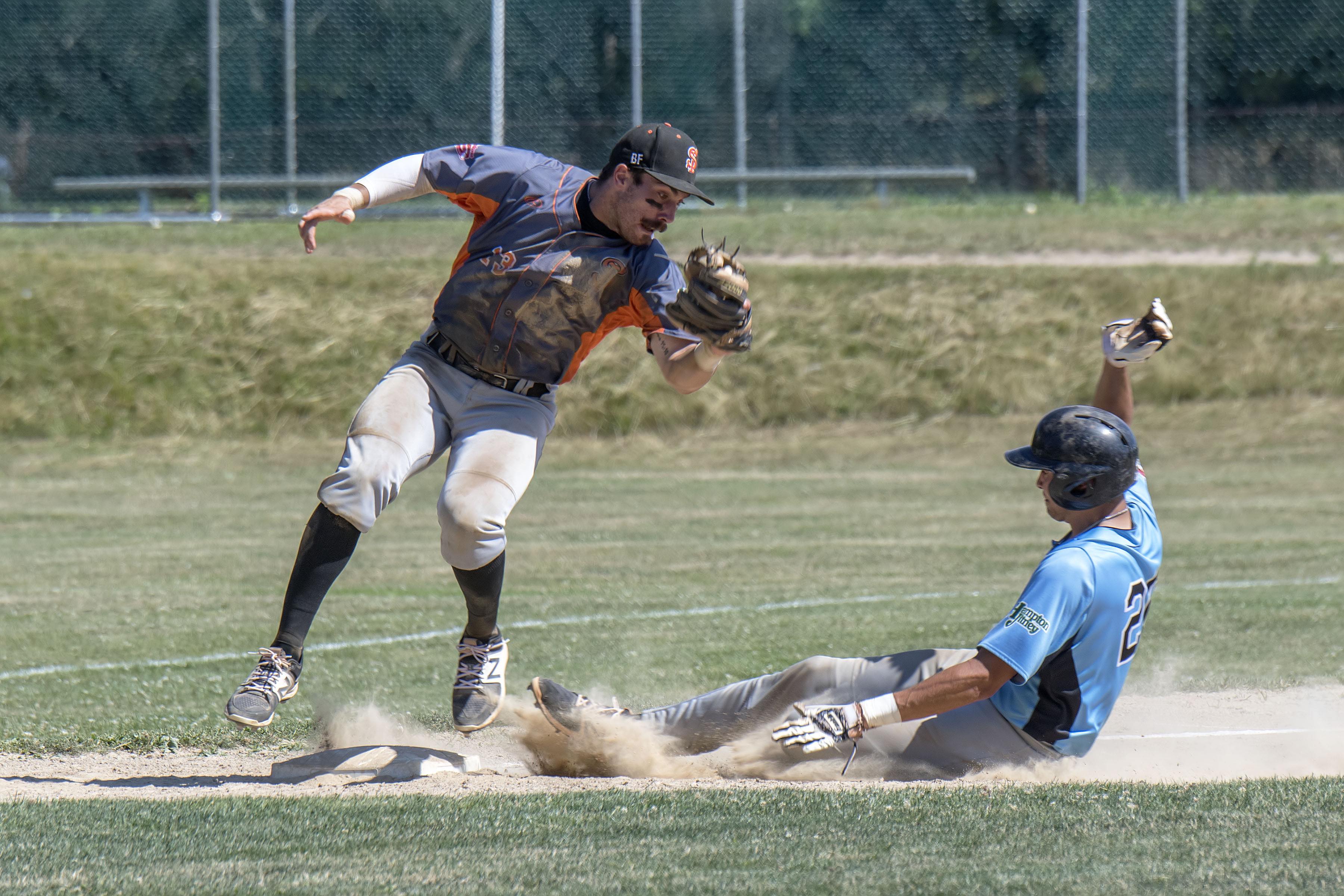
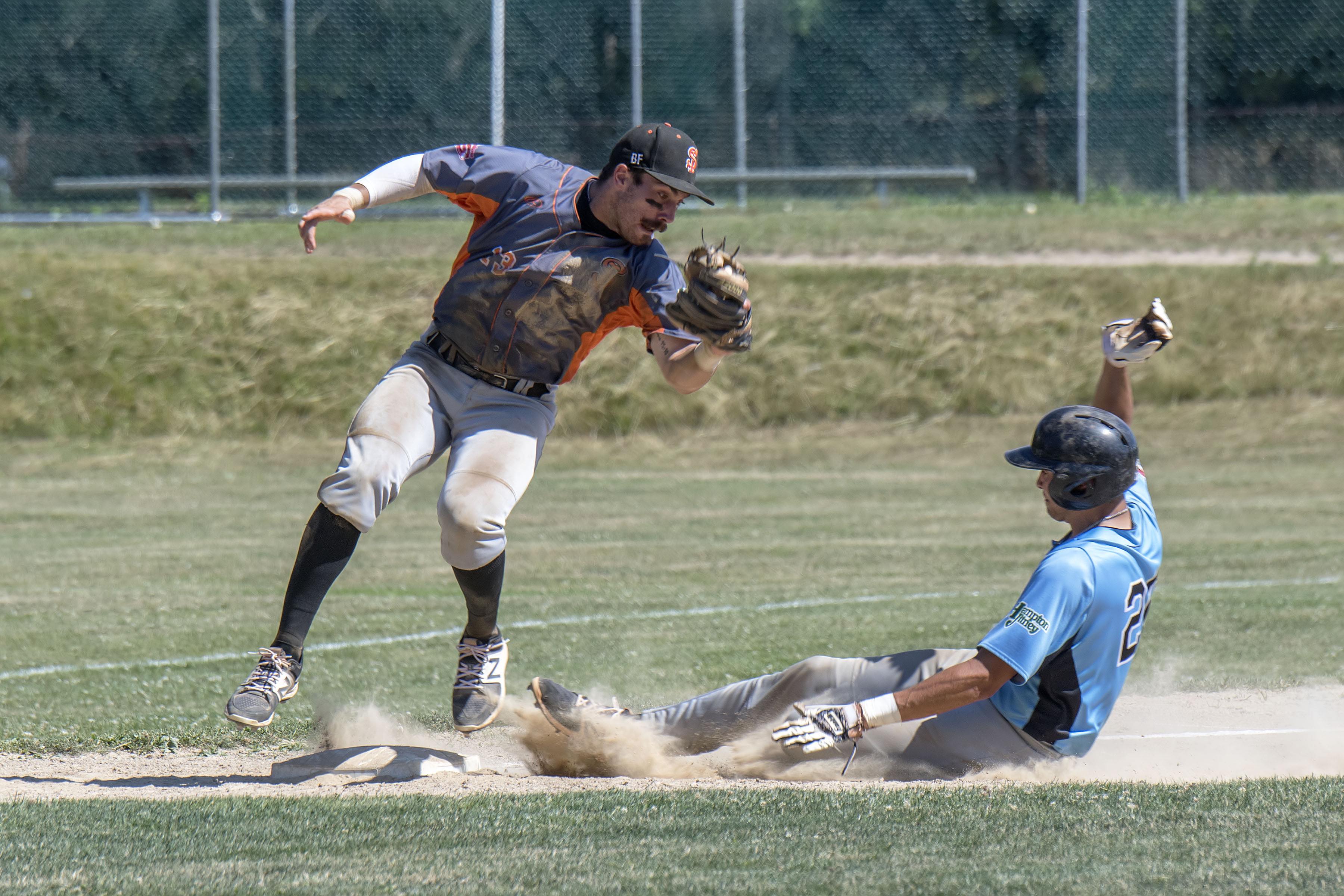
Sag Harbor's Dominiq Sicardo beats the tag as he steals third base during the HCBL game between the Sag Harbor Whalers and the Shelter Island Bucks at Mashashimuet Park on Sunday, 7/2/17
It takes a village to run a team in the Hamptons Collegiate Baseball League. That and roughly $85,000 each and every summer season.
That said, the HCBL has grown into one of the premier summer baseball leagues in America. In just 10 years, about 100 players have gone on to play professional baseball, and in 2016 alone, 24 HCBL alumni were drafted by teams from Major League Baseball, which sanctions the HCBL along with 12 other leagues from across the country.
The Sag Harbor team debuted in the Atlantic Collegiate Baseball League 11 years ago and the Whalers have been run every day since by co-general managers Sandi Kruel and Tom Gleeson, who say the league is at a crossroads in terms of how it houses players during the two-month summer season.
“The whole concept of the league is probably different than many places around the country in that we are completely non-profit,” said Gleeson, who, along with Kruel and most other HCBL officials, works as a volunteer. “Most leagues are either for-profit or at least somebody has some ownership of the teams. We do not. It’s all community-based and community-supported, which makes us unique.”
 The details of the league are relatively simple and consistent across its seven teams, which are located in Sag Harbor, Shelter Island, Southampton, Westhampton, Riverhead and Peconic, on the North Fork. A seventh team, the Long Island Road Warriors, is comprised of players from across Long Island, meaning housing is not required. The teams hold games or practice five or six days a week, and players, who pay $650 to join the league, generally work out in the evenings at local gyms. The players all are members in good standing with the National Collegiate Athletic Association.
Each team has a roster of about 27 players from colleges across the country and two or three coaches. Host families are relied upon to put up the players and coaches for one or two months from late May through the end of July. The players live in their homes, interact with their children and eat meals with the families on a daily basis.
And this is where the real challenge begins for league officials.
“The housing is absolutely the hardest part, and it’s getting tougher,” Gleeson said. “We still need housing for 12 kids, and I’m going to have to do a lot of moving because some people can only do it for a month or a few weeks.
“We’re not at a point where we can pay host families, but if we can sustain things, hopefully we can get to that point,” Gleeson added.
Kruel has had two sons play in the league and, as a result, has housed dozens of players over the years. Through her sons, Brandon and Nick, she was connected to other baseball parents, who have traditionally been the most willing to host players. Kruel’s third son, Dylan, is involved in theater so her connection to the youth baseball community has largely been lost.
“I’ve had as many as seven players at a time. It can’t be sustained,” Kruel said, adding that housing a player and feeding them can get expensive. “I see it changing or being unsustainable.”
The closest comparison to the HCBL in term of geography is the Cape Cod League, which is considered the top summer league in the country. Listed on its website are dozens of corporate sponsors including Coca-Cola, Friendly’s and Dunkin Donuts, as well as sports equipment companies like Rawlings and Franklin, among others. Players in the Cape Cod League pay their host families directly, with the corporate money used to run the league. The HCBL, which currently offers no direct financial support to the host families, has sponsors as well, with three of them — Hampton Jitney, Norsic & Son and BNB Bank — on board since day one. That sponsorship money is used to run the league, though, and in many ways, the model has been a success. But the housing issue has remained vexing.
“Some teams have more difficulty than others,” said Henry Bramwell, the league president and general manager of the Westhampton Aviators. “Shelter Island, which you would think is very small, had just about all the players housed a few weeks ago. This isn’t something you can advertise. It doesn’t work. You have to be in front of people, so they understand it, and it’s always the family with two or three kids in a three-bedroom house that takes players in. Their kids are involved in Little League or travel ball and things like that.”
Gleeson said he and others in the league have reached out to companies like Chrysler and Stop-n-Shop, but nothing major has materialized. Pepsi is a sponsor, but only provides products, which doesn’t help to pay the host families.
“The Hamptons is a great demographic, but it all boils down to manpower,” Bramwell said. “When you think about how many people are involved in this league, it’s really amazing what is accomplished. And now we have a responsibility to keep this thing going. It’s free family entertainment, with free clinics for the kids and we’re in the Hamptons. Major League Baseball is very happy with what we do and how we do it, we just need to get more talent involved.”
Compounding the financial problem in Sag Harbor this summer is the recent closings of Conca D’Oro and La Superica, restaurants that supported the team with post-game dinners. Conca D’Oro, which closed late last year, typically donated 40 pizzas per week, and La Superica, which announced its closing in March, donated as many as 60 burritos, six or eight times each summer.
And the loss of those providers is not the only change seen in Sag Harbor. There has also been a shift in demographics, with more and more second homeowners replacing families whose children might have played baseball locally and would benefit from having a college player as a role model in their home.
In order to continue reaching out to families with children who play baseball or softball, the league is offering free lessons and camps for children whose families host a player. The Hamptons Baseball Camp, which is based in Water Mill, is offering free sessions of summer camp to those children as well.
“Mostly it’s families that are interested in baseball,” Gleeson said about the typical hosts. “These kids are great role models. They become like an extra family member.”
“When you talk about it taking a village to run something, that’s what we need,” Kruel said. “But I don’t recommend the full eight weeks for anybody doing this for the first time. Start with one month. Whether it’s June or July, pick a month and see how it works for you.”
To host a player, call 631-466-4393 or email hb@hamptonsbaseball.com


 gavinmenu on May 2, 2018