


 5 Photos
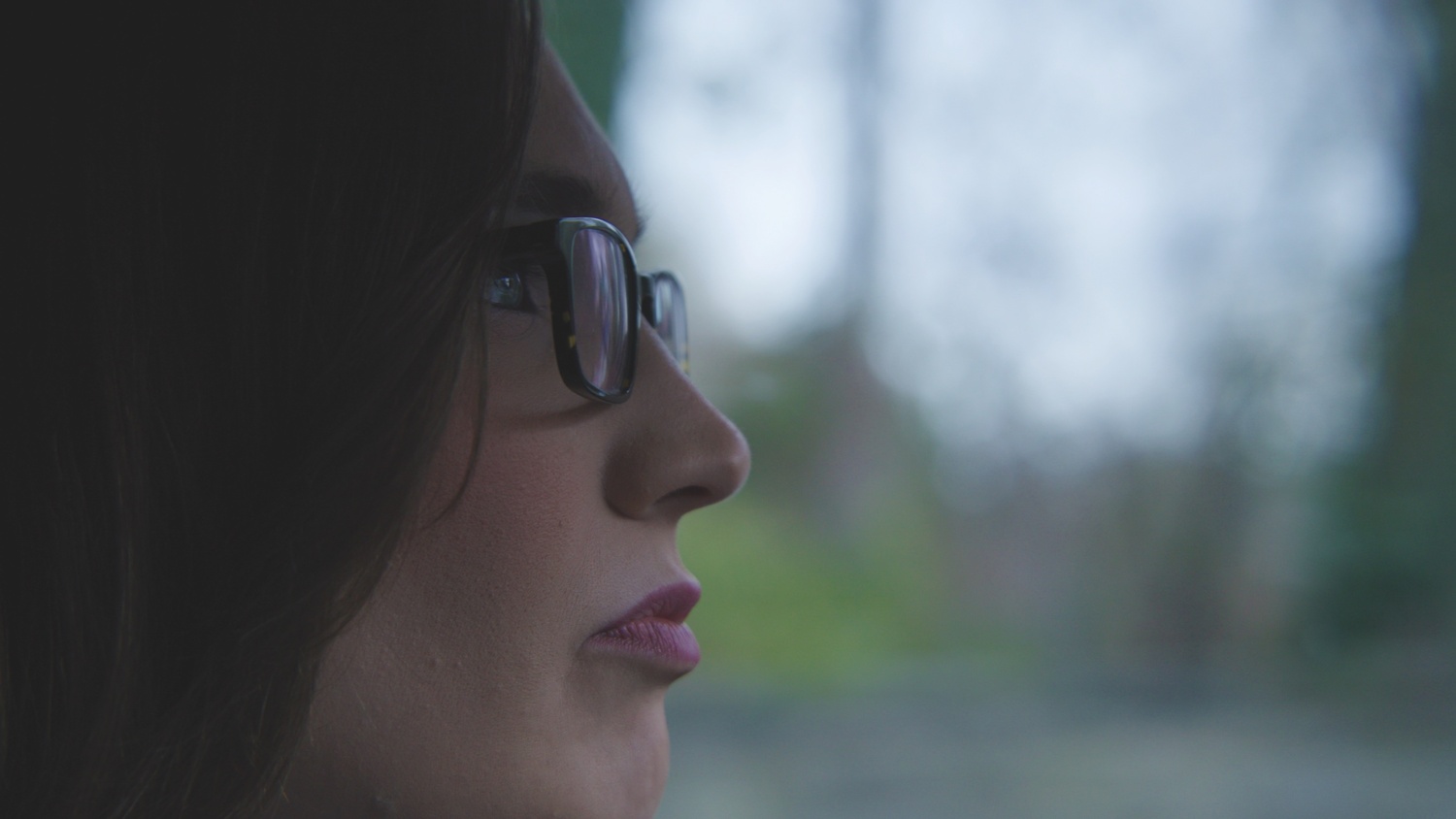
Sarah McBride in Chase Joynt's documentary "State of Firsts." STEPHEN MAING

Newly elected Congresswoman Sarah McBride celebrates victory in Chase Joynt's documentary 'State of Firsts.' MELISSA LANGER

Congresswoman Sarah McBride in Chase Joynt's documentary 'State of Firsts.' MELISSA LANGER
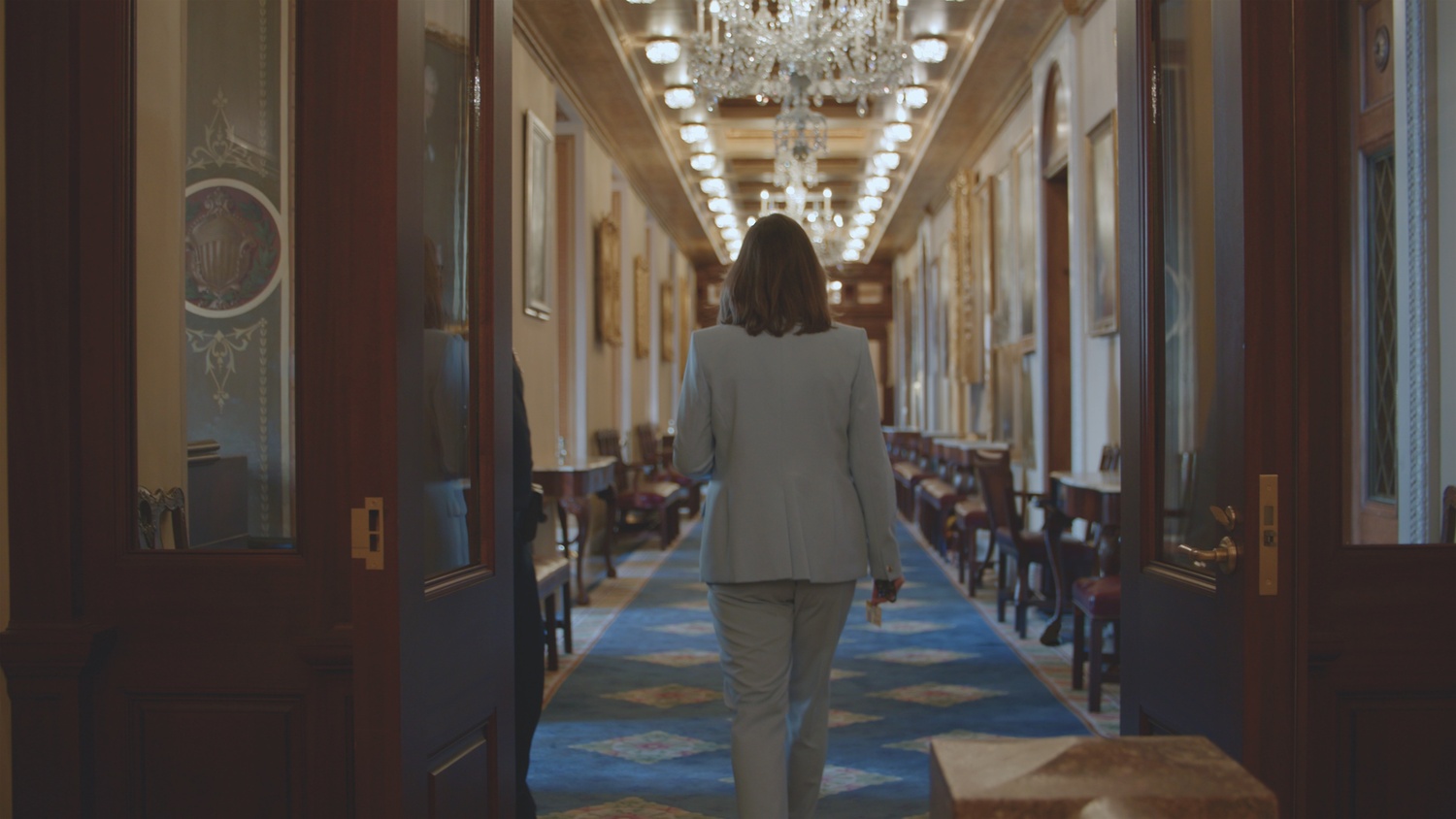
Newly elected Congresswoman Sarah McBride of Deleware walks the halls of the Capitol in Chase Joynt's documentary 'State of Firsts.' MELISSA LANGER

Chase Joynt, director of "State of Firsts." COURTESY THE ARTIST
Being a pioneer, regardless of the field or profession, is often a case study in humility. Rising above the fray, maintaining a professional demeanor and establishing precedent as a groundbreaker requires fortitude, stamina and, perhaps most importantly, a clear vision of one’s mission.
And as U.S. Congresswoman Sarah McBride would certainly attest, it’s rarely easy.
Last November, McBride was elected as the United States representative for Delaware’s at-large congressional district. In January, she took her seat in the hallowed halls of the U.S. Capitol with the goal of improving the lives of the million or so Delawareans whom she represents.
With her election, McBride, 35, also made history as the highest ranking openly transgender elected official in the nation and the first openly transgender member of the U.S. Congress. Her history-making election came on the very same evening that Donald J. Trump was elected to a second term as President of the United States, and Republicans secured majorities in all three branches of government.
That fact alone was certainly destined to make McBride’s new job a lot more challenging than it otherwise might have been.
The story of Sarah McBride’s race for congress and her early days in Washington, D.C., is the subject of Chase Joynt’s documentary “State of Firsts,” which screens at Bay Street Theater on Monday, December 8, as part of the 18th annual Hamptons Doc Fest. From knocking on doors in quiet suburban neighborhoods and enjoying down time at home with her parents and siblings, to appearing on national news shows and being subjected to hateful rhetoric on social media, Joynt’s cinema verité film brings viewers into McBride’s world as her visibility increases and she becomes a major figure on a larger stage.
In a recent interview, Joynt, a Canadian-born filmmaker who now lives in Los Angeles, explained how this film came to be.
“All of my documentary work is about trans history or representation, and I understand why I was approached to direct this,” he said. “The connection comes through [the film’s producer] Jenna Kelly who went to American University with Sarah.”
McBride, who was the student body president at American University, first gained attention on the wider media stage in 2012 after she came out as a transgender woman in The Eagle, the university’s student newspaper.
“The momentum around Sarah’s persona and pursuits at A.U. were centralized when she came out as trans. But her family would say she had political aspirations since birth,” Joynt said. “[Jenna] had long been thinking a documentary should be made and was waiting for the right time. She floated the idea a few times when Sarah was consolidating a team. We could not have anticipated the way it would get national attention.”
Joynt notes that as a director, in taking on this project he felt it was important that the film’s focus be specific and defined. McBride’s congressional pursuit allowed him to set the parameters that he was looking for.
“What’s the point of a project like this at this time?” he asked. “I’m always suspicious about films that are about one person. I feel they are often overburdened. My commitment and goal was to situate Sarah in a context.
“This was an interesting opportunity to create a tight container around her,” he added. “What is the scope of the film? I needed to state that clearly because it’s in the moment — it’s not the history or the future of trans life. Your film can only be an attempt to satisfy a certain set of questions.”
In terms of this particular story of McBride, Joynt notes that rather than being fearful about taking on a run for congress, he believes that she saw it as something of an inevitability.
“I think she was imagining a world where this was her path, no matter what administration was in power,” Joynt said.
As the film reveals, if anyone can handle the stress of being a first, it’s McBride, and besides her close-knit and supportive family, what ultimately keeps her focused is her constituents whose interests she is seeking to represent in Washington, D.C. McBride stresses that her top priorities are expanding access to health care and passing paid family and medical leave. The importance of these issues became clear to McBride when she served as the caregiver to her husband, LGBTQ health advocate and attorney Andrew Cray, who died of cancer mere days after the couple married in 2014 when he was just 27 years old. The issues of health care define her focus throughout the film.
In terms of the film’s timeline, Joynt explained that beginning in summer 2024, he and his crew followed McBride and the campaign — wherever it took them — for a better part of a year
“My first day filming on the ground was the moment in New York when you see she’s in the car,” he said. “It’s the day after Biden’s disastrous debate and there’s a crisis for the Democratic party. She walks into a LGBTQ fundraiser for Biden, goes through a MAGA protest and a Palestinian protest. On that day, I recognized here are all the forces and fanatics of the film.
“So it set a bit of a standard for us. Whether it’s at the DNC or in the congressional areas there’s more than one context,” he added. “She’s always shown within a context, including in a media landscape organized in opposition.”
This documentary comes at a critical time in this country’s history, given that after a period of increased awareness of transgender rights and issues that emerged around the time of McBride’s coming out, attitudes are now shifting back the other way.
“I think the era of 2016, ’17 and ’18, after [trans actress] Laverne Cox was on the cover of Time magazine, was a time when people felt trans visibility would lead to opportunity,” Joynt said. “What we’re seeing now is a certain kind of visibility that has produced vulnerability and volatility.”
Much of that volatility can be traced to the fact that since the 2024 election cycle, the Republican party has made anti-trans issues one of its top priorities.
“I think the pendulum of politics swings and the arc is not one that necessarily always goes toward positive change,” Joynt said. “The game of politics is to appeal to your base.”
Which is why throughout “State of Firsts,” McBride consciously remains above it all and maintains a calm and upbeat presence in the face of the vitriol directed her way. In other words, she doesn’t take the bait, even when her new MAGA colleagues ban her from using certain Capitol restrooms and insist on misgendering her by addressing her as “Mr. McBride.”
As McBride, herself, says at one point in the film, “There’s an apocryphal quote: First they ignore you, then they laugh at you, then they fight you, then you win. Fifty years ago they ignored us, 20 years ago they laughed at us, now they’re fighting us … soon we win.”
But McBride also takes heat from her own side as well and is criticized by the trans community when she doesn’t fight back as hard as they think she should on the bathroom debate. It’s another occupational hazard of being a “first,” and as she notes in the film, there’s a difference between activism and advocacy, which, as an elected official, is now her job.
“One of the things the film is trying to elucidate is the tension between activists and urges for social changes,” Joynt said. “There’s a reason activists are not politicians, but marginalized communities put pressure on her and there is real disappointment in how she’s approaching questions of social change.
“Sarah’s decisions are strategies of survival, of political attunement,” he added. “That is keeping her on target. She speaks for herself about why the choices she makes stay close to the truth she is offering. While we were filming in the car, it’s a portal — a public and a private space — where she could let us in a little further. But she never totally let us in.”
The same could be said of McBride’s parents, who became increasingly reluctant subjects as the campaign publicity ratcheted up and turned heated.
“They can be read as a family that is loving, and all that is true. Also, they had always stayed on the side of their trans kid. We were able to show it felt meaningful and significant,” Joynt said. “In earlier eras, they were open to filming. But as increased attention consumed Sarah’s world and there were threats of violence, they also closed down and pulled back. At end of the day, it’s technology they don’t have control over. They were choosing their privacy.”
When asked to share some of his personal impressions of shooting this film, and the highs and lows, Joynt responded: “It was stressful to shoot in the halls of Congress. These are the same tunnels where the vitriolic media is taking place. But you’re also experiencing the newness of these environments at the same time. Sarah was feeling the literal architecture of the space and all it signified. Our job was to stay as close to her as possible. To give you insight into the feeling.
“One of great joys of cinema vérité is to be in the room while attempting not to influence or impact what is unfolding,” he added. “To be in the room on election night and witness the rise of Sarah’s win, but also the rise of Trump’s win, it was building to that moment. It’s deeply uncomfortable to recognize at that moment what it means.”
“State of Firsts” will screen as part of the Hamptons Doc Fest at 8 p.m. on Monday, December 8, at Bay Street Theater on Long Wharf in Sag Harbor. Director Chase Joynt will take part in a Zoom Q&A after the film. For tickets, visit hamptonsdocfest.com.


 Annette Hinkle on Dec 1, 2025