


 1 Photo
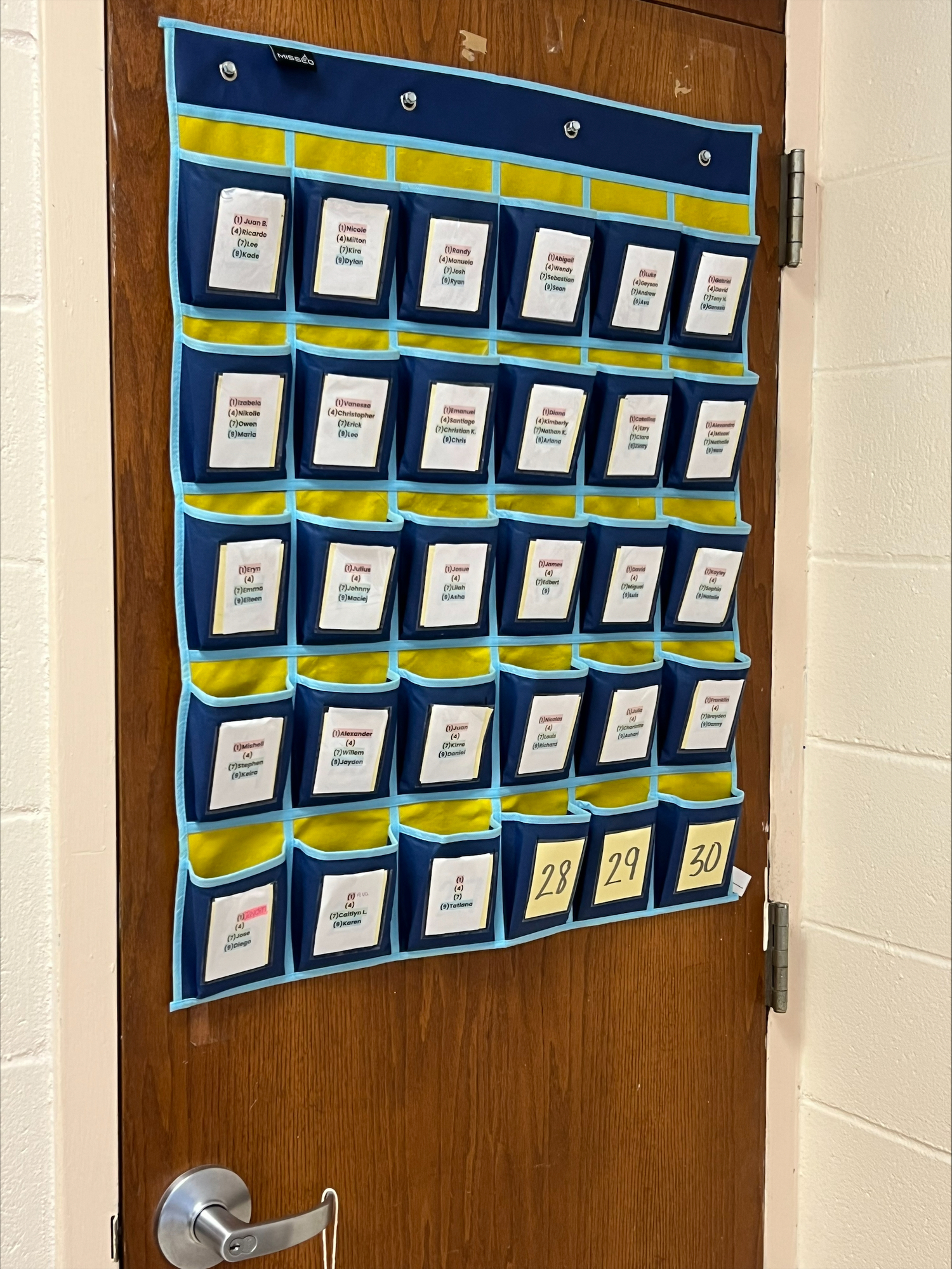
Many teachers in the Hampton Bays school district require their students to place their phones in cubbies in a wall unit at the front of the classroom to ensure the phones are not a distraction to students while class is in session. COURTESY HAMPTON BAYS SCHOOLS
With the adoption of the Yondr system this year, Pierson Middle-High School became an outlier on the East End, and in all of Suffolk County, by fully restricting student access to cellphones during the school day.
While Sag Harbor is currently the only school district using a system like Yondr, other local districts have implemented policies of their own that restrict student cellphone use to certain degrees during the day, and with varying disciplinary measures in place for students who violate them.
Here’s a look at the other policies in place at East End schools:
East Hampton
In the East Hampton School District, there is a “no display” rule in the middle school, which effectively bans the use of cellphones during the school day.
At the high school, cellphones are allowed to be carried by students and used in common areas, and teachers do, from time to time, allow the students to use their phones in class for instructional purposes.
East Hampton is one of many school districts — including Southampton, Hampton Bays and Westhampton Beach — making use of cellphone storage systems in many classrooms, where students can be required to put their phones in a slot or pouch in a large wall organizer or cubby while class is in session.
Springs
At the Springs School, which includes students in prekindergarten through eighth grade, cellphones are required to be turned off and placed in backpacks, which are required to be stored in lockers.
Unlike other schools, where students rarely, if ever, use their lockers, the lockers are well-used at Springs, where they are unlocked — students do not even have combination locks on their lockers. Keeping their phones in their lockers helps with rule enforcement, according to Superintendent Debra Winter.
Hall monitors ensure students do not surreptitiously go to their lockers and grab their cellphones during bathroom breaks.
Southampton
The Southampton School District’s policy states: “Cellphones and personal devices, inclusive of earbuds and headphones, are not allowed to be visible and/or heard in instructional spaces (all classrooms, the school library during regular school hours, and school assemblies). Students may use cellphones in the school only in noninstructional settings inclusive of lunch and study hall periods.”
The classroom procedures dictate that “at the start of class, teachers will announce that: ‘all cellphones and personal devices are to be stored away, not visible or heard.’” The policy reads that this includes, but is not limited to, “nonschool issued laptops and mobile tablets.”
After that time, if a student has a cellphone or personal device visible or heard, a verbal warning will be issued for the first offense, with the teacher telling the student to put the device away. A second infraction will lead to the student once again being told to put the device away, and will also be issued a disciplinary referral.
The first disciplinary referral includes a student meeting with the assistant principal and two lunch detentions; a second referral includes a meeting with the assistant principal, five lunch detentions and a parent/guardian notification. A third referral includes the assistant principal meeting, a full day of in-school suspension, and an in-person parent/guardian conference meeting.
Hampton Bays
In the Hampton Bays School District, wall organizers are used by many teachers to store phones, and they also have the option of allowing the students to take their phones from the wall organizers if the phone is used for an instructional purpose in a lesson.
Students are permitted to use their phones in the hallways and at lunch but cannot remove them from the wall organizers during class if they ask to leave to go to the bathroom.
Westhampton Beach
Like in Hampton Bays, students are also permitted to use their cellphones in the hallways and at lunch in the Westhampton Beach School District. The policy states that “all cellphones need to be turned off before students enter the classroom. There will be zero tolerance for cellphones in the classroom.”
It continues: “Students who are unable to use their cellphone responsibly will be held accountable. The first time students have their cellphone confiscated by an administrator or faculty/staff member, students will be able to pick up their phones at the end of the school day. The second offense will necessitate the parent/guardian picking up the cellphone at the end of the school day.”


 Cailin Riley on Feb 14, 2024