


 1 Photo
Accessory dwelling units, defined by any additional housing structures located on properties zoned for single-family residences, could be key in providing affordable housing.
“If you don’t have affordable housing, you really don’t have a community.”
These words are from East Hampton Town Supervisor Peter Van Scoyoc, who, like many leaders in local government throughout the East End, has spent countless hours working toward solving the housing crisis that has historically plagued the region — only becoming increasingly dire over the last few years.
He has witnessed firsthand how the lack of affordable housing has changed the makeup of the township in myriad ways — from a school district unable to attract and retain quality teachers, to small businesses straining to find employees, to doctors struggling to staff their offices.
Each scenario threatens the future economic development of the town and overall well-being of the community, he explained, and a problem this big needs a multi-pronged approach to solve it.
While discussion swirls around efforts to create more large, multi-unit, affordable housing complexes in both East Hampton and Southampton towns — and, along with them, plenty of strong opinions — another, perhaps less-visible method of addressing the issue could be key in providing some relief to community members who don’t have a place to live.
Many local elected leaders and housing advocates agree: Increasing the number of accessory dwelling units will play a crucial role in alleviating the housing crisis.
“People have to understand that you need to have a balanced community where people can live and work,” noted State Assemblyman Fred W. Thiele Jr., who is at the forefront of the issue, adding that residents from every socioeconomic level benefit from the presence of affordable housing.
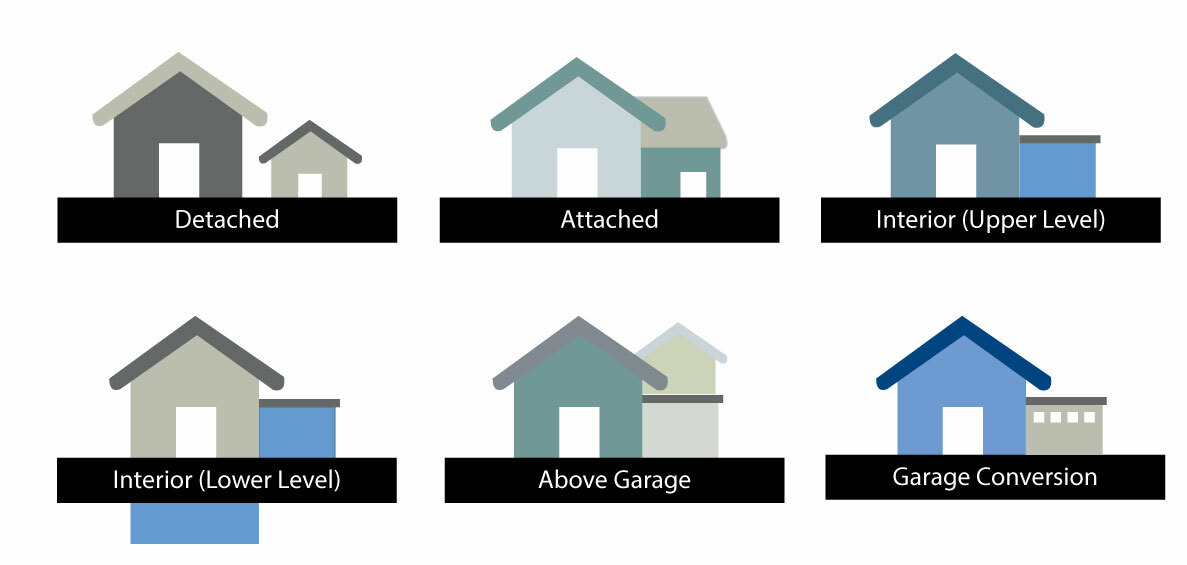
The term “accessory dwelling unit,” or ADU, is a catch-all that encompasses any additional housing unit or structure located on a piece of property zoned for a single-family residence. Basement and over-garage apartments, stand-alone cottage or studio structures, and any kind of attached or detached separate living facility, with its own kitchen, bathroom and sleeping accommodations, fall under the umbrella of ADUs.
There are several reasons why a homeowner may have an ADU, or seek to build one. Perhaps they have an elderly parent or relative they are caring for, and an ADU allows them to do so while retaining a sense of privacy and separateness. Many homeowners who have ADUs use them as second sources of income to help make ends meet in an area where the cost of living is notoriously high — frequently creating a mutually beneficial situation for the homeowner, who is effectively the landlord, and the tenant.
Many officials and housing advocates believe that increasing the number of ADUs in their towns and villages can help ease the housing shortage, but as with any policy that relates to affordable housing, roadblocks and disagreements about the best way to go about it notoriously arise.
“The real conflict around accessory apartments is an old rule put in place years ago that only allows one cooking facility on a property zoned as a single-family property,” said Michael Daly, a real estate broker and founder of East End YIMBY, which stands for “Yes In My Back Yard” — a not-too-subtle pushback at the phrase “NIMBY,” or “Not In My Back Yard,” referring to people opposed to certain measures meant to improve the quality of life for low-income populations.
The community housing advocacy group has conducted research on ADUs and makes recommendations to local zoning boards on how they can change or update their regulations to make them more accessible. It is a move that will allow these units to be a bigger solution in the affordable housing crisis — and a legally sound one.
At present, Daly estimates that there are “thousands” of unpermitted accessory apartments on the East End. “That alone demonstrates the need for them,” he said.
Daly, who also serves on the Southampton Town Zoning Board of Appeals, takes issue with the position of what he terms “the loud minority” of financially secure homeowners, who have been vocal and influential in their opposition of measures aimed at increasing the availability of affordable housing — and ADUs in particular.
“We know they’re needed, and we know we could allow them, but we kowtow to the single-family homeowners that think [ADUs] are only a nuisance rather than an important part of every community,” he said.
Only a small percentage of East End homeowners either want or can afford to build an ADU, Daly said, and estimated that about 5 percent of them actually have accessory apartments. On average, he said he sees two or three variances per month from homeowners seeking to construct them.
Southampton Town Supervisor Jay Schneiderman said he wants to see legislation and other action that would help change that.
“I’ve thought for a while now that, with accessory apartments, we could create hundreds of units, and no one would know,” he said.
The supervisor said he has considered different initiatives that could make creating more ADUs possible. While updating or loosening zoning regulations is one part of the equation, providing incentives for homeowners to add an ADU, or upgrade an existing accessory structure to make it habitable, is another.
Proposing housing developments with upward of 20 affordable units is a surefire way to stir up controversy, Schneiderman acknowledged, and is often a long road paved with litigation hurdles — which is why he finds the idea of bolstering the number of ADUs particularly appealing.
To that end, Thiele said he is committed to procuring state funding to make this a reality.
In January, Governor Kathy Hochul initially included a proposal in her budget that would have required local governments to authorize the construction of ADUs and transit-oriented development, but she ultimately removed it following pushback from lawmakers on both sides of the aisle — including Thiele — who felt the proposal flew in the face of home rule, wresting authority from local governments to make planning decisions for themselves.
Thiele, who chairs the legislature’s Local Governments Committee, said that the governor’s proposal was well-intended but “wasn’t the tool to get the job done.”
“Almost every local government I represent already has an accessory apartment law on the books,” he said. “Every town and village recognizes the affordable housing problem. They see it firsthand and they all want to help solve that problem.”
He said he would like to see Hochul and the rest of the state government focus less on enacting a “one-size-fits-all” approach to the affordable housing issue and, instead, make funds available to municipalities that are tackling the problem in ways that are tailored to the specific needs of their communities.
“It’s one thing to make them legal,” he said, “but you also have to get property owners to walk through the door and want to construct them.”
The hesitation can lie in the lengthy, confusing and often costly process of obtaining a permit for an ADU and hiring an architect, as well as the concern that adding a structure to the property could lead to increased assessed value, causing taxes to rise.
“That’s why incentives are so important,” Thiele said. He noted that several other states are ahead of the curve when it comes to ADUs — pointing to Massachusetts, which provides grants of up to $75,000 for accessory apartment construction, along with property tax incentives.
Schneiderman has suggested using revenue from the proposed Community Housing Fund to help front the cost for property owners looking to build accessory units. Then, the property owner would send a portion of the rent they collect every month back to the town until the balance is paid. The supervisor added that, in those instances, the property owners would need to agree to keep the rent at an agreed upon threshold so it remains truly affordable.
Thiele, who is currently promoting towns enacting their plans for affordable housing under the Community Housing Fund that was finally signed by Hochul last year — the towns must create their funds through separate referendums in November — said he has had good feedback and buy-in from several local leaders who are interested in finding a way to provide these kinds of incentives to homeowners. After budget season, the legislator — who chairs a working group on accessory apartments in the State Assembly — said the committee plans to design a package of legislative incentives and proposals that will help local governments put together ADU programs.
“The state shouldn’t be telling Sag Harbor Village or East Hampton Town how many ADUs they should have and where they should be or how they should be built,” he said. “That’s what local zoning is about. [The state] should be providing the resources and incentives to governments and property owners to implement the programs.”
Outreach to the public will also be key, Thiele said, and his hope is that there will be the same kind of publicity push surrounding the creation of more ADUs as there has been for efforts related to solar energy and alternative septic systems. But advocating for affordable housing sharply differs from other causes, like preservation and environmental efforts, due to the often-unspoken elephant in the room: systemic racism and implicit bias.
“Everybody I know is okay with having a nature preserve near them,” Thiele said, “but not everyone is okay with having an affordable housing development next to them.”
He acknowledged that increasing population density will always be a cause for concern for local residents — in part due to the environmental impact — but it is in their “enlightened self-interest” to support efforts to create more affordable housing.
Gathering consensus around that idea remains an uphill battle, though. According to Daly, the reality is that wealthy property owners still hold the balance of power.
“If you’re not a financially secure homeowner, you’re a second-class citizen out here,” he said, adding, “Homeowners have been groomed to believe that they live in one big, gated community and that they have an overriding say about what goes on. This is not a country club; everything is not here to serve your own best interest.”
He lamented the narrative brought to light by Hochul’s accessory dwelling proposal, calling it “a good faith effort” to create ADUs in every municipality throughout the state — and the fact she felt it was necessary is telling, Daly said.
“If home rule was working for community housing, then something like that would not have been necessary,” he said.
Still, local leaders insist they are making progress. Van Scoyoc — who Daly commended in particular for his efforts — pointed out that East Hampton has “led the charge” when it comes to offering ADUs within the zoning code, and the town will likely make continued modifications to remove even more obstacles in building them.
“We understand how critical it is to make inroads with this problem,” Van Scoyoc said, referring to the affordable housing crisis at large. “Every board member is working on this issue. We have seen a change in perception; people are starting to understand that this isn’t just housing for homeless or indigent people, we’re talking about everyone from that level to working professionals.”
Van Scoyoc said he recently heard from a local longtime pediatrician considering retiring due to hiring issues — driving home just how dire the situation has become.
“We lose our future if we can’t solve this problem,” he said.


 Cailin Riley on Apr 13, 2022