



 2 Photos
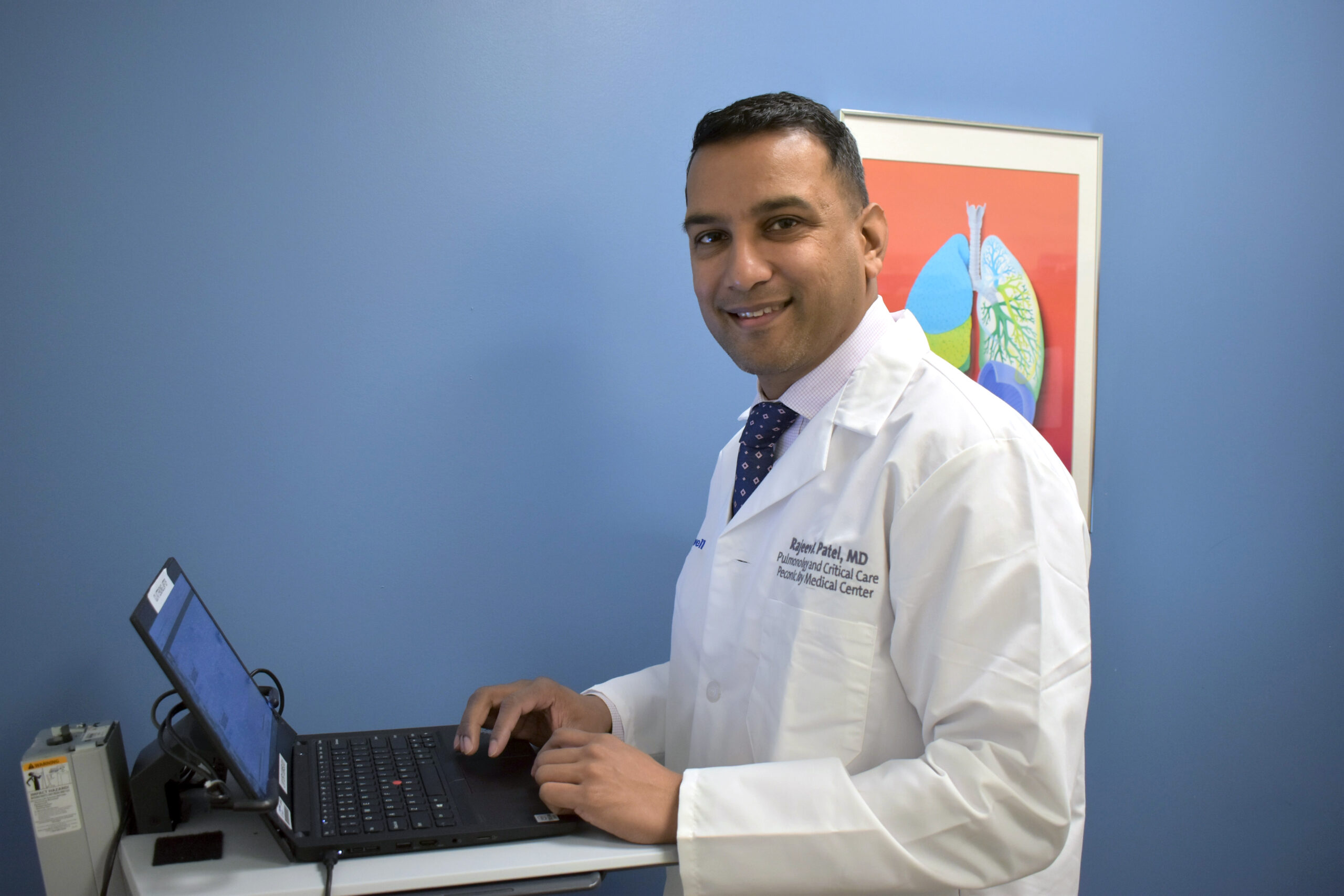
Dr. Rajeev Patel
Dr. Sritha Rajupet
In a Zoom conversation last week, Dr. Sritha Rajupet, director of the Stony Brook Medicine Post-COVID Clinic, and Dr. Rajeev Patel, chairman of medicine and chief of pulmonary and critical care at Peconic Bay Medical Center, answered questions about the medical community’s understanding of “long COVID.”
Is there any question at this point that long COVID is, in fact, a syndrome of importance?
Dr. Sritha Rajupet: I think it’s well established in the medical community that long COVID, or PASC [post-acute sequelae of SARS CoV-2 infection], is certainly a thing of concern. One in five individuals are affected by long COVID at this time, and it’s not something we can ignore. We all have to screen for it, address it and treat it as best as we can.
Dr. Patel, do you agree?
Dr. Rajeev Patel: Yeah, I agree. I think, based on the most recent studies, it’s about 65 million people worldwide, and probably, I think, about 20 million in the U.S. who are affected by long COVID. So, at this point, I think it’s well established. And there’s even consensus guidelines for some of the symptoms, at this point. So I would agree.
Dr. Rajupet, you said about one in five — so about 20 percent of people who have had COVID develop some post-COVID symptoms?
Dr. Rajupet: Correct.
Can you talk about what those symptoms are? It’s a fairly wide range, isn’t it?
Dr. Rajupet: Yes. Depending on where you’re reading, there can be sometimes over a hundred symptoms that are often discussed. I usually like to go by those listed on the [Centers for Disease Control and Prevention] website. They could be anything from shortness of breath to fatigue, body aches and pains. Those typically are the top three. But there are many others we’ve all heard about in the news, including loss of taste and smell.
So we’re very open to hearing about new things, and I think that’s important for patients to hear — that it may not be in this defined list, but we will evaluate it and we will actively listen to what you are experiencing.
And Dr. Patel, these symptoms, how long can they last?
Dr. Patel: So, in my practice, I’ve had patients who still have them since their COVID infection, which can go beyond a year.
Most of my patients that I’ve seen developed them, probably … We start thinking about long COVID if they still have symptoms two months out, from the onset of the infection.
So I’ve had patients, some have recovered within three, six months — but I have many who are a year out and still have symptoms.
Is there any difference between post-COVID syndrome and long COVID? Like, is it a case where some people will still have symptoms for the month or two after they’ve been infected, but that’s not necessarily long COVID? Or is that a distinction without any significance?
Dr. Rajupet: So, essentially, the CDC defines post-COVID, or long COVID, or PASC, as having symptoms for at least four weeks.
In the literature, there’s some talk about the post-acute phase, which is symptoms between four and 12 weeks, but it depends on what you’re reading.
In our clinic, at Stony Brook, you’re eligible to be seen in our post-COVID clinic as long as you’ve had symptoms for four weeks, which is the CDC definition.
And how serious can these symptoms be? How bad have you seen patients with post-COVID symptoms?
Dr. Patel: I mean, so for me, I’ve seen … it’s been debilitating [for some]. Anywhere from sort of normal, healthy individuals, young individuals, who previously had good endurance, come in describing fatigue, which waxes and wanes, from day to day. They were athletes before, and their endurance now is very limited.
I have also had patients who have concentration and memory issues, which have lasted a while, or anxiety, developed depression.
And I’m an ICU doctor, and I’ve seen patients post-ICU stays, and they develop [post-traumatic stress disorder] from their hospitalizations and the symptoms during COVID.
So it sort of runs the gamut. By the time they see me, [they’re] usually pretty symptomatic, where it’s sort of affecting quality of life.
Dr. Rajupet, is that consistent with what you’ve seen?
Dr. Rajupet: Absolutely. And I think we make it a point to talk about change in baseline state, because people had a way of doing things in life, and now they’re not able to do what they used to be able to.
And, as a result, that’s hard. And we want to get back to our normal states, and that’s what the goals in most people’s care are.
And, unfortunately, some people have to develop this new normal, as they adjust to something that they never imagined.
So, who gets long COVID? Do we have any idea? Is there any correlation as to who is more susceptible to a case of long COVID? Or something about the way they’re infected, or the way they go through the disease, that might suggest they could face some post-COVID symptoms?
Dr. Rajupet: I’m happy to take that one. So, the typical age range is between 30 and 60, the average age being 40, with females having greater predominance for long COVID.
Those individuals who’ve had a more severe COVID illness, typically, are more likely to develop long COVID symptoms.
And those individuals with chronic medical conditions are at greater risk for developing long COVID as well. So those individuals who have diabetes, congestive heart failure, COPD, etc., are at greater risk.
We know that, because they’re at greater risk for having COVID as well, and complications from COVID. And that, again, puts them at greater risk for long COVID.
Dr. Patel, is there a randomness to it as well, though?
Dr. Patel: I don’t know about randomness, but I know there is, based on, so far, what we have, in the short period of time we’ve been able to study this, is that there is a reduction with vaccination, that you will see a risk reduction in long COVID. It’s not 0 percent, that if you get vaccinated you won’t have long COVID, but there is a significant reduction with those patients.
And then, as was said, females have a greater predominance over males by about, I think, it’s about 5 percent compared to about 10 percent.
I’m curious whether the use of Paxlovid when you’re being treated for an infection, does that have any effect on whether or not a patient may develop long COVID?
Dr. Rajupet: Well, patients, some report that they feel their symptoms’ severity is decreased or their duration of symptoms are decreased while on Paxlovid.
And there are actually — there’s a study being conducted at Stanford at this time, to see if Paxlovid can be used to treat long COVID. So I believe in their study, they give the medication for two weeks and follow patients for approximately four and a half months. But we’re still waiting to hear about what their results may look like.
We’re still learning, right?
Dr. Rajupet: Yes, absolutely.
Is there any other treatment right now for long COVID, Dr. Patel?
Dr. Patel: At this point, there’s no specific treatment for long COVID. I think we’re sort of working up and treating, based on symptoms.
For example, in my practice, my pulmonary practice, if you come in with shortness of breath, we might work you up for the shortness of breath, and we can try inhaled corticosteroids, or long-acting agonists, basically the same treatments we would use for asthmatics or patients with COPD and emphysema.
And I think it’s the same thing in the cardiology world. You’d be worked up. The majority of symptoms revolve around dizziness and tachycardia, having palpitations. So, again, treating symptomatically.
But right now I think the studies are ongoing, to see if there are specific treatments. And there are treatments that I’ve heard about that people have tried, but nothing specific that we could say right now, “Okay, we can give this and we can treat it.”
Is there any indication as to whether there’s a real long-term effect of developing long COVID, in the sense of, several years down the line, there may be some related health issues? Have there been any indications, either way?
Dr. Rajupet: Some of the studies that the [Veterans Administration] conducted, for example, showed that individuals who have long COVID may be at greater risk for infections in the future. I think we’re still trying to figure out if those are predominantly bacterial, viral, etc.
And there’s a lot to still be learned about whether they’re at greater risk for other conditions. Are you at an accelerated risk for diabetes, for example, or COPD? That has yet to be learned.
And, Dr. Patel, is there any indication about whether having long COVID either makes you more or less susceptible to reinfection with an active case of COVID?
Dr. Patel: I don’t know if there’s any definitive, but I think long COVID goes along, I think, right now, the ongoing theory is, it is sort of a chronic inflammation. So any sort of chronic inflammation within the body can make you susceptible to different types of things. And we’ve seen that, as was mentioned, with diabetes, the increased incidence of diabetes in patients with long COVID, or COVID infection in general.
There also have been studies that show that there’s endothelial damage, that’s why there’s an increased risk of heart attacks, strokes, things like that. Myocarditis in patients who have had COVID infection or have long COVID as well.
Have we learned anything about what this may say about future COVID variants, if they come out? What long COVID may have to tell us about how we deal with future variants and is there any indication that we can get from that?
Dr. Rajupet: I think we have a lot to learn still. As vaccines also continue to improve and they’re adjusted to the latest variants, our risk for complications may change as well.
So if the vaccine covers the latest variant more significantly, we may have milder forms of illness, and that could subsequently lead to perhaps less long COVID in the community.
Dr. Patel, anything to add there?
Dr. Patel: Yeah, I agree. And I think we’ve reached the point in this disease process where we’re sort of in an endemic phase now, rather than a pandemic phase. So it might change in that respect as well, going forward.
And I think the first year and a half, we spent treating patients. And in the last year and a half, we’ve started to really look at the long-term effects of COVID. So it’s yet to be determined.
And in that time, we had the delta variant and the omicron, and variants after that.
So potentially, there is some difference between them, but nothing that we can speak about, at this point.
Anything else to add?
Dr. Patel: I can mention that, at Northwell, we have a CARES, a COVID Ambulatory Resource Support Clinic — we have multiple locations throughout New York, Long Island, the Westchester area, where patients can come and be seen if they have any symptoms.
Dr. Rajupet: For Stony Brook, we’re located in Commack and specifically focused on long COVID care.


